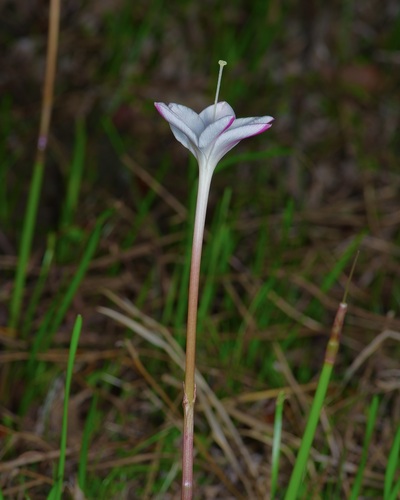
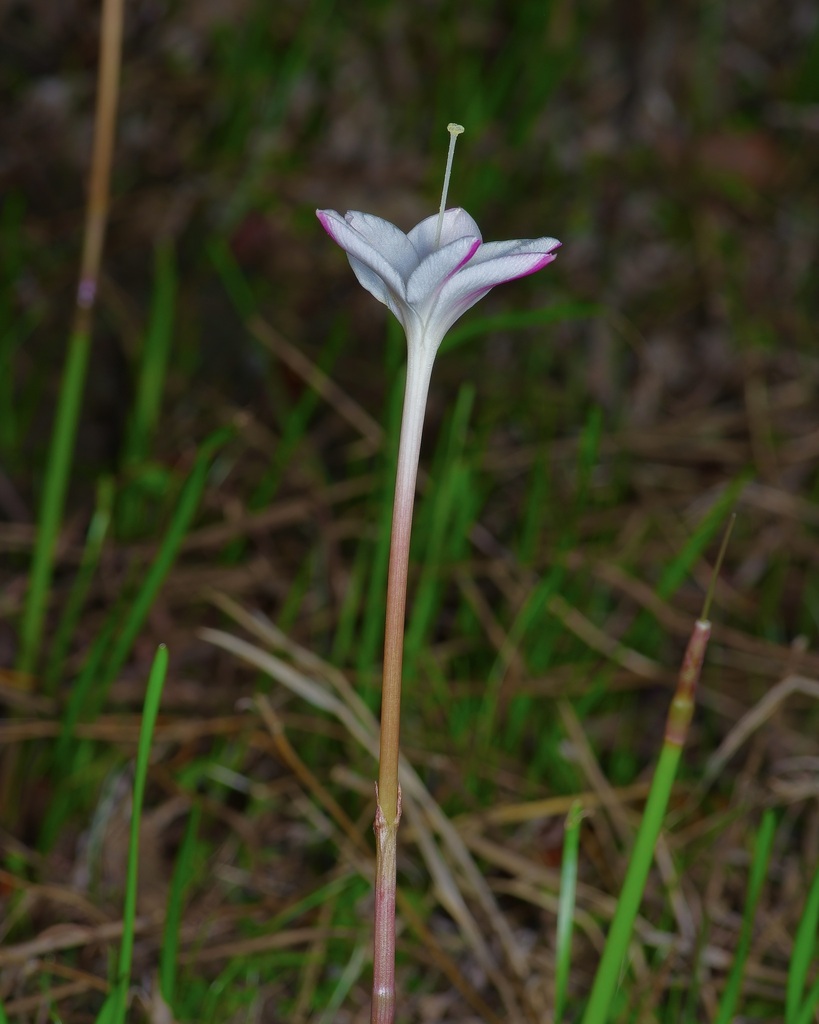
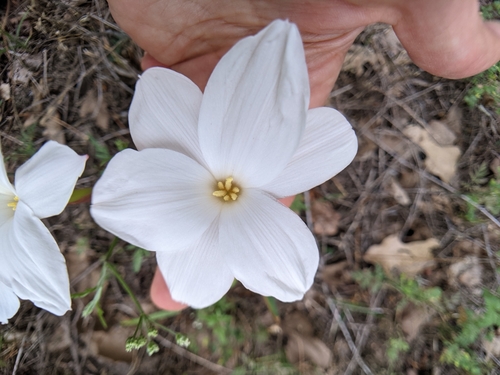
Also known as Traub's Rainlily, Traub's Zephyrlily
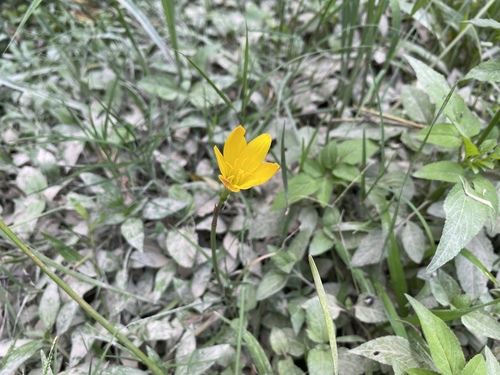
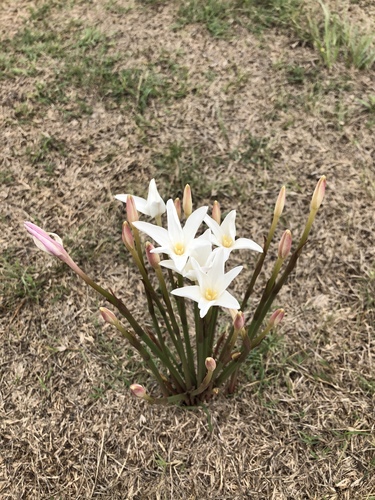
Traub's rain-lilies lie dormant beneath sun-baked prairie soils until heavy downpours trigger explosive synchronous blooms. Solitary, starry white to pale pink blossoms open quickly on slender scapes, unfurling delicate floral tubes that release a faint fragrance to summon evening pollinators. Found primarily across coastal grasslands and prairies, these geophytes complete their reproductive cycle rapidly before arid conditions return.
Not EvaluatedConservation statusIUCN Red List categoriesLCNTVUENCREWEXNot Evaluated — not placed on the risk ladderRed List categories, explained →
Key facts
Diet & prey
Autotrophic (photosynthetic)
Predators
Not available
ThreatsHabitat loss from urban development, agricultural conversion, and invasive turf grasses
HabitatsCoastal plains, prairie grasslands, open sandy woodlands, and ditches
Life spanPerennial (bulb survives indefinitely)
Size / weightNot available
Classification
OrderAsparagales
FamilyAmaryllidaceae
GenusZephyranthes
SpeciesZephyranthes traubii
Range & activity
Range data is not available yet.
Safe observation
Interaction riskHigh
Low
Moderate
High
Very high
Why interaction risk is high
Bulbs contain toxic alkaloids that harm humans and pets if eaten; observe flowers without foraging.
Why it is dangerous
Like most members of the amaryllis family, the underground bulbs contain lycorine and other phenanthridine alkaloids that cause nausea, vomiting, abdominal cramping, and severe diarrhea if ingested.
How to recognize a risky encounter
Look for grass-like basal leaves arising from a subterranean tunic-covered bulb, topped by a single erect, star-shaped white flower.
What to do
Do not harvest or consume any part of the plant, and ensure curious pets do not dig up or chew on the bulbs.
Responsible observation
Timing: Look for blooms 2 to 4 days immediately following significant late spring or summer rainstorms.
Habitat: Scan undisturbed prairie remnants and grassy roadside swales with sandy loam soils.
Conservation: Leave bulbs undisturbed in the ground, as wild populations do not tolerate digging.