
Plant
Downy Rattlesnake Plantain
Goodyera pubescensAlso known as Rattlesnake Plantain, Checkered Plantain
Downy rattlesnake plantain forms evergreen basal rosettes of dark blue-green leaves traced with a crisp white lattice that resembles snakeskin. In mid to late summer, a fuzzy, glandular stalk rises from the center of the rosette, bearing dense spirals of small white, hood-shaped flowers pollinated primarily by bumblebees. Like other woodland orchids, its dust-like seeds lack stored nutrients and depend on symbiotic mycorrhizal fungi in the forest floor to germinate and grow.
EvergreenOrchidShade-tolerant
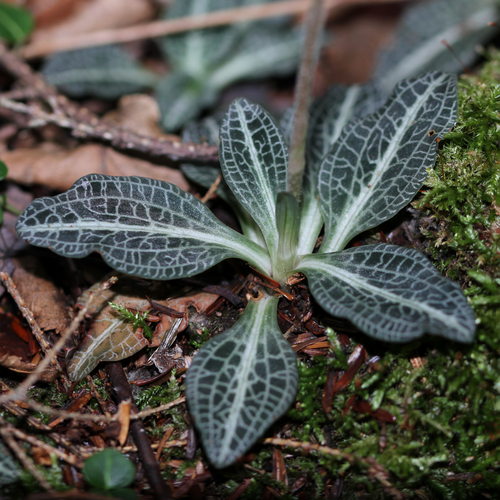
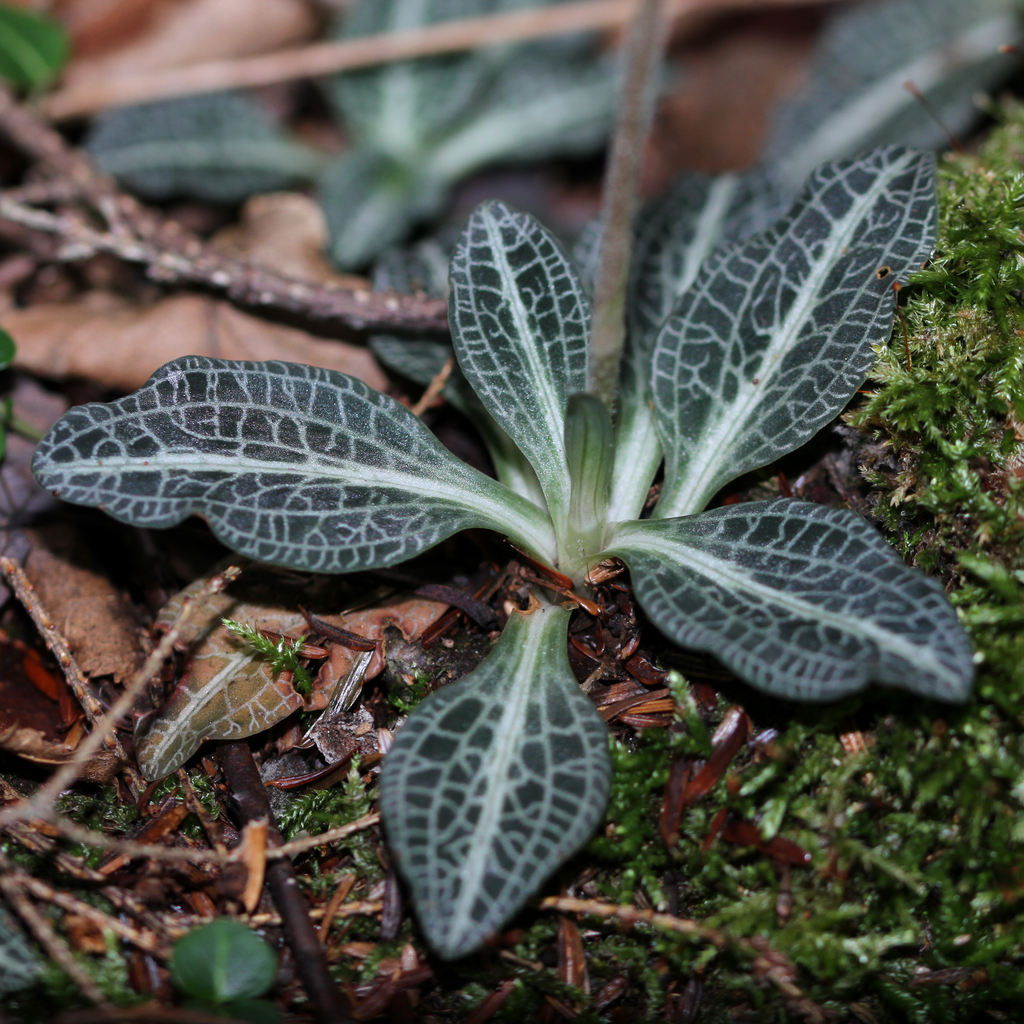
—observations
—countries
—peak records
Least ConcernConservation statusIUCN Red List categoriesLCNTVUENCREWEXLeast ConcernRed List categories, explained →
Diet & preyPhotosynthetic; relies on mycorrhizal soil fungi during seed germination
Predators
- White-tailed deer
- Slugs and snails
- Wild turkeys
ThreatsHabitat loss from logging and development, deer browsing, and invasive understory plants
HabitatsDry to moist deciduous and mixed coniferous forests, shaded slopes, and rich humus across eastern North America
Life spanPerennial (individual rosettes live several years; clonal mats persist for decades)
Classification
- FamilyOrchidaceae
- SpeciesGoodyera pubescens
Range data is not available yet.
Interaction riskLow
- Low
- Moderate
- High
- Very high
- Why interaction risk is low
- Safe to observe at a normal distance.
Responsible observation
- Leave in Place: Wild orchids depend on specific soil fungi and rarely survive transplanting.
- Look for Colonies: Scan shaded mossy banks and oak-pine litter where creeping rhizomes form mats.
- Check Summer Spikes: Look in July and August for the fuzzy white flower stalks rising above the leaves.
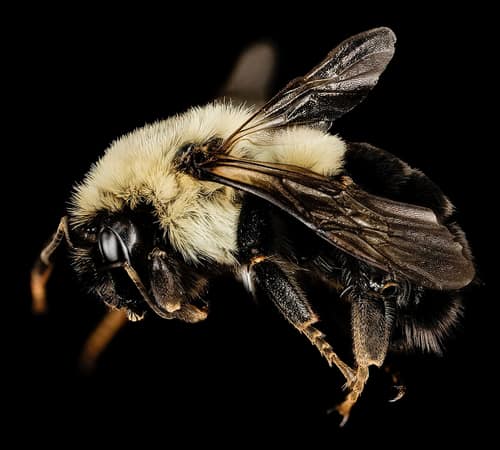
Pollinator USGS Bee Inventory and Monitoring Lab from Beltsville, Maryland, USA / Public domain · cc0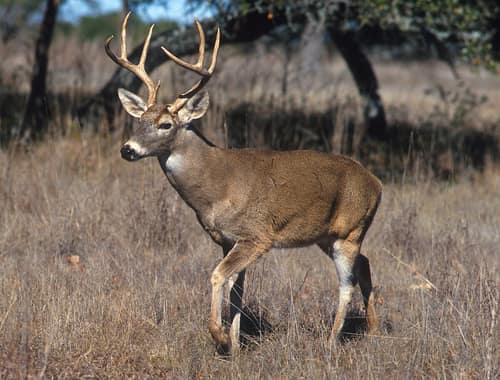
Herbivore USDA photo by Scott Bauer / Public domain · cc0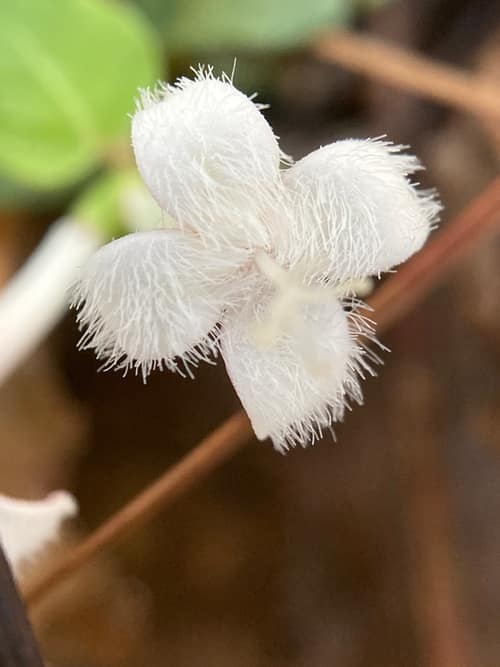
Frequent Companion no rights reserved, uploaded by mikoikoi · cc0 Image unavailable
Look-alike 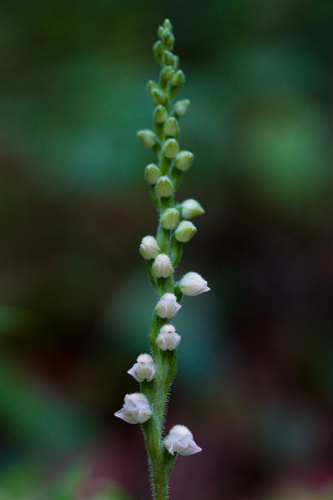
Close Relative (c) Ken-ichi Ueda, some rights reserved (CC BY) · cc-by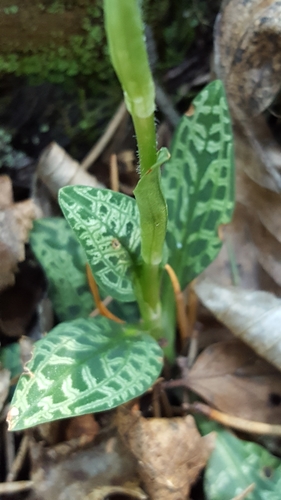
Close Relative (c) Norma Malinowski, some rights reserved (CC BY), uploaded by Norma Malinowski · cc-by
Help improve the field guideSomething wrong?
Checking your Fauna account…Report a name, category, or profile issue for review.