Cape aloes form imposing single-stemmed rosettes that can reach several meters tall, retaining a protective petticoat of dried, spiky dead leaves along their trunks. During the chill of winter, mature specimens erupt with brilliant candelabra-like flower spikes in shades of glowing orange and fiery red, producing abundant nectar that fuels migrating sunbirds and insects across southern Africa. The thick, blue-green leaves brim with bitter yellowish sap rich in aloin, a natural defense mechanism that deters large browsing herbivores.
ThreatsOverharvesting of wild plants, habitat clearing, and invasive pests
HabitatsFynbos, succulent Karoo, rocky hillsides, and valley bushveld
Life span50–150 years
Classification
OrderAsparagales
FamilyAsphodelaceae
GenusAloe
SpeciesAloe ferox
Range & activity
Range data is not available yet.
Safe observation
Interaction riskHigh
Low
Moderate
High
Very high
Why interaction risk is high
Leaf sap contains anthraquinones; toxic to dogs and cats if ingested and sharply purgative to humans.
Why it is dangerous
Leaves contain bitter anthraquinone glycosides like aloin, causing severe abdominal cramping, diarrhea, and vomiting in pets and sensitive individuals.
How to recognize a risky encounter
Look for large, thick, succulent blue-green leaves edged with sharp reddish-brown teeth and arranged in a massive trunk-topping rosette.
What to do
Wear heavy gardening gloves when pruning to avoid thorny punctures, and keep cut leaves out of reach of domestic animals.
Responsible observation
Spine Caution: Steer clear of the stiff, sharp leaf margins and surface prickles when walking nearby.
Winter Blooms: Visit rocky slopes between May and August to observe peak flowering and visiting sunbirds.
Pet Safety: Keep curious cats and dogs from chewing the bitter leaves to prevent gastrointestinal upset.

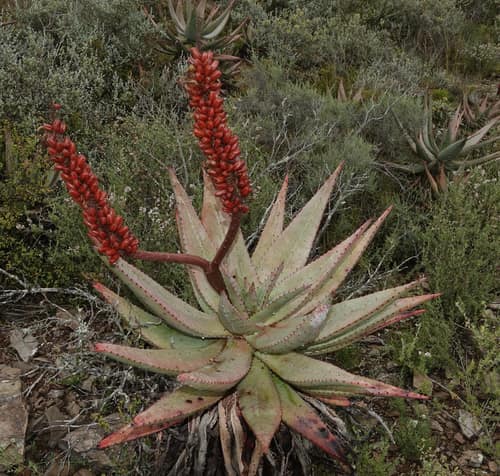
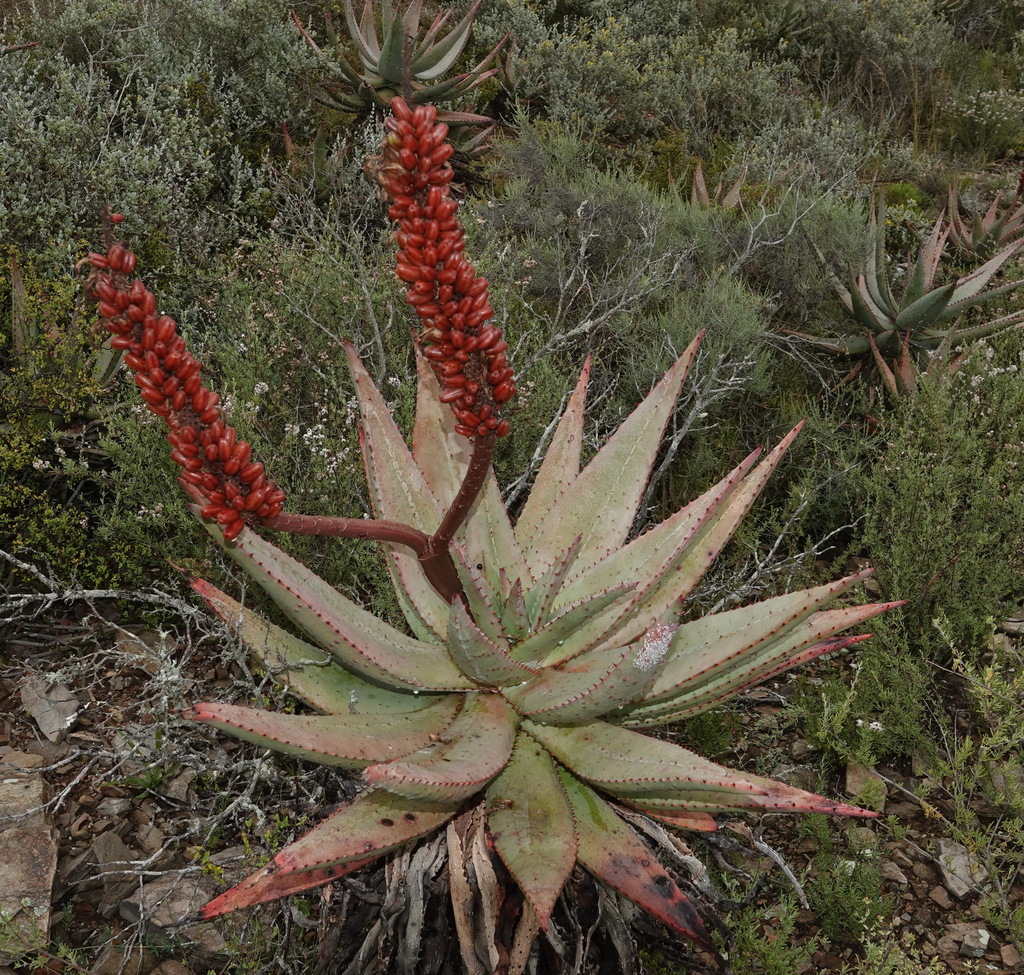
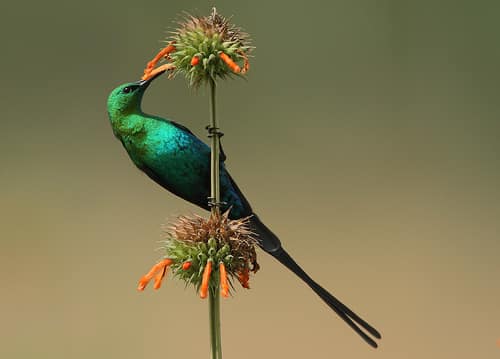
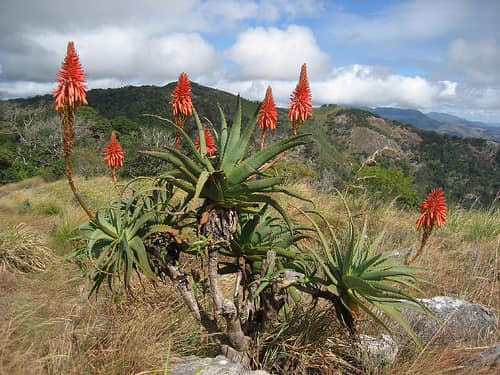
 Image unavailable