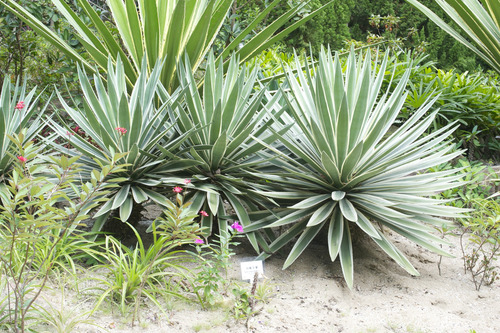
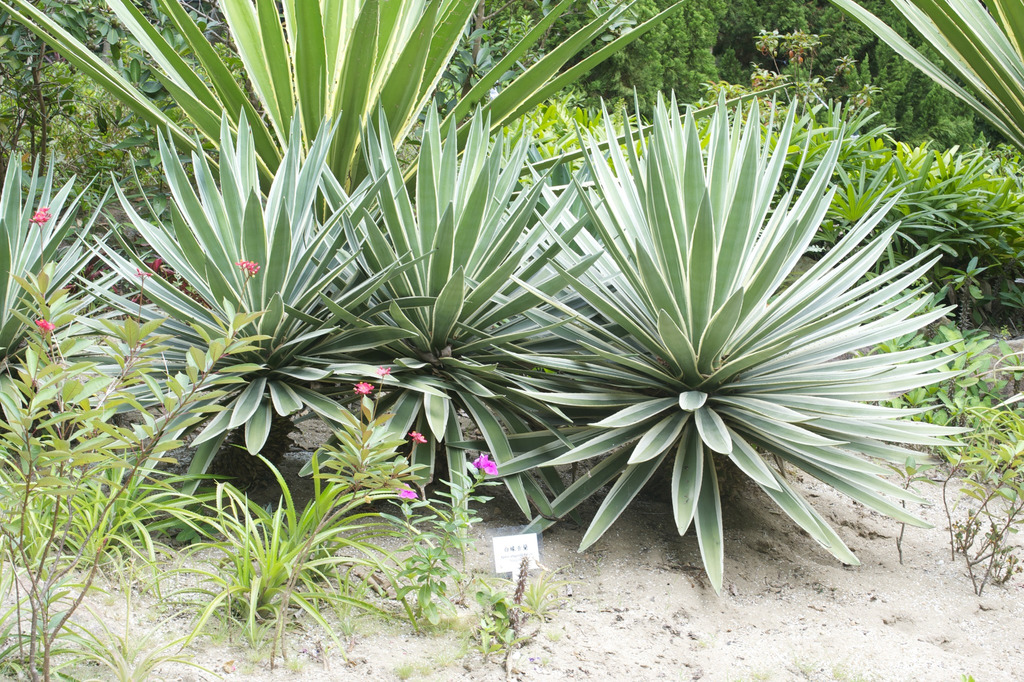
Also known as Narrow-leaved Agave, Espadin, Maguey Espadin, Dwarf Century Plant
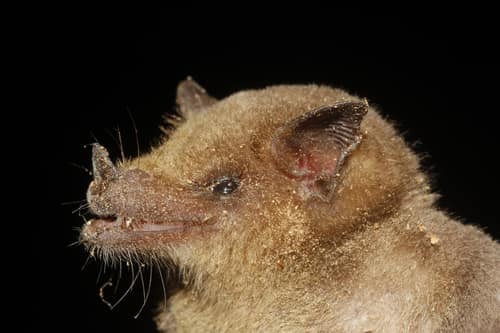
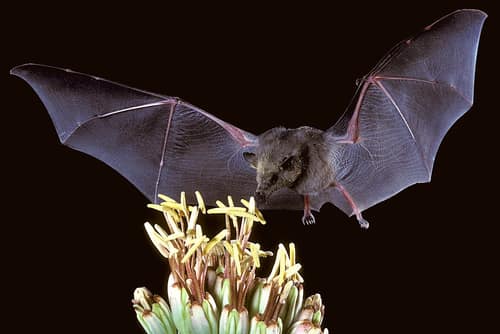
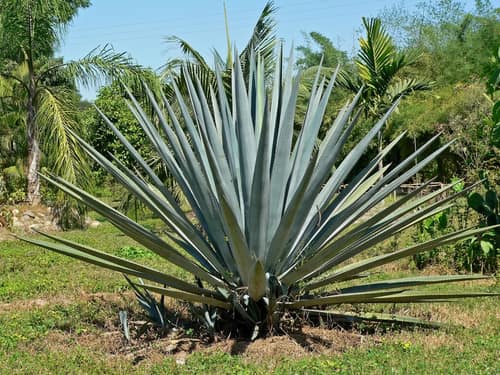
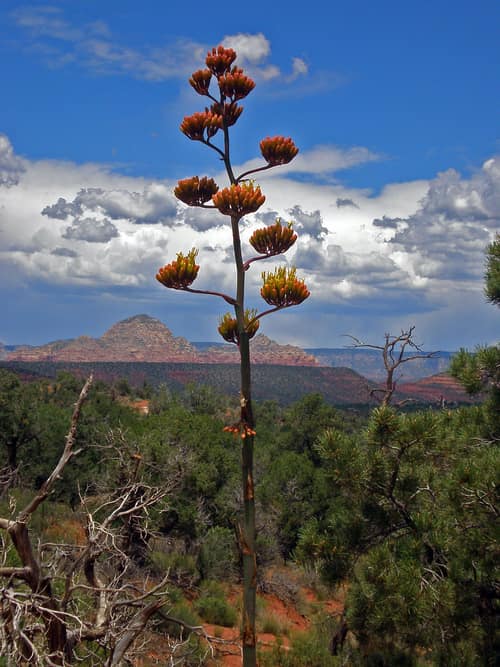
Caribbean agaves form dense, architectural rosettes of stiff, sword-shaped leaves tipped with sharp dark spines and lined with small marginal teeth. After growing for seven to fifteen years, a mature plant sends up a towering flower stalk up to five meters tall, blooms once with greenish-yellow flowers pollinated by nectar-feeding bats, and dies while leaving behind basal offsets. Wild populations thrive across dry scrublands and coastal habitats from Mexico through Central America, and in Oaxaca the species is widely cultivated under the name espadin for mezcal production.
Diet & preyPhotosynthetic autotroph; absorbs water and minerals through shallow, fibrous roots
Predators
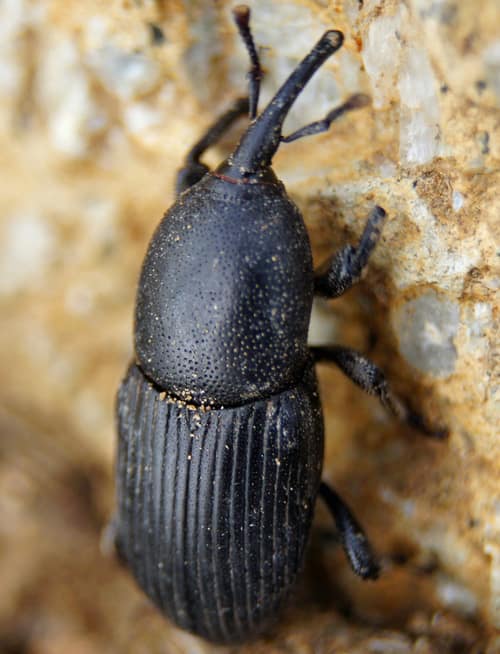
Agave Snout Weevil
Javelina
Desert Cottontail
ThreatsHabitat loss from agriculture, overharvesting of wild populations for mezcal, and invasive agave snout weevils
HabitatsDry tropical forests, coastal scrub, rocky hillsides, and arid savannas
Life span10 to 20 years (monocarpic; dies after flowering once and producing offsets or seeds before dying back completely).
Classification
OrderAsparagales
FamilyAsparagaceae
GenusAgave
SpeciesAgave angustifolia
Range & activity
Range data is not available yet.
Safe observation
Interaction riskHigh
Low
Moderate
High
Very high
Why interaction risk is high
Sharp leaf spines can puncture skin, and raw sap contains irritating compounds that cause contact dermatitis.
Why it is dangerous
Raw sap contains microscopic calcium oxalate crystals and steroidal saponins that pierce skin cells and trigger painful contact dermatitis, blistering, or severe eye irritation.
How to recognize a risky encounter
Recognize it by the dense rosette of narrow, stiff green to blue-green leaves edged with small teeth and tipped by a dark brown terminal spine.
What to do
Admire plants without touching, and keep pets and children away from the sharp leaf tips; wash immediately with soap and water if sap contacts skin.
Responsible observation
Keep Your Distance: Stay clear of the rigid terminal spines, which can easily pierce clothing and skin.
Avoid Raw Sap: Wear gloves and eye protection if pruning, as the juice causes painful skin and eye irritation.
Look for Stalks: Spot mature plants sending up tall, candelabra-like flower spikes that attract night-flying bats.