Also known as Oyster Plant, Boat Lily, Cradle Lily, Moses-in-a-Basket
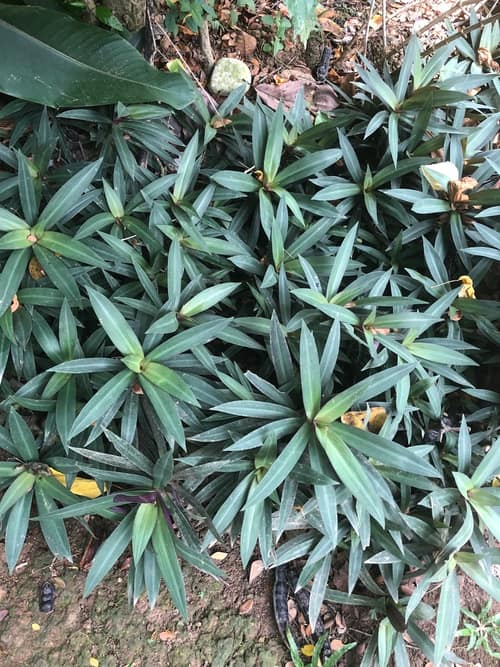
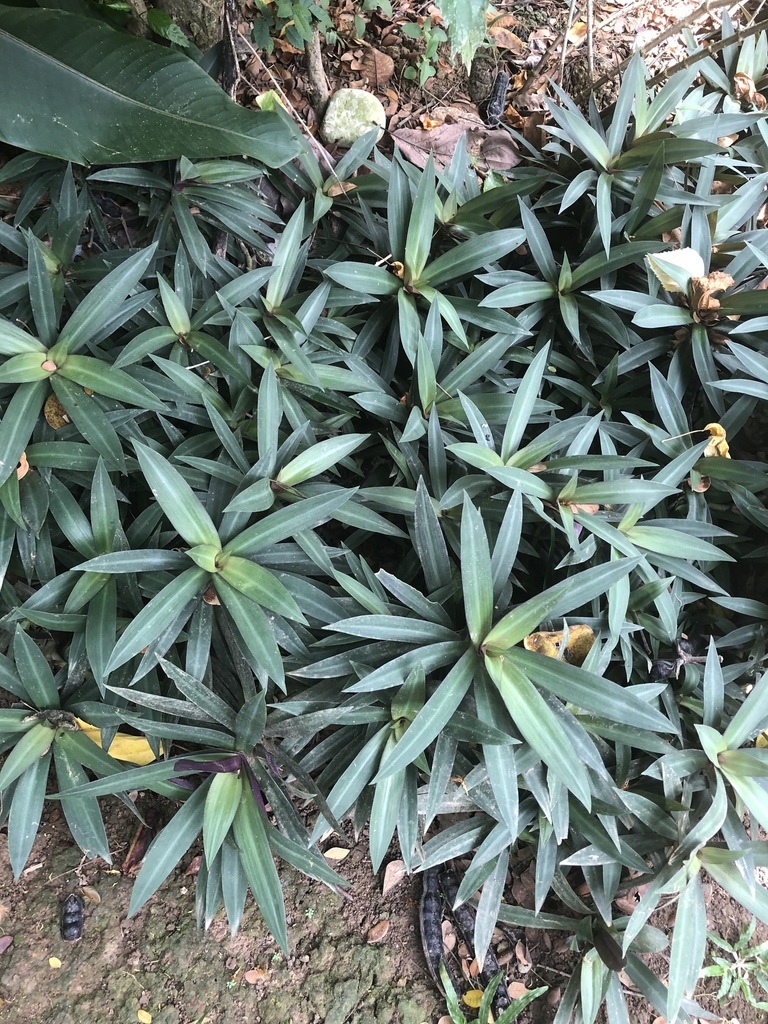
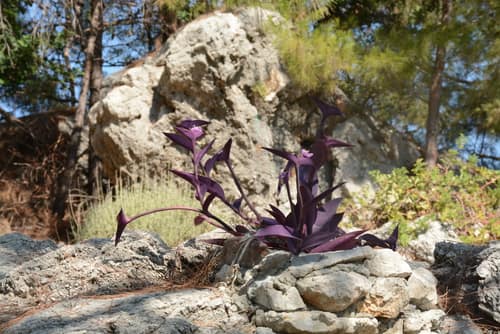
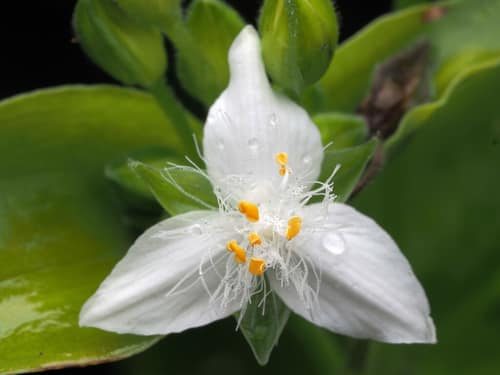
Moses-in-the-cradle forms dense clumps of upright, sword-shaped leaves featuring olive-green tops and vivid royal-purple undersides. Small, delicate white flowers with three petals cluster inside boat-shaped purple leaf bracts tucked close to the main stem, inspiring its nautical and biblical common names. Native to the rocky woods of Central America, it spreads readily through underground rhizomes and seeds, thriving as both a popular houseplant and a fast-growing outdoor groundcover in frost-free climates.
Sap contains calcium oxalate crystals causing skin rash and stomach distress in pets; wear gloves when handling.
Why it is dangerous
Sap contains calcium oxalate crystals and watery irritants that cause intense skin rash, drooling, mouth pain, and digestive distress upon contact or ingestion.
How to recognize a risky encounter
Recognizable by thick, fleshy rosette growth with glossy dark green leaf tops and striking deep purple undersides.
What to do
Wear protective gloves when trimming or propagating, and keep plants situated far out of reach of domestic pets.
Responsible observation
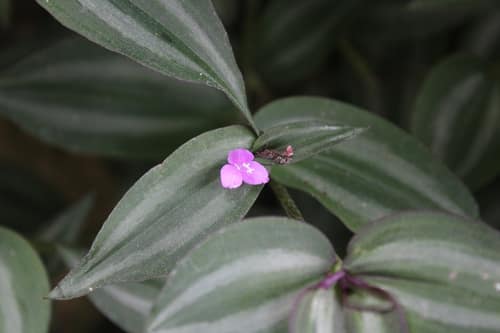
Flower Spotting: Peer into the leaf axils along the stem base to spot the tiny white three-petaled blossoms nestled within boat-like bracts.
Safe Gardening: Wear gloves and long sleeves when pruning or dividing stems, as broken tissues leak irritating sap.
Pet Protection: Place potted specimens on high shelves or hanging baskets well out of reach of curious dogs and cats.