
Plant
Virginia Dayflower
Commelina virginicaAlso known as Wetland Dayflower
Virginia dayflower thrives in damp woods, stream margins, and swampy thickets across the eastern United States. Each striking sky-blue blossom opens at dawn and liquifies into a dark jellied mass by afternoon, giving the bloom a single fleeting morning to attract pollinators. Reddish hairs ringing the top of the leaf sheaths and thick underground rhizomes distinguish this native perennial from its close relatives.
PerennialWetlandBlue Flowers
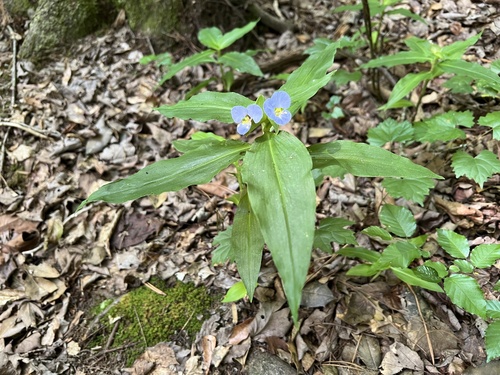
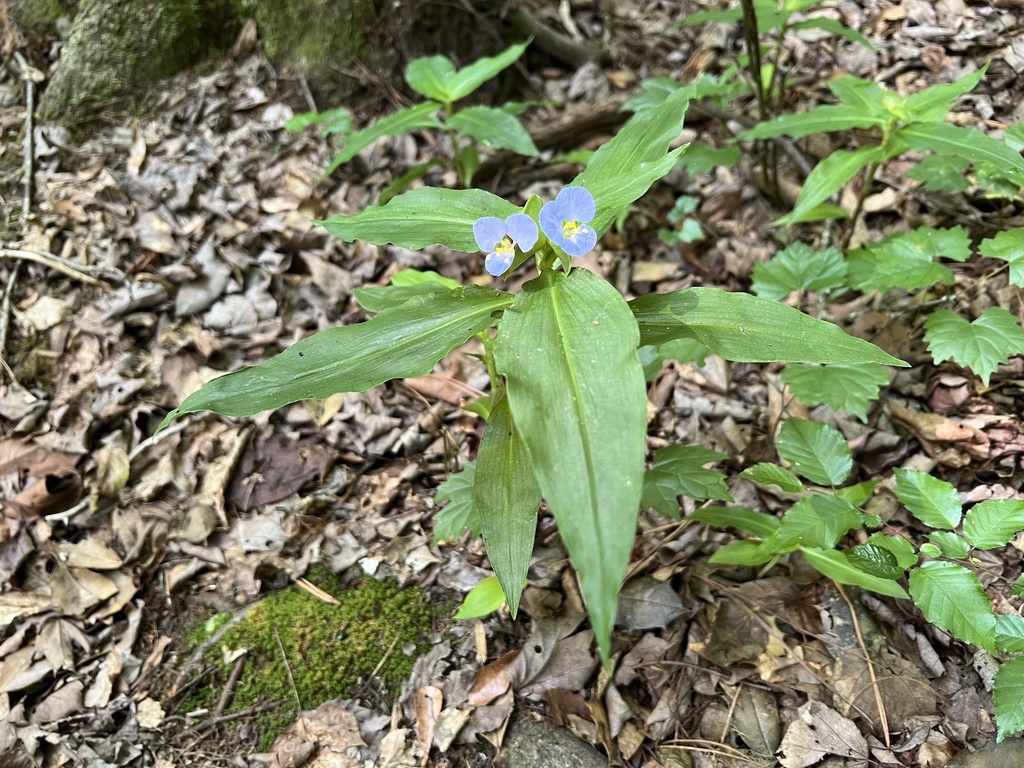
—observations
—countries
—peak records
Not EvaluatedConservation statusIUCN Red List categoriesLCNTVUENCREWEXNot Evaluated — not placed on the risk ladderRed List categories, explained →
Diet & preyPhotosynthetic
Predators
- White-tailed Deer
- Caterpillars
- Grasshoppers
ThreatsHabitat Degradation, Invasive Plant Competition
HabitatsWetland Edges, Floodplains, Swampy Woods, Stream Banks
Life spanPerennial
Classification
- FamilyCommelinaceae
- SpeciesCommelina virginica
Range data is not available yet.
Interaction riskLow
- Low
- Moderate
- High
- Very high
- Why interaction risk is low
- Safe to observe at a normal distance.
Responsible observation
- Timing: Look for open blooms early in the morning, as individual flowers melt by mid-afternoon.
- Identification: Examine the leaf sheaths for reddish hairs near the stem junction to confirm identity.
- Habitat: Search along damp woodland borders, ditches, and shady floodplain trail edges.
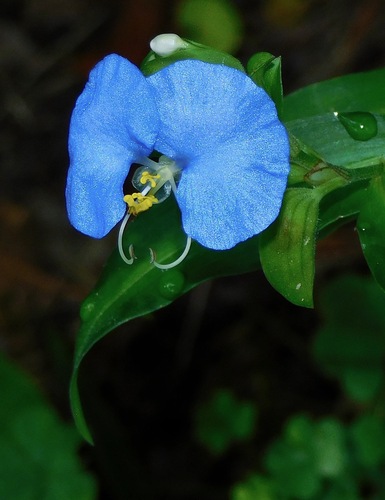
Close Relative (c) Michael J. Papay, some rights reserved (CC BY), uploaded by Michael J. Papay · cc-by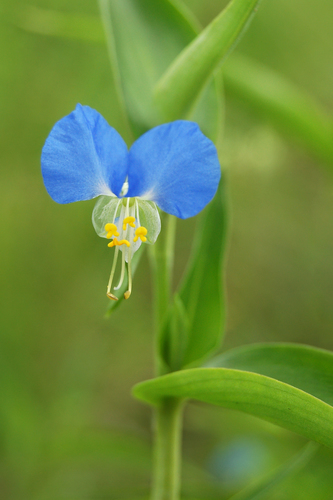
Introduced Relative (c) NotAnonymous, some rights reserved (CC BY-SA) · cc-by-sa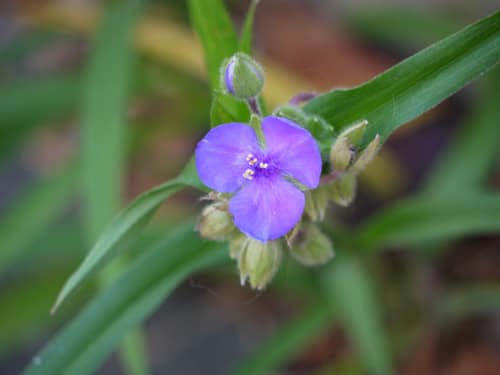
Family Relative (c) Alexis Tinker-Tsavalas, some rights reserved (CC BY), uploaded by Alexis Tinker-Tsavalas · cc-by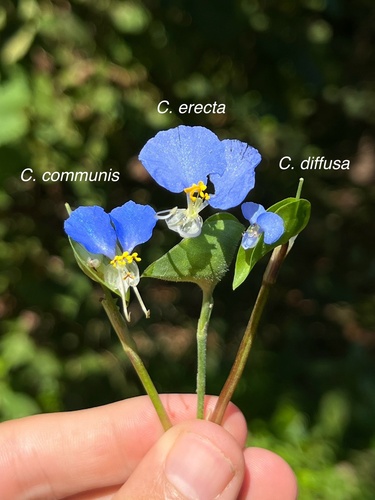
Close Relative (c) Nathan Aaron, some rights reserved (CC BY) · cc-by
Help improve the field guideSomething wrong?
Checking your Fauna account…Report a name, category, or profile issue for review.