
Plant
Utah Juniper
Juniperus osteospermaAlso known as Desert Cedar, Utah Cedar
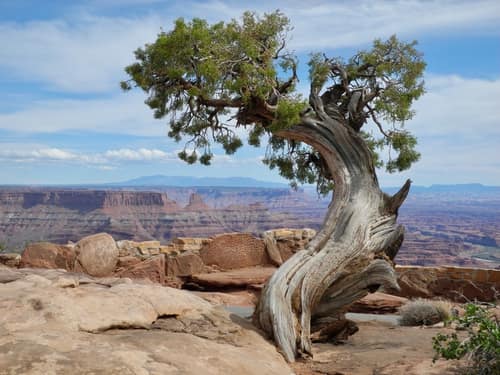
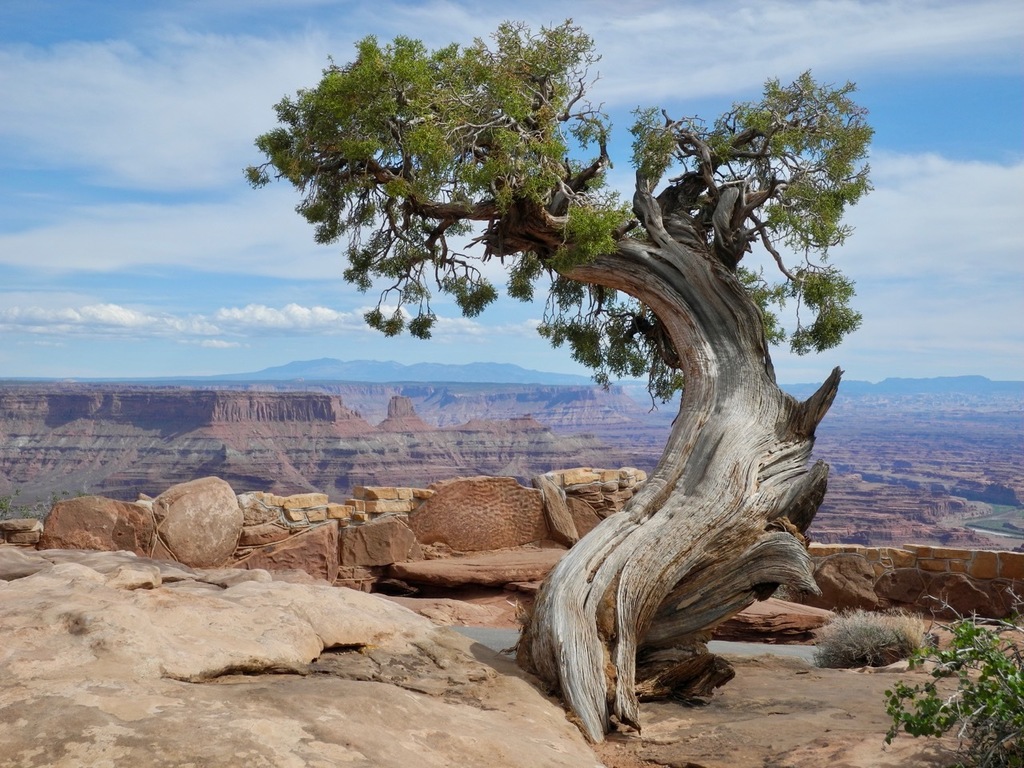
Utah junipers shape the dry, rugged landscapes of the American Great Basin and Colorado Plateau, anchoring arid woodlands where few other trees survive. Their stout, twisted trunks and fibrous shredding bark shelter desert wildlife, while female trees produce berry-like cones covered in a silvery white bloom. Long-lived and drought-resistant, individual trees can endure for over six centuries by shedding branches during extreme dry spells.
EvergreenArid-AdaptedConifer
—observations
—countries
—peak records
Least ConcernConservation statusIUCN Red List categoriesLCNTVUENCREWEXLeast ConcernRed List categories, explained →
Diet & preySunlight, Water, Soil Minerals
Predators
- Mule Deer
- Townsend's Solitaire
- Pinyon Jay
ThreatsSevere wildfire, prolonged drought, invasive grasses
HabitatsDesert scrub, rocky slopes, pinyon-juniper woodlands
Life span300–600+ years
Classification
- FamilyCupressaceae
- SpeciesJuniperus osteosperma
Range data is not available yet.
Interaction riskLow
- Low
- Moderate
- High
- Very high
- Why interaction risk is low
- Wild cones and berries have toxic look-alikes; never eat wild plant parts based on app identification alone.
Responsible observation
- Observation: Look for the distinctive white wax blooming over the hard blue-green cones on female trees.
- Identification: Check for shreddy, ash-gray bark and scale-like leaves arranged in tight, rounded sprays.
- Ecology: Notice how the surrounding soil often hosts a biological crust crucial for moisture retention.
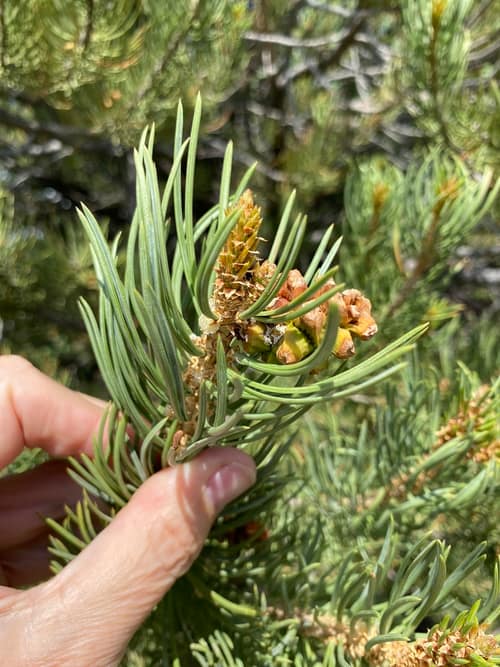
Frequent Companion no rights reserved · cc0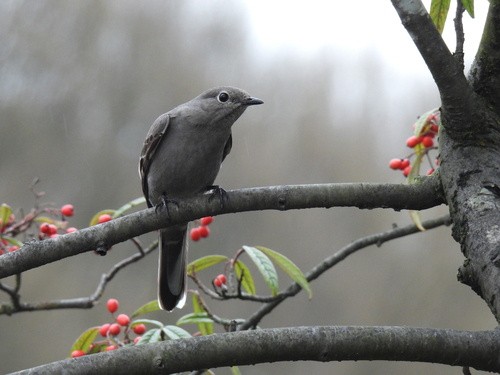
Seed Disperser (c) Pete Lypkie, some rights reserved (CC BY) · cc-by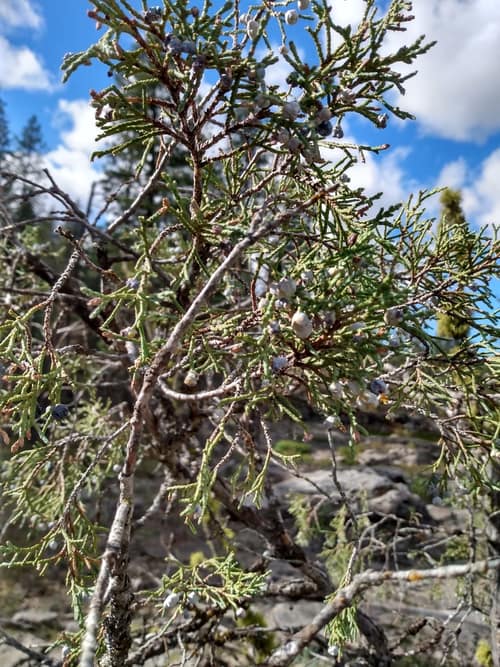
Close Relative (c) John Powers, some rights reserved (CC BY) · cc-by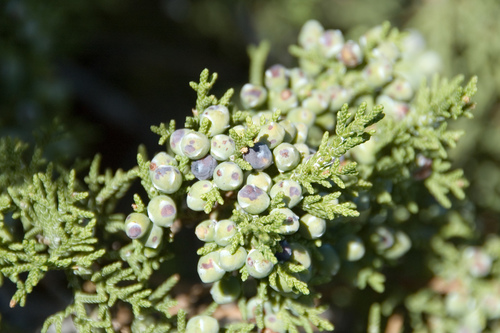
Close Relative (c) Paul Asman and Jill Lenoble, some rights reserved (CC BY) · cc-by
Help improve the field guideSomething wrong?
Checking your Fauna account…Report a name, category, or profile issue for review.