
Plant · GBIF taxon 2684184
Sandarac Tree
Tetraclinis articulataAlso known as Barbary Thuja, Sandarac, Alerce, Gharghar
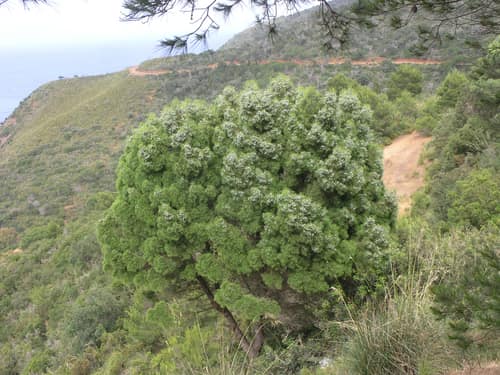
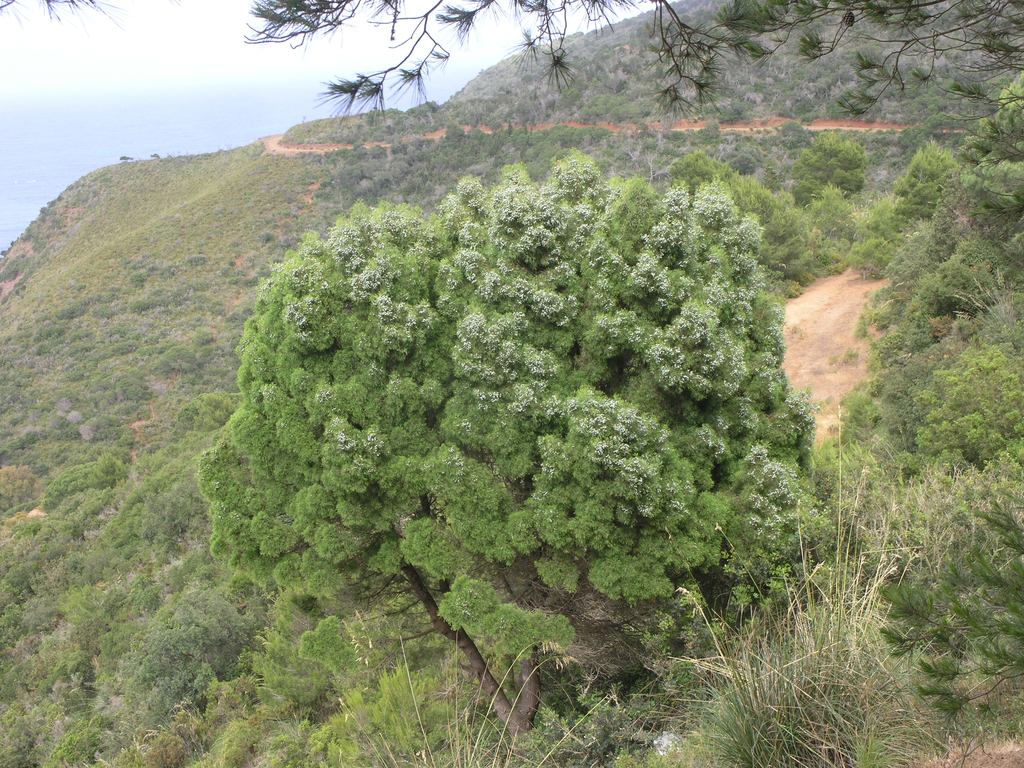
Sandarac trees thrive in arid, rocky limestone hillsides across the western Mediterranean where few other conifers can survive. Resilient to drought and fire, they sprout vigorously from their swollen base stump after severe burning or cutting. Their aromatic resin, harvested for millennia as sandarac varnish, produces a warm, incense-like scent when crushed or exposed to sun.
ConiferEvergreenAromatic
 1 / 7
1 / 7—observations
—countries
—peak records
Least ConcernConservation statusIUCN Red List categoriesLCNTVUENCREWEXLeast ConcernRed List categories, explained →
Diet & prey
- Autotrophic (Photosynthetic)
Predators
- Goats
- Bark beetles
ThreatsHabitat fragmentation, overgrazing, wildfires
HabitatsArid scrubland, rocky limestone slopes, coastal hills
Life span100–400 years
Size / weightNot available
Classification
- FamilyCupressaceae
- SpeciesTetraclinis articulata
Range data is not available yet.
Interaction riskLow
- Low
- Moderate
- High
- Very high
- Why interaction risk is low
- Safe to observe at a normal distance.
- What to notice
- Recognizable by small, cypress-like growth with distinct jointed foliage and four-valved woody cones.
- Support conservation
- Stay on designated trails and avoid trampling young saplings in fragile coastal scrublands.
Responsible observation
- Observation: Look for jointed, flattened branchlets arranged in four-part whorls.
- Fragrance: Crush fallen foliage to smell the sweet, resinous aroma.
- Etiquette: Avoid breaking branches or collecting resin from living trees.
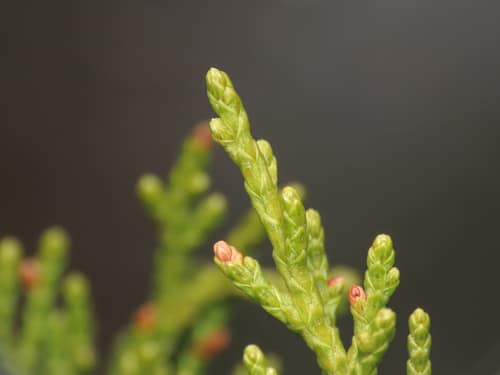
Frequent Companion (c) Emanuele Santarelli, some rights reserved (CC BY-SA), uploaded by Emanuele Santarelli · cc-by-sa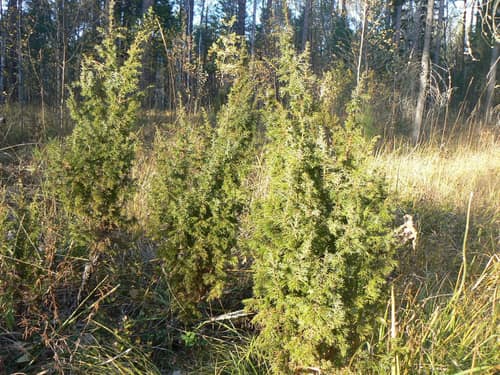
Cypress Relative (c) Andrew Bazdyrev, some rights reserved (CC BY), uploaded by Andrew Bazdyrev · cc-by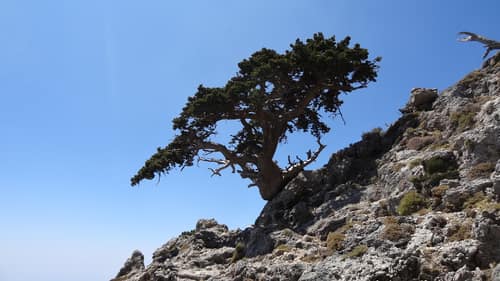
Family Relative (c) Rockhopper2, some rights reserved (CC BY-SA) · cc-by-sa
Help improve the field guideSomething wrong?
Checking your Fauna account…Report a name, category, or profile issue for review.