
Plant
Hinoki Cypress
Chamaecyparis obtusaAlso known as Japanese False Cypress, Hinoki Falsecypress, Japanese Cypress
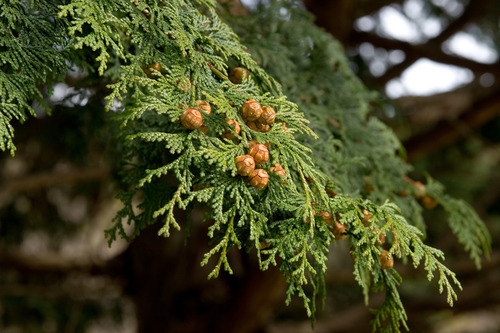
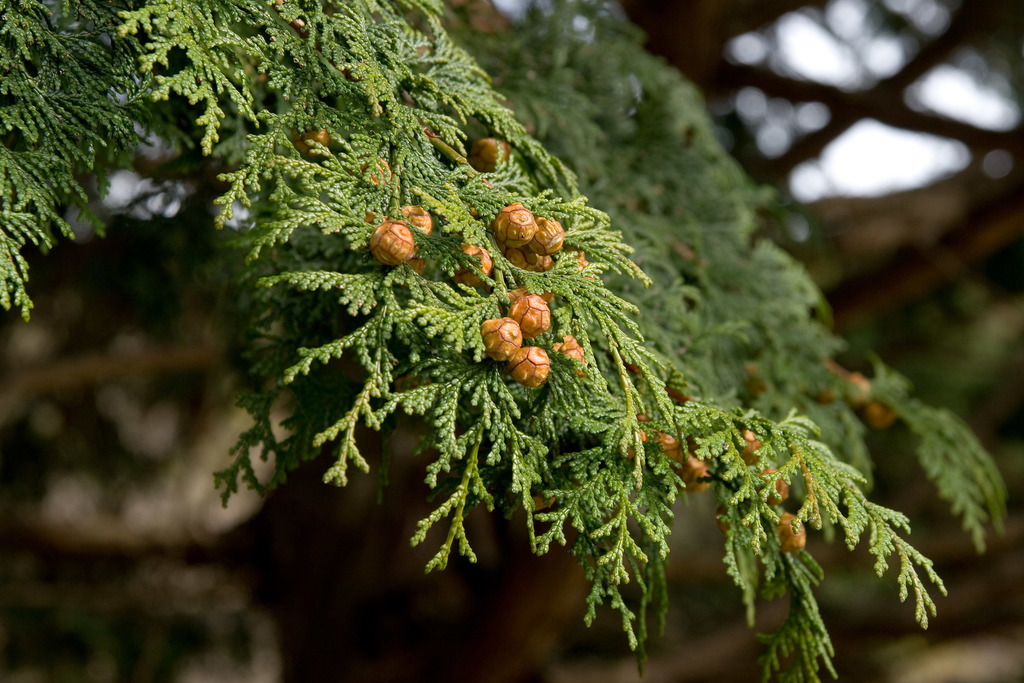
Hinoki cypress is a stately evergreen conifer celebrated for its rich aromatic heartwood and graceful fan-like foliage sprays. Wild trees develop dense columnar or conical crowns and fibrous reddish-brown bark that peels in vertical strips. Its decay-resistant wood has served as the revered structural foundation for centuries-old Japanese temples and shrines, including the Grand Shrine of Ise.
EvergreenConiferAromatic
—observations
—countries
—peak records
Near ThreatenedConservation statusIUCN Red List categoriesLCNTVUENCREWEXNear ThreatenedRed List categories, explained →
Diet & preyAutotrophic (photosynthetic)
Predators
- Sika deer (seedlings)
- Bark beetles
ThreatsHistorical overlogging, habitat fragmentation, and commercial plantation replacement
HabitatsMontane temperate forests, humid mountain slopes, and sheltered river valleys
Life span500–1,000+ years
Classification
- OrderPinales
- FamilyCupressaceae
- GenusChamaecyparis
- SpeciesChamaecyparis obtusa
Range data is not available yet.
Interaction riskLow
- Low
- Moderate
- High
- Very high
- Why interaction risk is low
- Safe to observe at a normal distance.
- What to notice
- Look for tall forest conifers with frond-like, drooping sprays of scale leaves and rounded cones measuring 8 to 12 mm across.
- Support conservation
- Stay on designated trails to avoid trampling delicate seedling beds and compacting soil around mature root zones.
Responsible observation
- Foliage Check: Look for blunt, scale-like leaves with distinctive Y-shaped white wax bands beneath.
- Bark Texture: Observe the stringy, reddish bark peeling in vertical ribbons without touching or peeling it.
- Aroma: Crush a dropped leaf between fingers to catch the distinct lemony cedar scent.
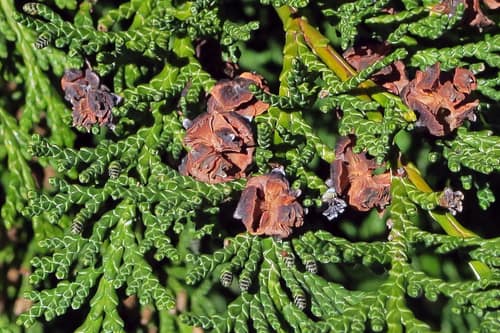
Same Genus (c) John Rusk, some rights reserved (CC BY) · cc-by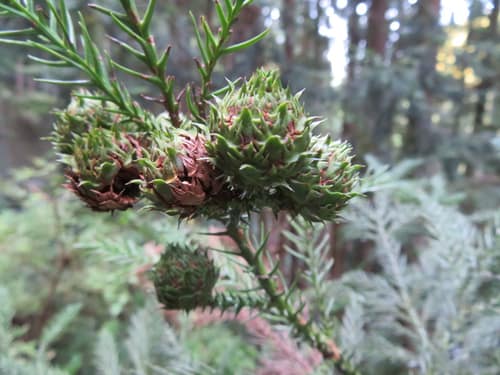
Frequent Companion (c) Marco Mussita, some rights reserved (CC BY), uploaded by Marco Mussita · cc-by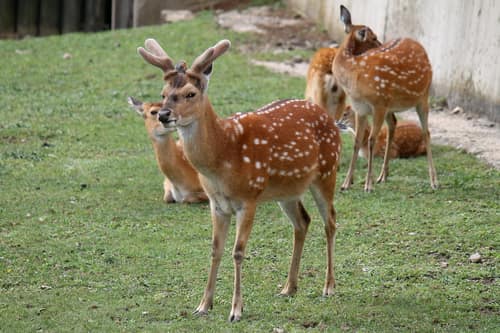
Herbivore "Vietnamese Sika Deer" by elPadawan is licensed under CC BY-SA 2.0. To view a copy of this license, visit https://creativecommons.org/licenses/by-sa/2.0/. · cc-by-sa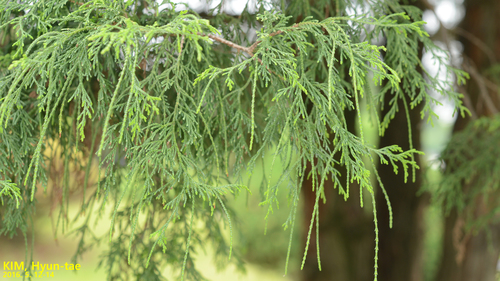
Close Relative (c) Kim, Hyun-tae, some rights reserved (CC BY), uploaded by Kim, Hyun-tae · cc-by
Help improve the field guideSomething wrong?
Checking your Fauna account…Report a name, category, or profile issue for review.