
Fungus
Weathered Earthstar
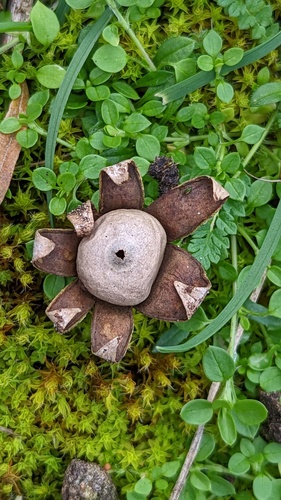
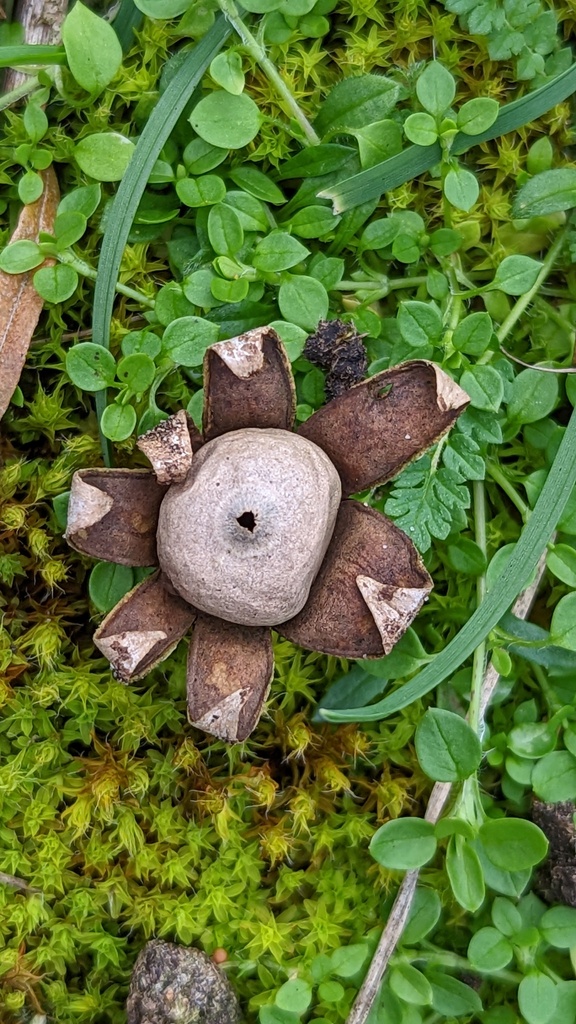
Geastrum corollinumWeathered earthstars are saprotrophic fungi whose outer peridium splits into star-like rays that curve backwards to elevate the central spore sac off the forest floor. These rays are hygroscopic, curling inward over the spore sac during dry conditions and opening outward when rehydrated to facilitate wind and raindrop spore dispersal. Typically emerging in late summer and autumn among leaf litter or sandy soil, their dried, papery fruiting bodies can persist for months after the spores have dispersed.
FungusSpore-producingWoodland
—observations
—countries
—peak records
Not EvaluatedConservation statusIUCN Red List categoriesLCNTVUENCREWEXNot Evaluated — not placed on the risk ladderRed List categories, explained →
Diet & preySaprotrophic (decaying plant matter and leaf litter)
Predators
- Slugs
- Fungus gnats
- Small rodents
ThreatsHabitat clearance and ground disturbance
HabitatsDeciduous and mixed woodlands, scrublands, and open sandy soils
Life spanFruitbody lasts several months; mycelium is perennial
Classification
- FamilyGeastraceae
- SpeciesGeastrum corollinum
Range data is not available yet.
Interaction riskLow
- Low
- Moderate
- High
- Very high
- Why interaction risk is low
- Many edible mushrooms have toxic look-alikes; never eat wild fungi based on app identification alone.
Responsible observation
- Look at ground level: Search among thick leaf litter and needle duff around the bases of mature trees.
- Observe moisture reactions: Watch how the outer rays flex open in wet weather and curl shut when dry.
- Leave in place: Allow the fruiting body to remain intact so passing raindrops can pump out remaining spores.
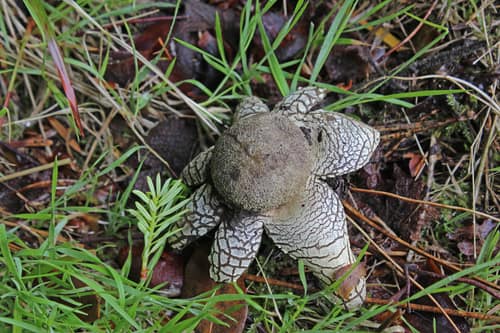
Look-alike (c) Davide Puddu, some rights reserved (CC BY), uploaded by Davide Puddu · cc-by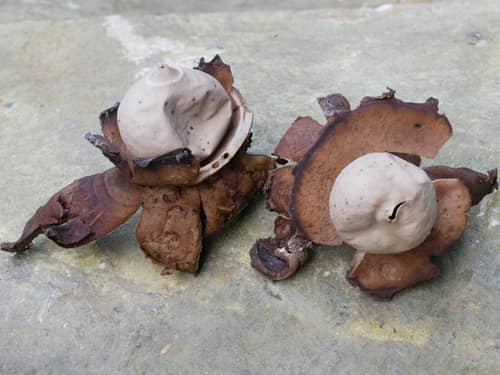
Close Relative no rights reserved, uploaded by Garrett Taylor · cc0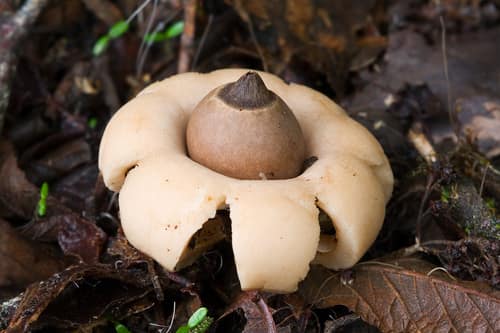
Close Relative (c) JJ Harrison, some rights reserved (CC BY-SA) · cc-by-sa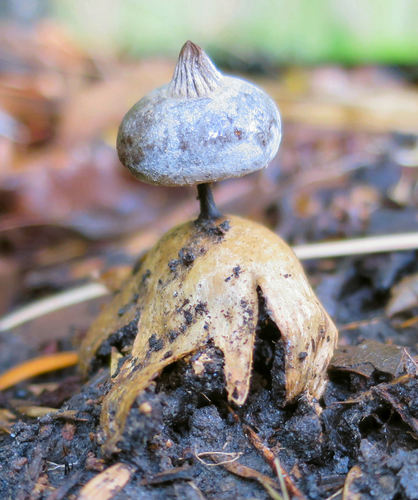
Close Relative (c) Alice Shanks, some rights reserved (CC BY) · cc-by
Help improve the field guideSomething wrong?
Checking your Fauna account…Report a name, category, or profile issue for review.