
Fungus
Hairy Curtain Crust
Stereum hirsutumAlso known as False Turkey Tail, Hairy Stereum, Curtain Crust
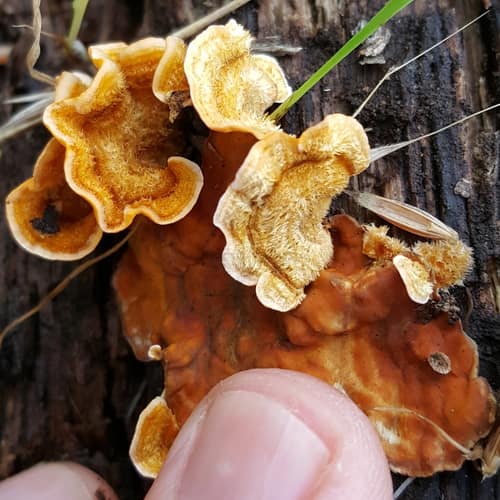
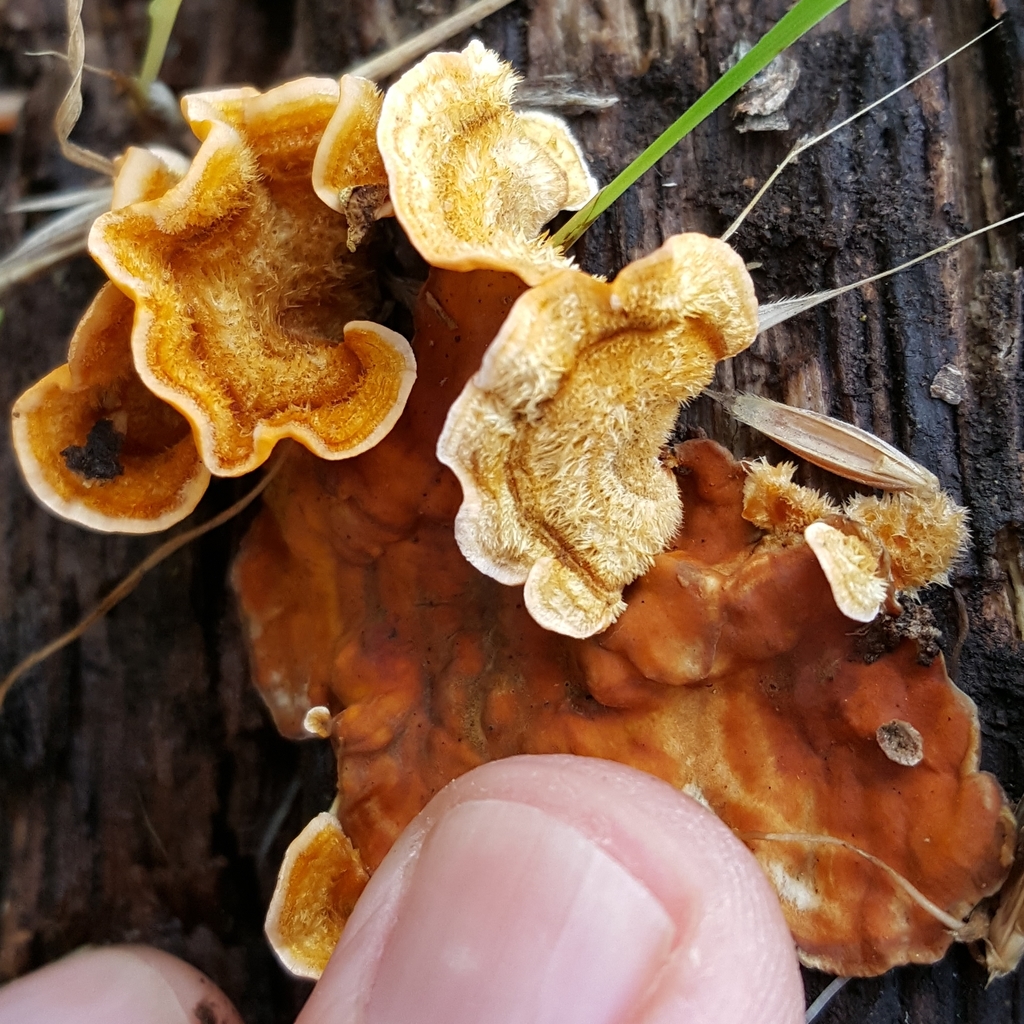
Hairy curtain crust forms wavy, tiered clusters of leathery brackets on dead hardwood and fallen logs throughout temperate woodlands. The upper surface features dense, velvety hairs arranged in concentric bands of cream, bright orange, and dull grey, while the lower surface is completely smooth and poreless. By breaking down tough lignin and cellulose, this white-rot agent accelerates wood decomposition and recycles crucial nutrients back into the forest soil.
Wood-DecayingBracket FungusForestry
—observations
—countries
—peak records
Not EvaluatedConservation statusIUCN Red List categoriesLCNTVUENCREWEXNot Evaluated — not placed on the risk ladderRed List categories, explained →
Diet & preyDecaying hardwood, Dead branches, Lignin
Predators
- Fungus beetles
- Slugs
- Springtails
ThreatsIntensive forest management and widespread deadwood clearance
HabitatsDeciduous and mixed woodlands, forest edges, and fallen logs
Life span1–3 years (fruiting bodies often persist across seasons)
Classification
- OrderRussulales
- FamilyStereaceae
- GenusStereum
- SpeciesStereum hirsutum
Range data is not available yet.
Interaction riskLow
- Low
- Moderate
- High
- Very high
- Why interaction risk is low
- Many edible mushrooms have toxic look-alikes; never eat wild fungi based on app identification alone.
Responsible observation
- Inspect the Underside: Turn brackets over to confirm a smooth spore-bearing surface devoid of pores.
- Observe Seasonal Changes: Watch dry, dormant crusts revive and brighten following sustained rainfall.
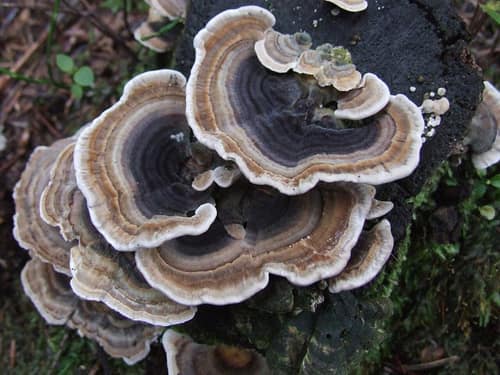
Look-alike Jerzy Opioła / CC BY-SA 3.0 · cc-by-sa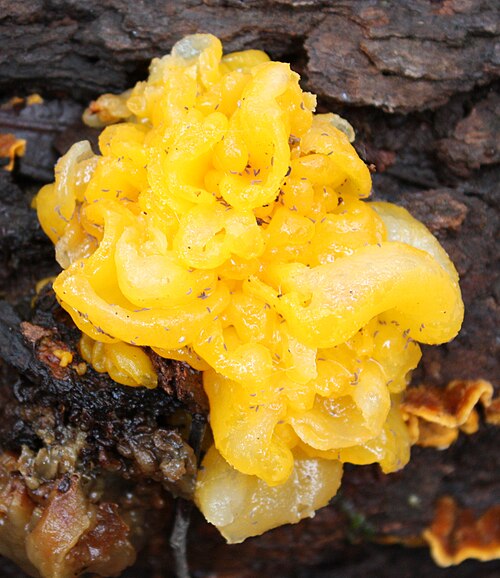
Parasite Hesperian / CC BY-SA 3.0 · cc-by-sa Image unavailable
Close Relative 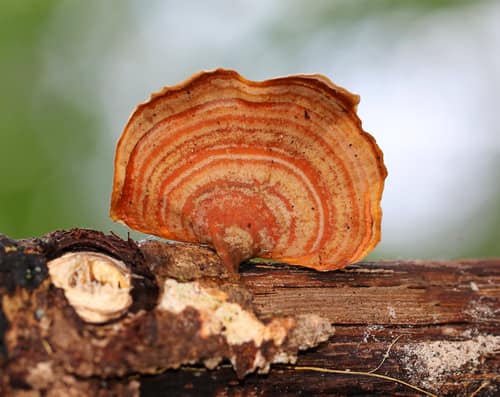
Close Relative (c) Christine Young, some rights reserved (CC BY), uploaded by Christine Young · cc-by
Help improve the field guideSomething wrong?
Checking your Fauna account…Report a name, category, or profile issue for review.