
Fungus
Bulbous Honey Fungus
Armillaria gallicaAlso known as Honey Mushroom, Bulbous Honey Mushroom, Yellow Honey Fungus
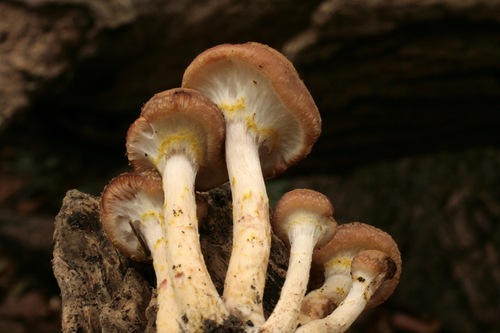
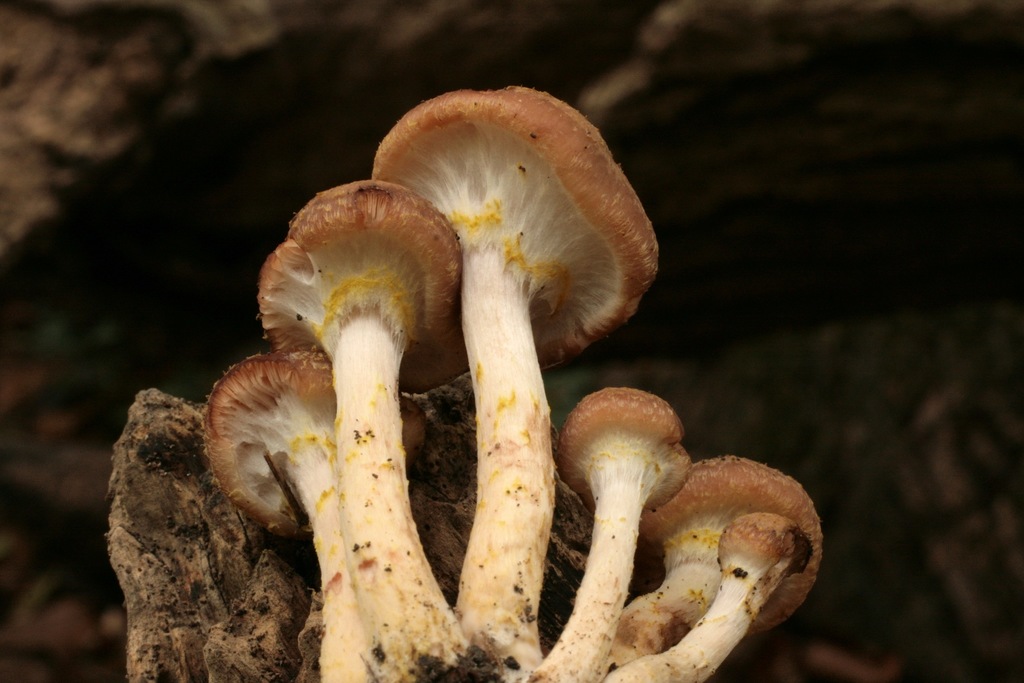
Bulbous honey fungi emerge in autumn, sending up yellowish caps adorned with fine scales around decaying hardwood stumps and tree roots. Beneath the forest floor, vast networks of black, shoestring-like cords called rhizomorphs scavenge for dead wood and spread silently through the soil. Certain subterranean threads produce a faint, bioluminescent glow known as foxfire during dark woodland nights.
Wood-DecayingBioluminescentFungus
—observations
—countries
—peak records
Not EvaluatedConservation statusIUCN Red List categoriesLCNTVUENCREWEXNot Evaluated — not placed on the risk ladderRed List categories, explained →
Diet & preyDecomposer and opportunistic parasite
Predators
- Fungus gnats
- Slugs
- Forest beetles
ThreatsDeforestation and clear-cutting
HabitatsTemperate hardwood forests and woodlands
Life spanIndefinite mycelium (thousands of years); mushrooms last 1–2 weeks
Classification
- OrderAgaricales
- FamilyPhysalacriaceae
- GenusArmillaria
- SpeciesArmillaria gallica
Range data is not available yet.
Interaction riskLow
- Low
- Moderate
- High
- Very high
- Why interaction risk is low
- Many edible mushrooms have toxic look-alikes; never eat wild fungi based on app identification alone.
Responsible observation
- Observe Stem Base: Look for a swollen or bulbous stem base covered in fine yellow scales.
- Check for Rhizomorphs: Peel away bark near the mushroom base to find black, shoestring-like cords.
- Search in Autumn: Look around hardwood stumps and decaying logs after mid-autumn rains.
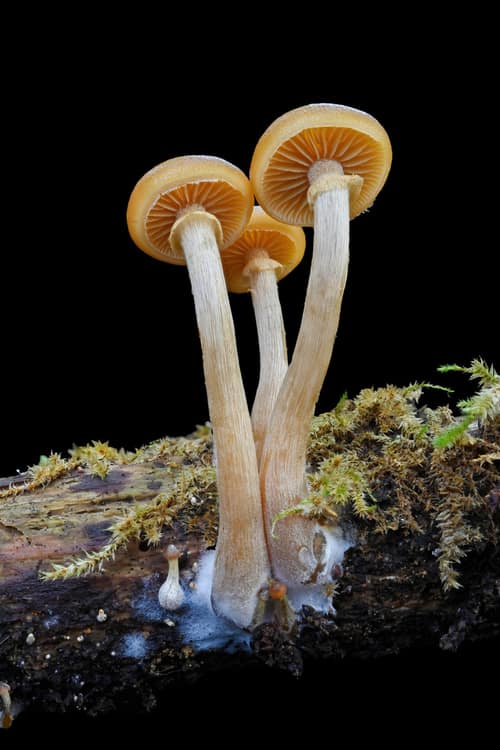
Toxic Look-Alike (c) Alan Rockefeller, some rights reserved (CC BY), uploaded by Alan Rockefeller · cc-by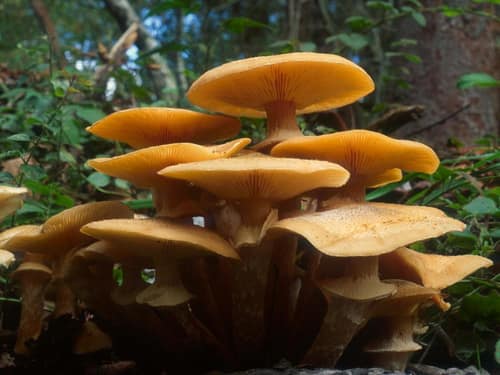
Close Relative (c) Nathan Wilson, some rights reserved (CC BY-SA) · cc-by-sa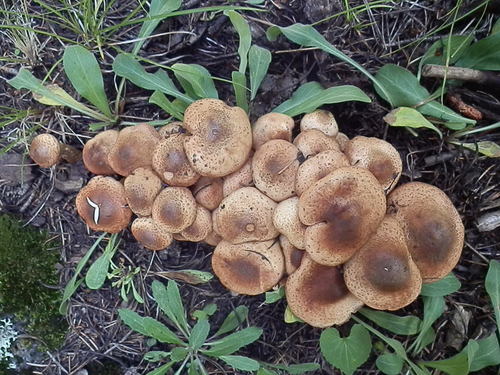
Close Relative (c) pinonbistro, some rights reserved (CC BY-SA), uploaded by pinonbistro · cc-by-sa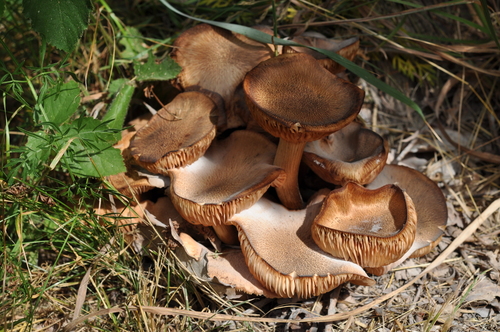
Close Relative (c) Jose Castro, some rights reserved (CC BY) · cc-by
Keep collecting in Fauna
Found in Collections
Species set Pro
Fungi Forager
Bulbous Honey Fungus is found in this collection. Identify it in Fauna to fill this slot and continue your progress.
Unlock to track progress
Help improve the field guideSomething wrong?
Checking your Fauna account…Report a name, category, or profile issue for review.