
Fungus
Leucocoprinus Gongylophorus
Leucoagaricus gongylophorusAlso known as Leafcutter Ant Fungus, Ant Garden Fungus
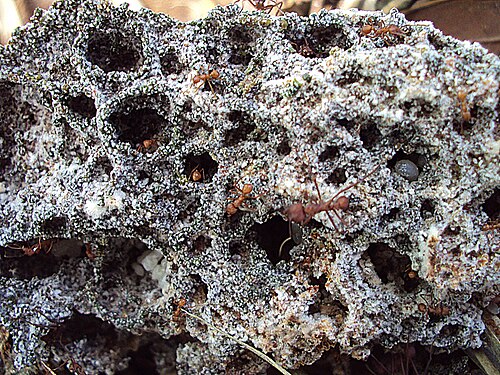
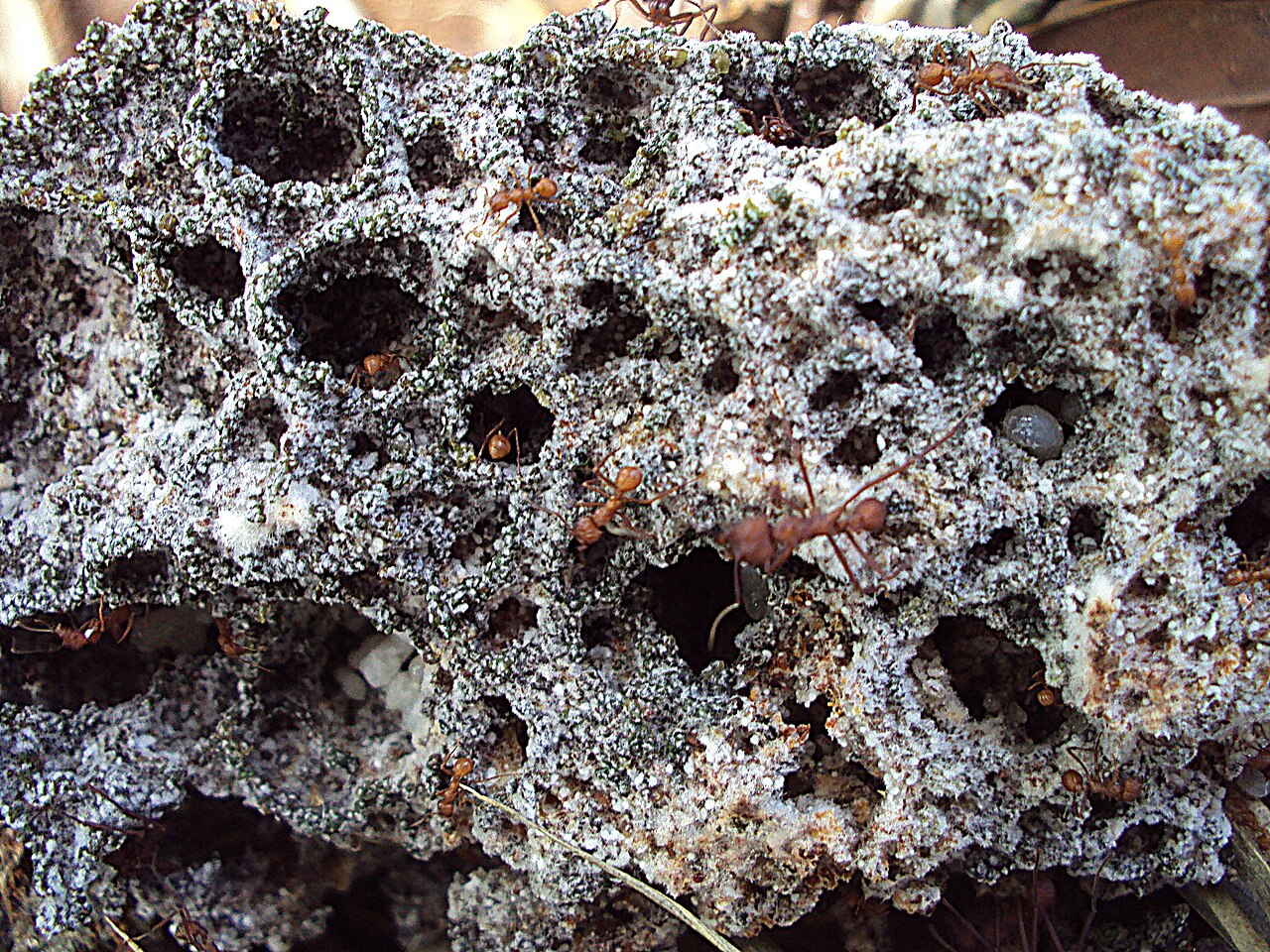
Leafcutter ant colonies sustain this specialized cultivar inside deep subterranean chambers, constantly grooming its mycelium and weeding out microbial pathogens. The fungus digests freshly masticated leaf tissue provided by the insects and returns vital nutrition via gongylidia, nutrient-dense hyphal tips loaded with lipids and proteins. Above-ground mushrooms seldom appear unless the host ant colony dies or abandons the nest, freeing the mycelium to fruit into tall, pale agarics.
FungusMutualisticSubterranean
—observations
—countries
—peak records
Not EvaluatedConservation statusIUCN Red List categoriesLCNTVUENCREWEXNot Evaluated — not placed on the risk ladderRed List categories, explained →
Diet & preyMasticated tree leaves, Foliar sap, Ant glandular secretions
Predators
- Escovopsis microfungi
ThreatsAnt colony mortality, pesticide runoff, habitat fragmentation
HabitatsUnderground leafcutter ant chambers in tropical and subtropical forests
Life span10–20+ years (maintained clonally by ant colonies)
Classification
- FamilyAgaricaceae
- SpeciesLeucoagaricus gongylophorus
Range data is not available yet.
Interaction riskLow
- Low
- Moderate
- High
- Very high
- Why interaction risk is low
- Many edible mushrooms have toxic look-alikes; never eat wild fungi based on app identification alone.
Responsible observation
- Waste Pile Clues: Examine the discard mounds outside active leafcutter nests to spot exhausted garden pellets.
- Fruiting Searches: Look for emergent mushrooms sprouting directly above collapsed or dead ant colonies after heavy rains.
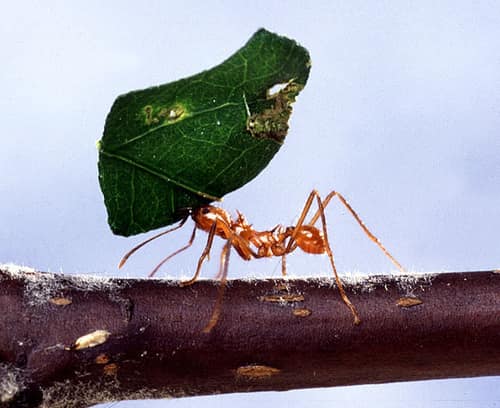
Symbiont (c) Biosedbergh, some rights reserved (CC BY) · cc-by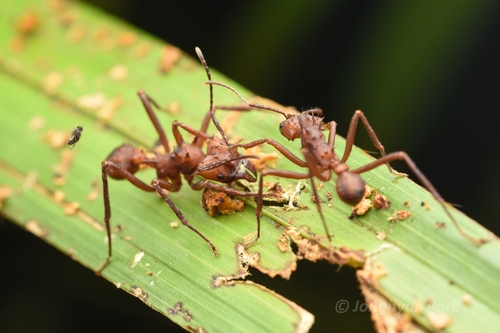
Symbiont (c) Jonghyun Park, some rights reserved (CC BY), uploaded by Jonghyun Park · cc-by Image unavailable
Parasite 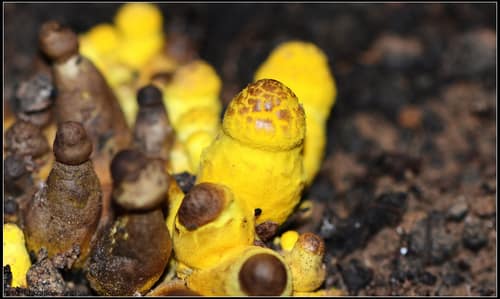
Close Relative (c) Zinogre, some rights reserved (CC BY-SA) · cc-by-sa
Help improve the field guideSomething wrong?
Checking your Fauna account…Report a name, category, or profile issue for review.