
Fungus
Chip Cherries
Leratiomyces ceresAlso known as Redlead Roundhead, Scarlet Roundhead
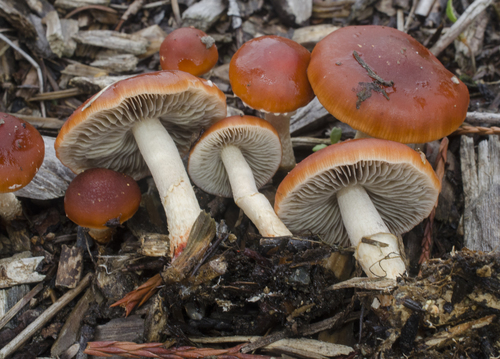
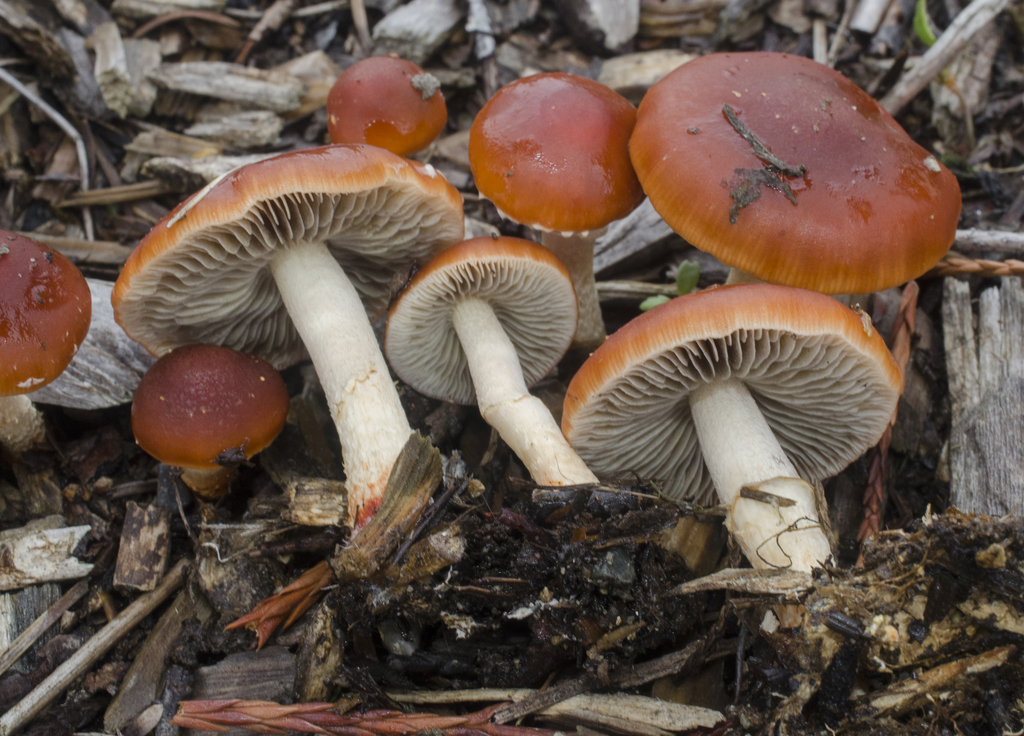
Chip cherries emerge in striking clusters across urban garden beds and parks, sporting vivid scarlet-to-orange caps that immediately draw the eye against dark wood mulch. As the fruiting body matures, its bright yellow-fringed gills darken to a deep purple-brown from an abundance of pigmented spores. This aggressive saprotroph thrives by breaking down wood chips and plant debris, spreading rapidly along transport corridors where landscaped mulch is widely used.
DecomposerMulch InhabitantColorful
—observations
—countries
—peak records
Not EvaluatedConservation statusIUCN Red List categoriesLCNTVUENCREWEXNot Evaluated — not placed on the risk ladderRed List categories, explained →
Diet & preyLignin, Cellulose, Decomposing wood
Predators
- Fungus gnat larvae
- Slugs
- Springtails
ThreatsFungicide treatments, substrate removal, and intense soil solarization
HabitatsLandscaped gardens, mulched parklands, and woodchip paths
Life spanFruiting bodies last 1–2 weeks; mycelial networks persist for years
Classification
- OrderAgaricales
- FamilyStrophariaceae
- GenusLeratiomyces
- SpeciesLeratiomyces ceres
Range data is not available yet.
Interaction riskHigh
- Low
- Moderate
- High
- Very high
- Why interaction risk is high
- Many edible mushrooms have toxic look-alikes; never eat wild fungi based on app identification alone.
- Why it is dangerous
- Contains unidentified gastrointestinal toxins that cause severe stomach cramping, nausea, and vomiting if swallowed.
- How to recognize a risky encounter
- Look for glossy, cherry-red to orange-red convex caps growing directly from woodchips with dark purple-brown mature gills.
- What to do
- Observe and photograph in place without ingesting, and wash hands thoroughly after handling any wild fungi.
Responsible observation
- Habitat Spotting: Search freshly mulched urban flowerbeds and park paths during cool, damp autumn weather.
- Photographing Gills: Tilt your camera low to capture the white partial veil remnants clinging to the cap margin.
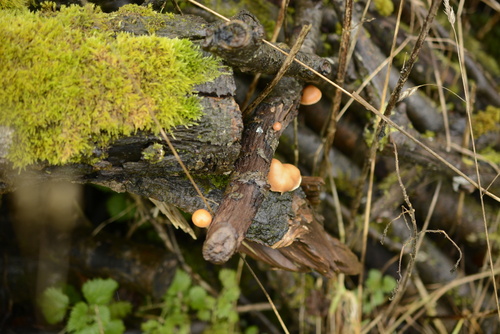
Habitat Companion (c) Cara Ennis, some rights reserved (CC BY) · cc-by Image unavailable
Close Relative 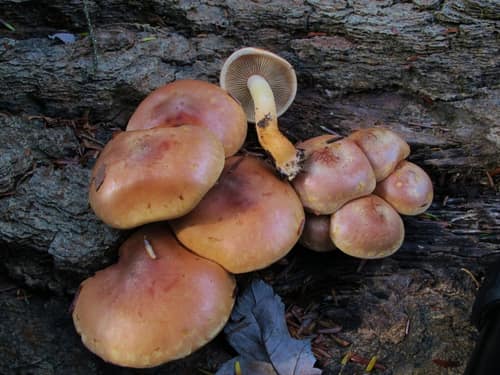
Same Family (c) mycowalt, some rights reserved (CC BY-SA), uploaded by mycowalt · cc-by-sa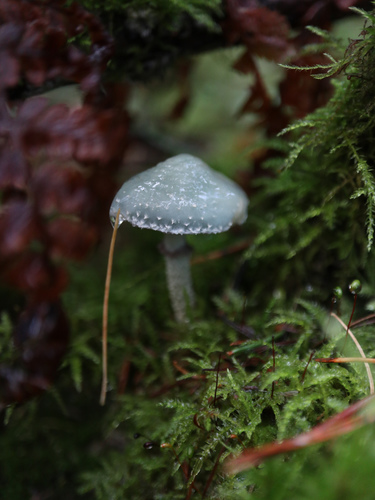
Same Family no rights reserved, uploaded by Tero Linjama · cc0
Help improve the field guideSomething wrong?
Checking your Fauna account…Report a name, category, or profile issue for review.