
Fungus · GBIF taxon 2530635
Termite Mushroom
Termitomyces heimiiAlso known as Heim's Termite Mushroom
Termitomyces heimii develops an intimate subterranean partnership with fungus-growing termites, which cultivate its mycelium within specialized comb structures inside their mounds. When heavy rains arrive, the subterranean fungus pushes prominent white mushrooms aboveground, anchored by a long root-like pseudorhiza that extends deep into the nest core. These ephemeral fruiting bodies release spores into the humid air before decaying rapidly to cycle nutrients back into the surrounding soil.
SymbioticFungusTropical
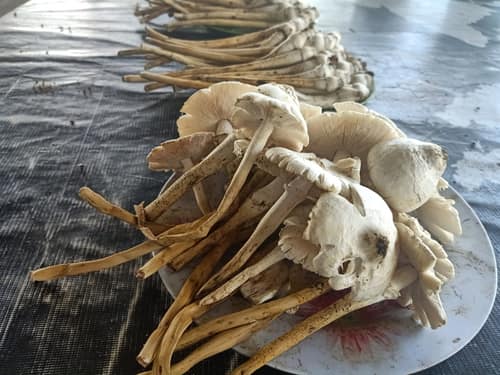
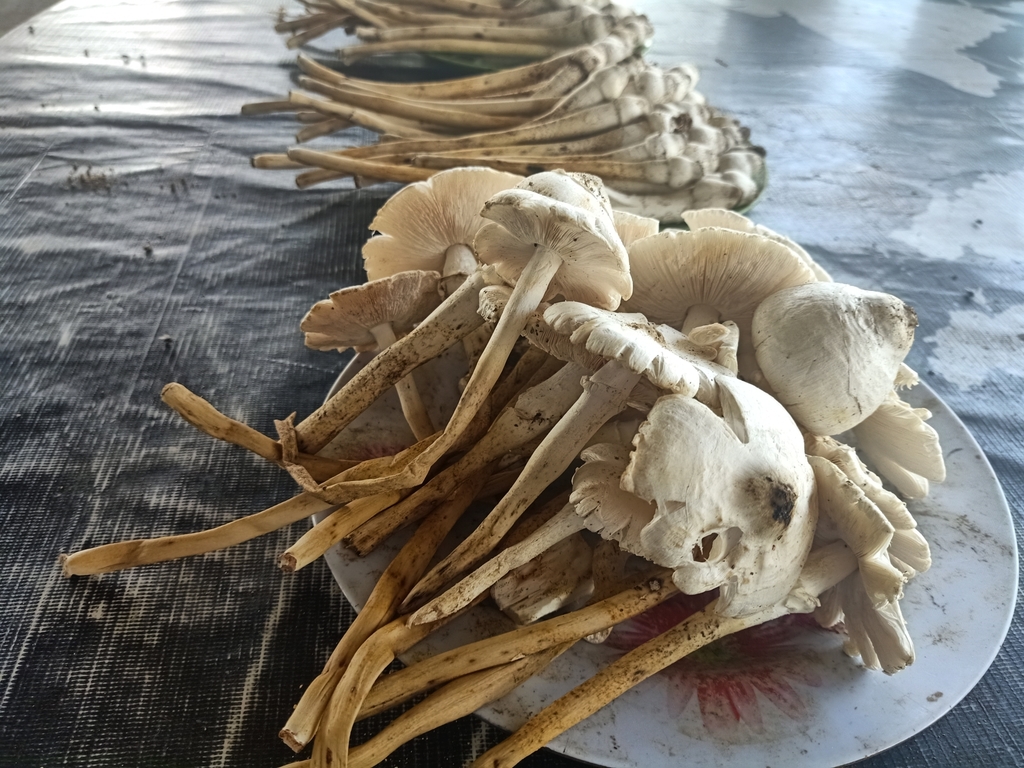
—observations
—countries
—peak records
Not EvaluatedConservation statusIUCN Red List categoriesLCNTVUENCREWEXNot Evaluated — not placed on the risk ladderRed List categories, explained →
Diet & prey
- Decomposer / Termite Symbiont
Predators
- Fungus-growing Termites
- Fungus Gnats
- Slugs
ThreatsHabitat destruction, soil disturbance, and pesticide overuse
HabitatsTropical forests, open grasslands, and termite mounds
Life spanColony persists for years; mushrooms last 2–4 days
Size / weightNot available
Classification
- FamilyLyophyllaceae
- SpeciesTermitomyces heimii
Range data is not available yet.
Interaction riskLow
- Low
- Moderate
- High
- Very high
- Why interaction risk is low
- Many edible mushrooms have toxic look-alikes; never eat wild fungi based on app identification alone.
Responsible observation
- Observe Near Mounds: Search around subterranean termite nests following heavy seasonal monsoon rains.
- Trace the Pseudorhiza: Look for the characteristic root-like tapstem extending deep into the soil base.
- Leave Intact: Allow mature fruiting bodies to spore naturally to preserve local colony health.
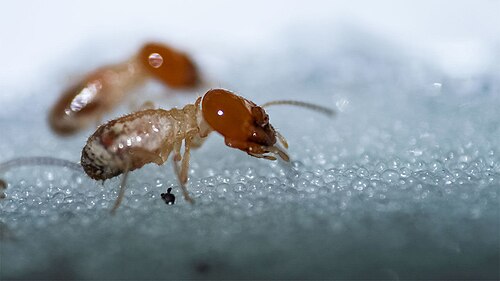
Symbiotic Host Nikhil More / CC BY-SA 4.0 · cc-by-sa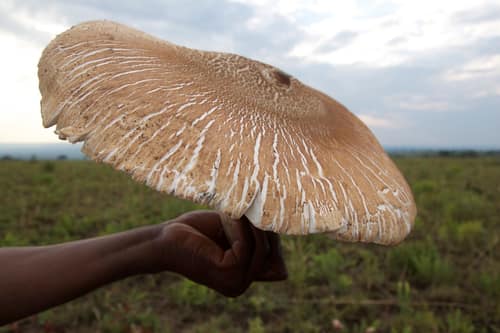
Close Relative Blimeo / CC BY-SA 4.0 · cc-by-sa
Help improve the field guideSomething wrong?
Checking your Fauna account…Report a name, category, or profile issue for review.