
Fungus · GBIF taxon 2530611
Termite Mushroom
Termitomyces schimperiAlso known as Omajowa, Schimper's Termite Mushroom, Ejiko
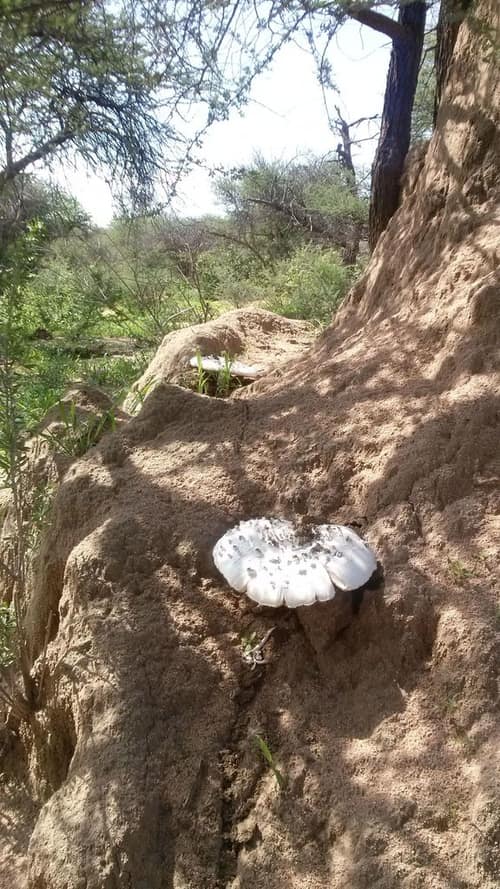
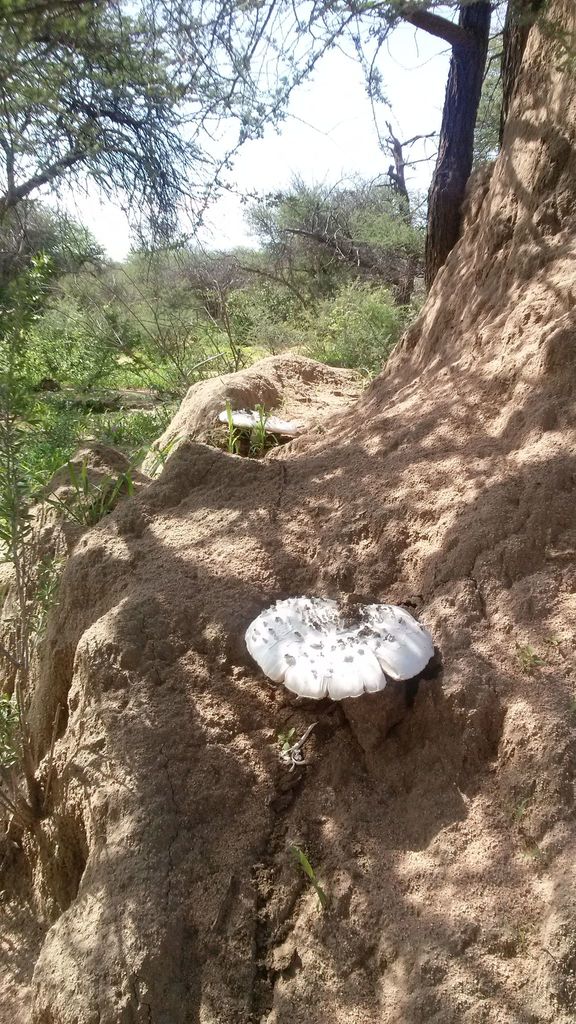
Forming an extraordinary mutualistic bond with subterranean termites, these massive fungi sprout directly from fungal gardens cultivated inside termite mounds. Worker termites collect plant material to feed the underground mycelium, which responds by producing colossal, thick-stemmed mushrooms after heavy soaking rains. The broad caps expand rapidly across African savannas, providing a fleeting nutrient source for local insects and wildlife.
FungusSymbioticTropical
—observations
—countries
—peak records
Not EvaluatedConservation statusIUCN Red List categoriesLCNTVUENCREWEXNot Evaluated — not placed on the risk ladderRed List categories, explained →
Diet & prey
- Cellulose
- Lignin
- Termite comb material
Predators
- Beetle larvae
- Small mammals
- Snails
ThreatsTermite colony destruction, habitat degradation
HabitatsSavannas, open woodlands, termite mounds
Life spanFruiting body lasts 2–5 days
Size / weightNot available
Classification
- FamilyLyophyllaceae
- SpeciesTermitomyces schimperi
Range data is not available yet.
Interaction riskLow
- Low
- Moderate
- High
- Very high
- Why interaction risk is low
- Many edible mushrooms have toxic look-alikes; never eat wild fungi based on app identification alone.
Responsible observation
- Locating: Scan the bases of active termite mounds following early rainstorms.
- Observing Structure: Look for the long, root-like stem extending deep into the mound soil.
 Image unavailable
Symbiont 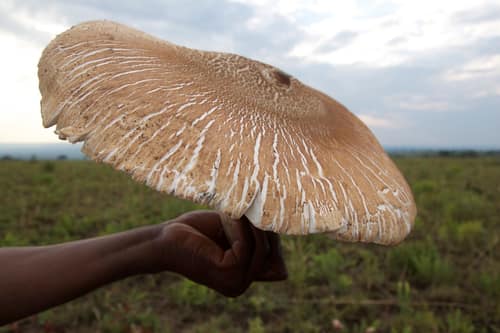
Close Relative Blimeo / CC BY-SA 4.0 · cc-by-saFamily Member
Help improve the field guideSomething wrong?
Checking your Fauna account…Report a name, category, or profile issue for review.