
Fungus · GBIF taxon 2526769
Blue Meanies
Panaeolus cyanescensAlso known as Blue-Staining Panaeolus
Blue Meanies are delicate, slender-stemmed coprophilous mushrooms native to tropical and warm temperate grasslands worldwide. When damaged or handled, their pale greyish caps and stipes rapidly oxidize to an intense azure blue, reflecting high concentrations of indole alkaloids. They play an essential ecological role as saprotrophs, quickly decomposing dung and liberating vital nutrients back into the pasture soil.
CoprophilousSpore-producingDecomposer
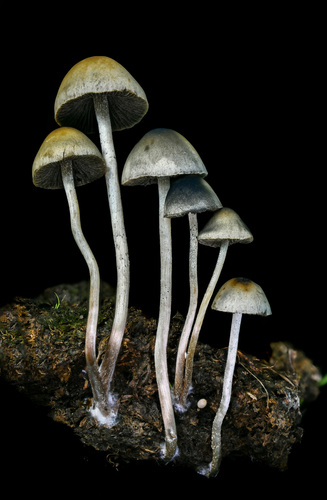
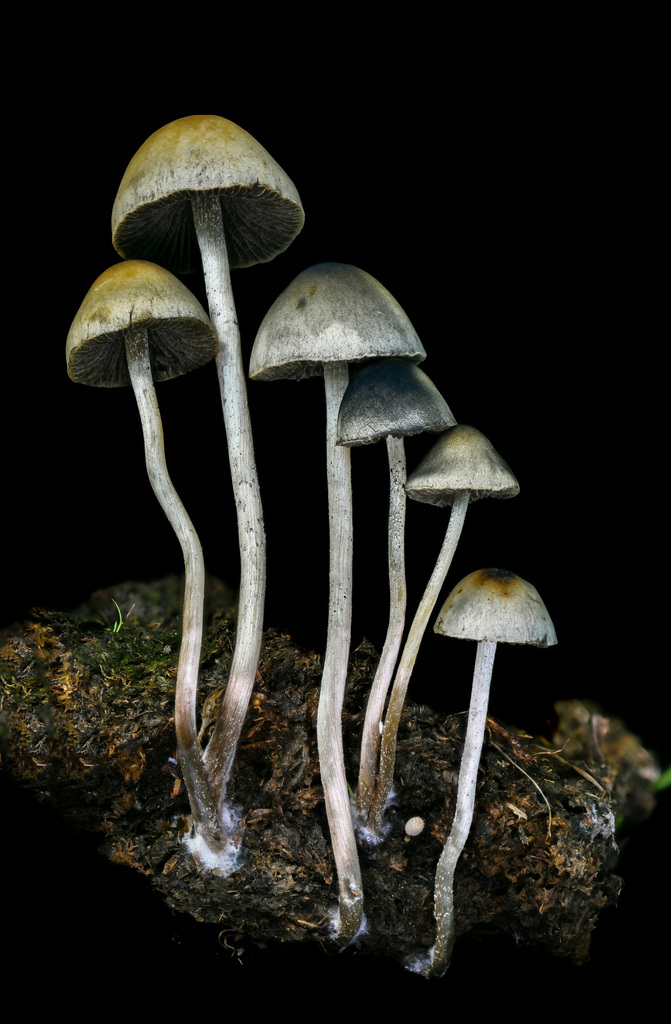
—observations
—countries
—peak records
Not EvaluatedConservation statusIUCN Red List categoriesLCNTVUENCREWEXNot Evaluated — not placed on the risk ladderRed List categories, explained →
Diet & prey
- Saprotrophic (absorbs nutrients from herbivore dung and rich organic soil)
Predators
- Fungus gnat larvae
- Slugs
- Springtails
ThreatsFungicide runoff, pasture conversion, and intensive livestock management
HabitatsTropical pastures, grassy meadows, and dung piles
Life spanFruit bodies persist 3–6 days; subterranean mycelium lives indefinitely
Size / weightNot available
Classification
- OrderAgaricales
- FamilyBolbitiaceae
- GenusPanaeolus
- SpeciesPanaeolus cyanescens
Range data is not available yet.
Interaction riskHigh
- Low
- Moderate
- High
- Very high
- Why interaction risk is high
- Contains psychoactive toxins and has toxic look-alikes; never eat wild fungi based on app identification alone.
- Why it is dangerous
- Contains high concentrations of psilocin and psilocybin, inducing disorientation, rapid heart rate, intense anxiety, and altered perception.
- How to recognize a risky encounter
- Look for a slender off-white cap that turns dark blue or blackish-green where bruised.
- What to do
- Do not harvest or consume; wash hands thoroughly if accidentally touched and keep pets away from pasture growth.
Responsible observation
- Spore Printing: Collect jet-black spore prints on white paper to confirm identification.
- Field Observation: Examine specimens in situ without disturbing their fragile rootlike rhizomorphs.
- Seasonal Timing: Look in warm pastures following torrential summer rainstorms.
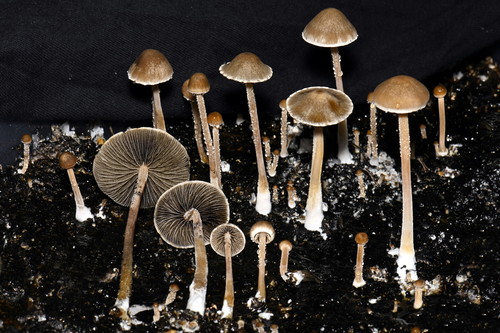
Same Genus (c) Alan Rockefeller, some rights reserved (CC BY) · cc-by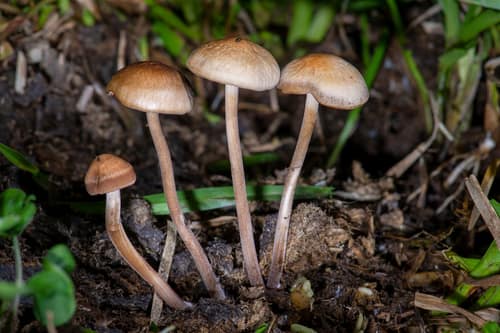
Same Genus (c) Alan Rockefeller, some rights reserved (CC BY), uploaded by Alan Rockefeller · cc-by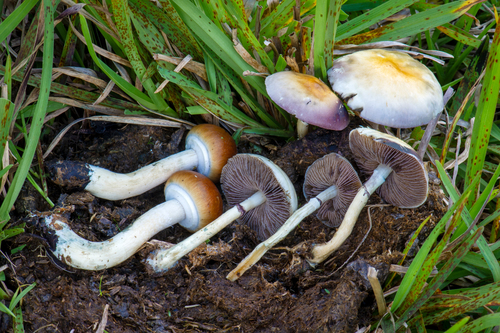
Competitor (c) Alan Rockefeller, some rights reserved (CC BY-SA) · cc-by-sa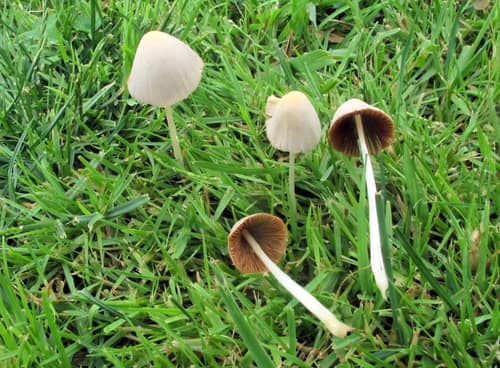
Look-alike (c) mycowalt, some rights reserved (CC BY-SA), uploaded by mycowalt · cc-by-sa
Host (c) Paulius Rupšas, some rights reserved (CC BY), uploaded by Paulius Rupšas · cc-by
Help improve the field guideSomething wrong?
Checking your Fauna account…Report a name, category, or profile issue for review.