
Fungus · GBIF taxon 2526754
Banded Mottlegill
Panaeolus cinctulusAlso known as Belted Panaeolus, Subbs, Subbalteatus
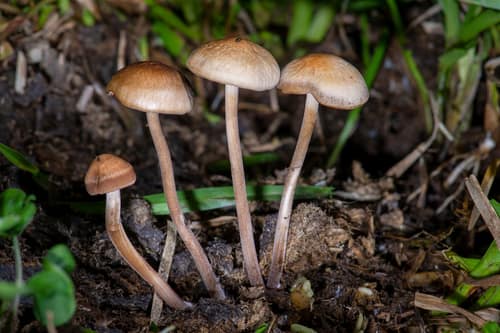
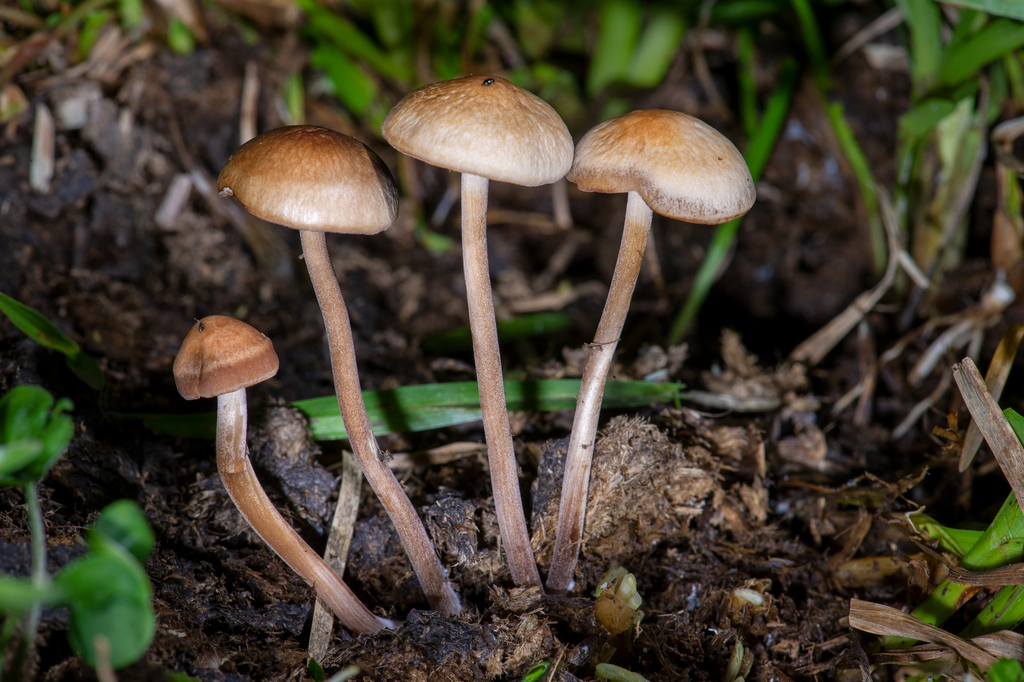
Banded Mottlegills emerge in dense clusters on manured lawns, compost piles, and fertilized pastures after warm summer rains. Their caps display a striking hygrophanous drying pattern, fading to pale tan at the center while retaining a dark reddish-brown belt around the outer rim. Beneath the cap, black spores mature at uneven rates across the gill faces, creating the patchy mottled surface that gives the genus its name.
FungusSaprobicMottled Gills
 1 / 7
1 / 7—observations
—countries
—peak records
Not EvaluatedConservation statusIUCN Red List categoriesLCNTVUENCREWEXNot Evaluated — not placed on the risk ladderRed List categories, explained →
Diet & prey
- Saprobic (decomposing rich organic matter)
Predators
- Fungus Gnats
- Slugs
- Springtails
ThreatsFungicide use, lawn chemical applications
HabitatsManured lawns, compost heaps, dunged pastures, woodchips
Life spanPerennial mycelium; individual mushrooms last 3–7 days
Classification
- OrderAgaricales
- FamilyBolbitiaceae
- GenusPanaeolus
- SpeciesPanaeolus cinctulus
Range data is not available yet.
Interaction riskHigh
- Low
- Moderate
- High
- Very high
- Why interaction risk is high
- Contains psychoactive toxins; many wild mushrooms have toxic look-alikes, so never consume wild fungi.
- Why it is dangerous
- Contains psilocybin and psilocin, which act on the central nervous system to induce hallucinations, disorientation, nausea, and rapid heart rate.
- How to recognize a risky encounter
- Recognized by a reddish-brown cap with a dark outer ring when drying, mottled gills, and a jet-black spore print.
- What to do
- Observe intact in the field; do not harvest or ingest, and keep domestic pets away from lawn clusters.
Responsible observation
- Observe Cap Banding: Watch how the hygrophanous cap dries from the center outward, leaving a distinct dark belt near the margin.
- Take a Spore Print: Place an mature cap gill-side down on white paper overnight to confirm its jet-black spore print.
- Inspect the Gills: Examine the gills under a hand lens to see the patchy brown and black blotches from uneven spore maturation.
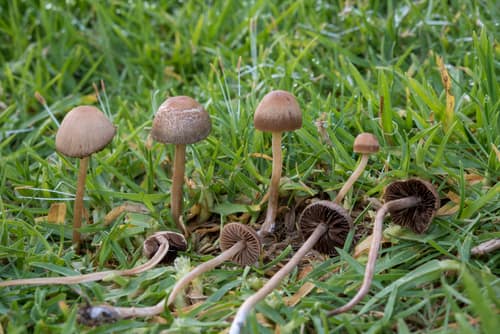
Look-alike (c) Alan Rockefeller, some rights reserved (CC BY), uploaded by Alan Rockefeller · cc-by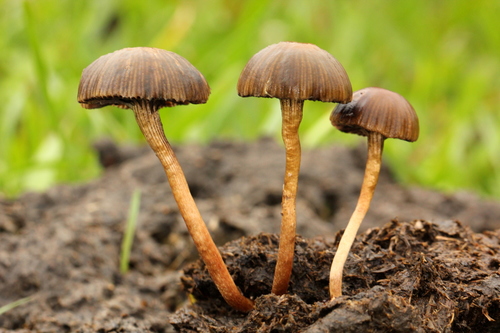
Habitat Competitor (c) Alan Rockefeller, some rights reserved (CC BY), uploaded by Alan Rockefeller · cc-by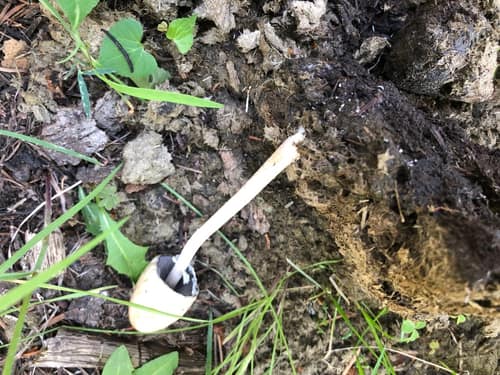
Close Relative (c) pinonbistro, some rights reserved (CC BY-SA), uploaded by pinonbistro · cc-by-sa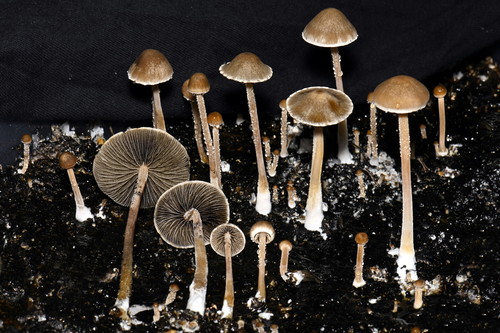
Close Relative (c) Alan Rockefeller, some rights reserved (CC BY) · cc-by
Help improve the field guideSomething wrong?
Checking your Fauna account…Report a name, category, or profile issue for review.