
Bird
Eastern Screech-Owl
Megascops asioAlso known as Shivering Owl, Little Horned Owl
Eastern screech-owls come in two distinct color morphs, rufous red and grey, which allow them to blend seamlessly against tree bark during daylight hours. Rather than screeching, these small nocturnal hunters communicate through a soft, trilling whistle and a descending whinny that echoes through eastern forests and suburban neighborhoods. They readily nest in tree hollows and nest boxes, spending their nights preying on everything from beetles and mice to songbirds.
NocturnalCamouflagedBird of Prey
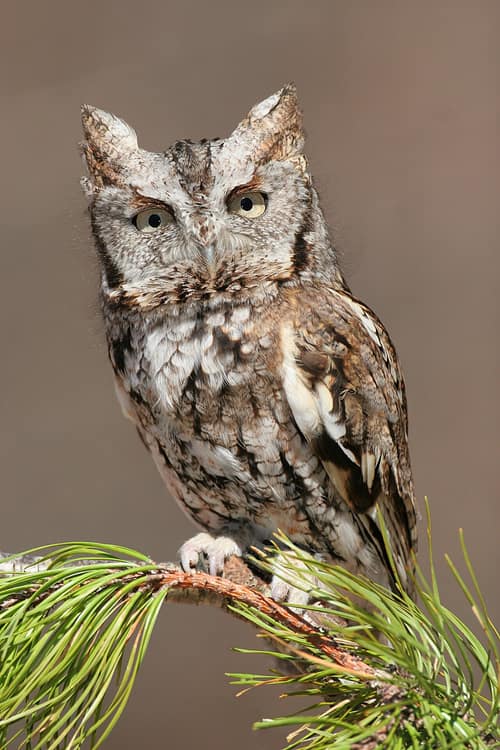
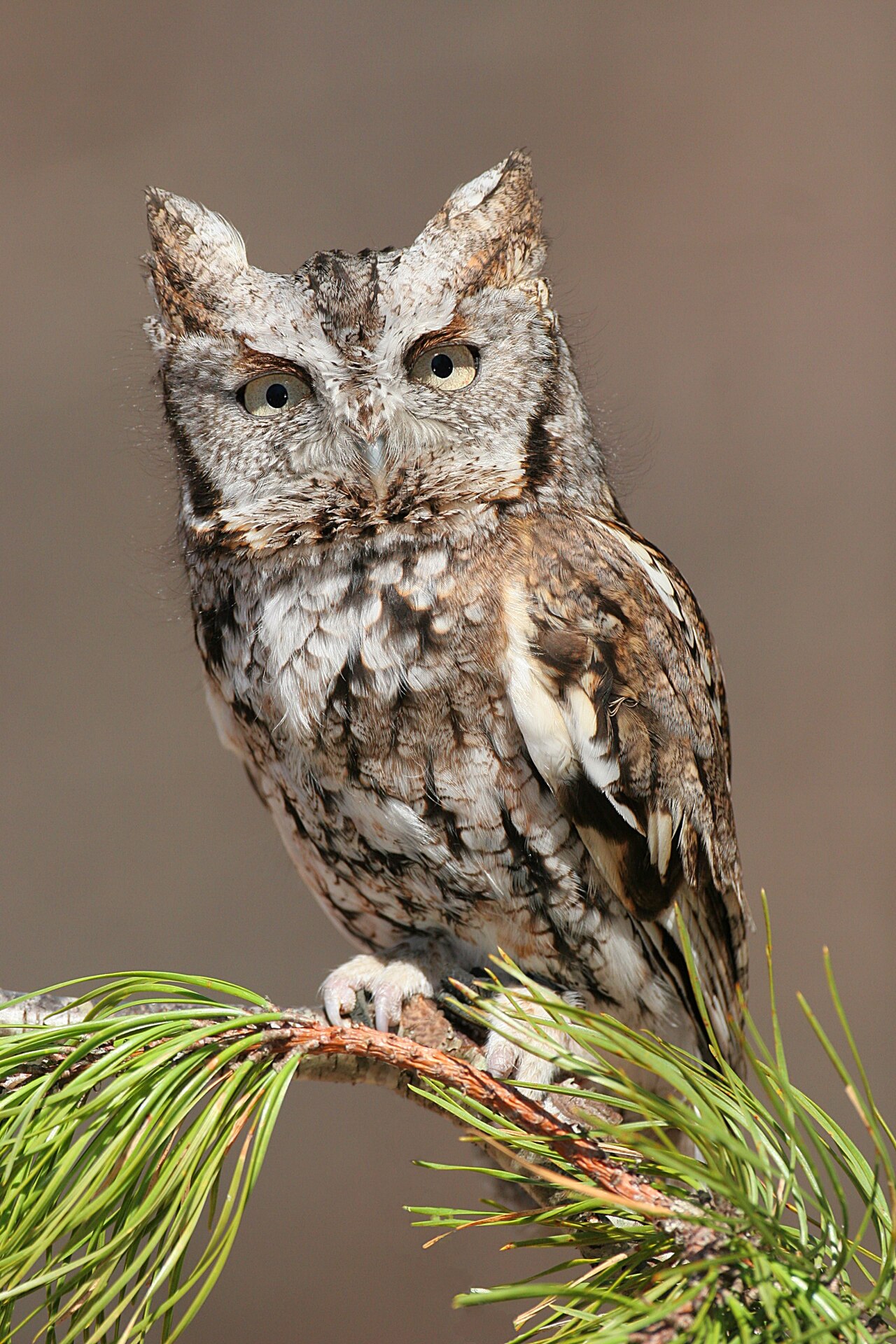
—observations
—countries
—peak records
Least ConcernConservation statusIUCN Red List categoriesLCNTVUENCREWEXLeast ConcernRed List categories, explained →
Diet & preyMice, Large Insects, Songbirds
Predators
- Great Horned Owl
- Barred Owl
- Cooper's Hawk
ThreatsVehicle collisions, pesticide and rodenticide toxicity, loss of cavity trees
HabitatsDeciduous and mixed forests, suburban parks, orchards
Life span8–10 years in the wild
Classification
- OrderStrigiformes
- FamilyStrigidae
- GenusMegascops
- SpeciesMegascops asio
Range data is not available yet.
Interaction riskLow
- Low
- Moderate
- High
- Very high
- Why interaction risk is low
- Capable of using sharp talons and beak defensively if cornered; observe from a respectful distance.
Responsible observation
- Listen at Dusk: Listen for their eerie, descending whinny or soft trill starting shortly after sunset.
- Look for Mobbing Birds: Watch for songbirds making alarm calls around tree trunks, which often reveals a hidden owl.
- Provide Nest Boxes: Mount artificial nest cavities high on trees to attract breeding pairs in suburban yards.
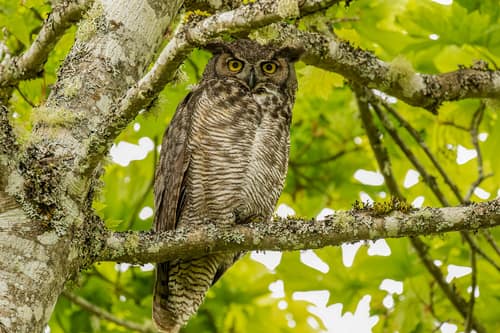
Predator "Great Horned Owl, the first I've seen in decent light this year. Didn't want to disturb it for too long so we continued along the trail" by island deborah- is licensed under CC BY-SA 2.0. To view a copy of this license, visit https://creativecommons.org/licenses/by-sa/2.0/. · cc-by-sa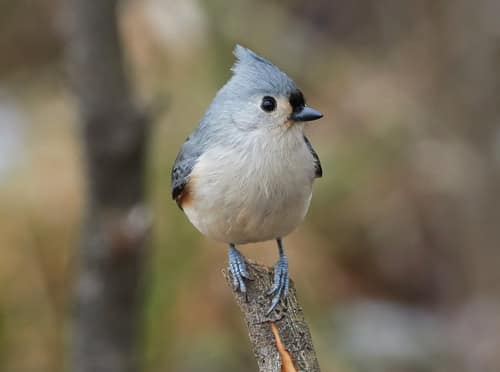
Mobbing Bird no rights reserved, uploaded by David Bird · cc0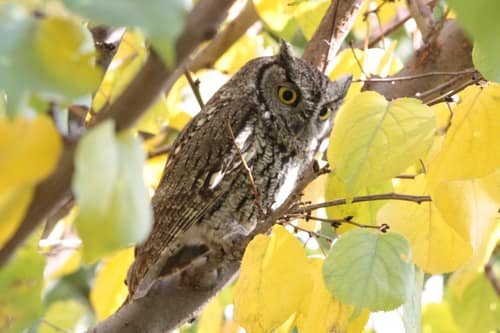
Close Relative (c) Rocio Reybal, some rights reserved (CC BY), uploaded by Rocio Reybal · cc-by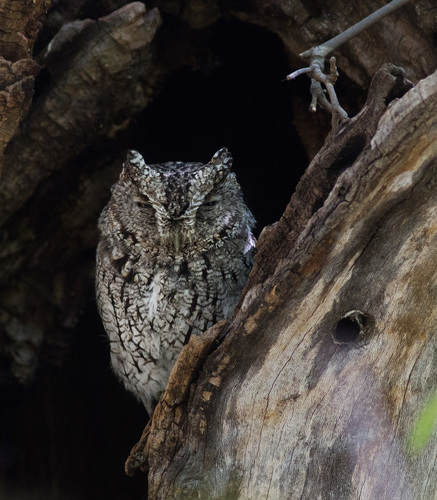
Close Relative (c) Fyn Kynd, some rights reserved (CC BY-SA), uploaded by Fyn Kynd · cc-by-sa
Keep collecting in Fauna
Found in Collections
Species set
Moonlight Marvels
Eastern Screech-Owl is found in this collection. Identify it in Fauna to fill this slot and continue your progress.
—/7
Help improve the field guideSomething wrong?
Checking your Fauna account…Report a name, category, or profile issue for review.