
Bird
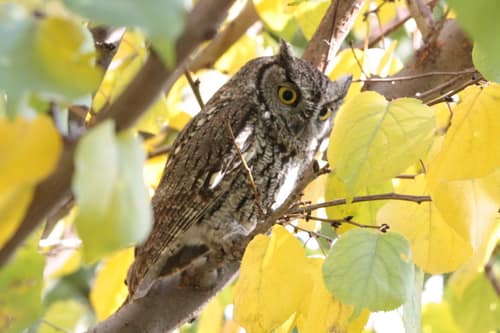
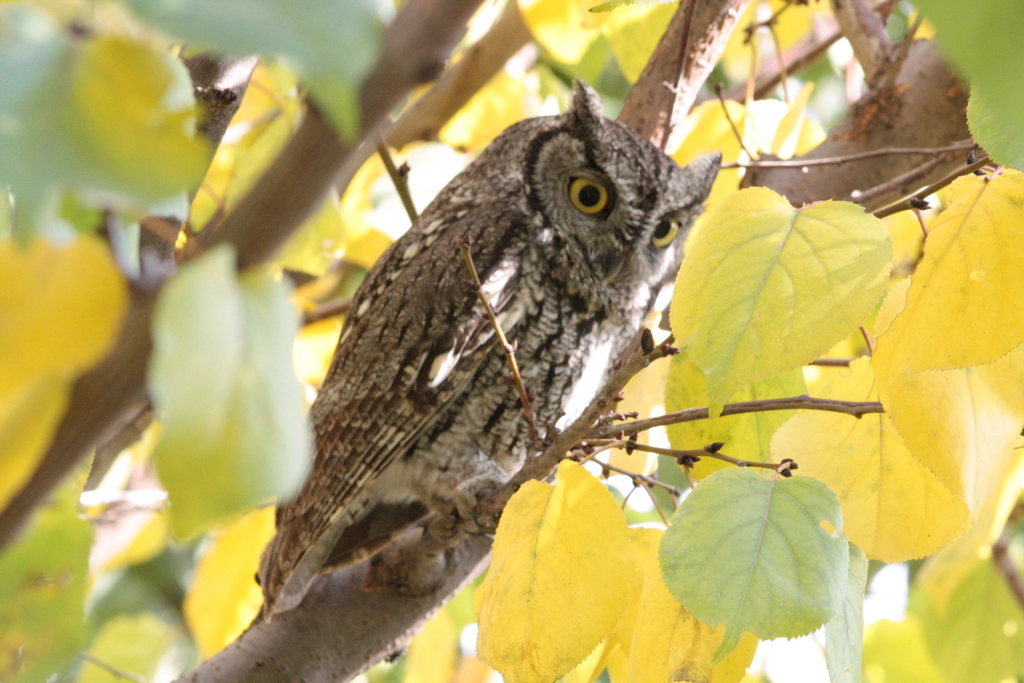
Western Screech-Owl
Megascops kennicottiiAlso known as Kennicott's Screech-Owl
Mastering camouflage against rough tree bark, this compact nocturnal hunter spends daylight perched upright inside hollows or flush against trunks. Males claim territories with a distinctive bouncing-ball sequence of muted whistles that accelerates toward the end rather than a classic screech. Pairs often mate for life, hunting everything from beetles and scorpions to deer mice and small fish near riparian edges.
NocturnalCamouflagedCavity Nester
—observations
—countries
—peak records
Least ConcernConservation statusIUCN Red List categoriesLCNTVUENCREWEXLeast ConcernRed List categories, explained →
Diet & preyDeer mice, Beetles, Crayfish
Predators
- Great Horned Owl
- Barred Owl
- Cooper's Hawk
ThreatsSecondary poisoning from rodenticides, removal of dead snag nesting trees, vehicle collisions
HabitatsRiparian woodlands, temperate rainforest edges, oak canyons, suburban parks, desert washes
Life span6–13 years in the wild
Classification
- OrderStrigiformes
- FamilyStrigidae
- GenusMegascops
- SpeciesMegascops kennicottii
Range data is not available yet.
Interaction riskLow
- Low
- Moderate
- High
- Very high
- Why interaction risk is low
- Safe to observe at a normal distance.
Responsible observation
- Listening for Calls: Listen at dusk for a rapid series of hollow whistles accelerating like a dropped bouncing ball.
- Spotting Day Roosts: Scan tree cavities and dense ivy tangles where mottled grey-brown feathers blend into bark.
- Night Lighting: Avoid aiming continuous bright spotlights directly into roost holes to prevent disrupting diurnal sleep.
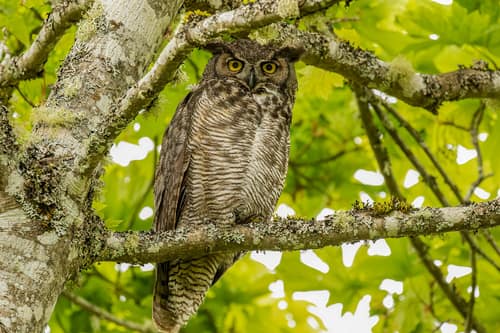
Predator "Great Horned Owl, the first I've seen in decent light this year. Didn't want to disturb it for too long so we continued along the trail" by island deborah- is licensed under CC BY-SA 2.0. To view a copy of this license, visit https://creativecommons.org/licenses/by-sa/2.0/. · cc-by-sa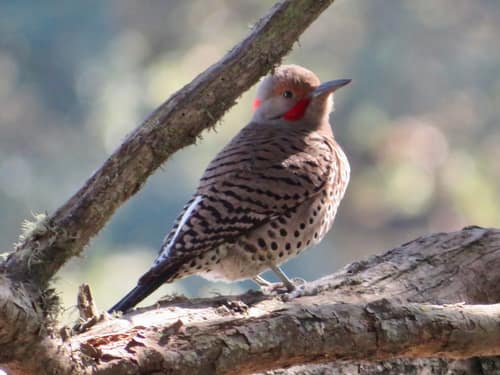
Nest Provider (c) Jon Robson, some rights reserved (CC BY-SA), uploaded by Jon Robson · cc-by-sa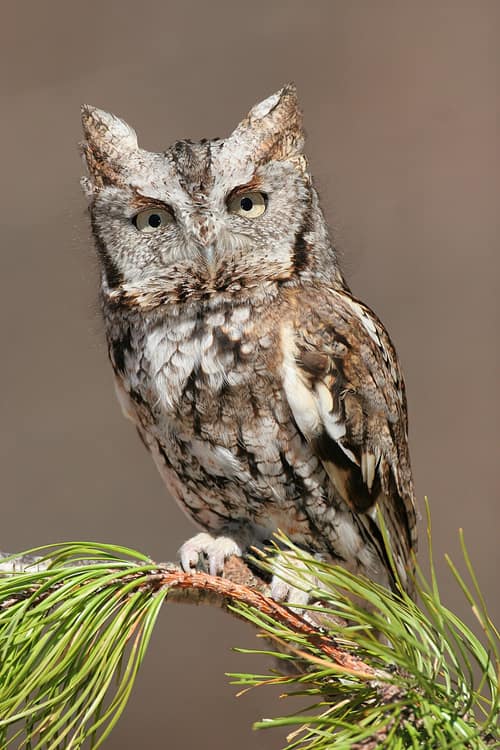
Close Relative Wolfgang Wander / CC BY-SA 3.0 · cc-by-sa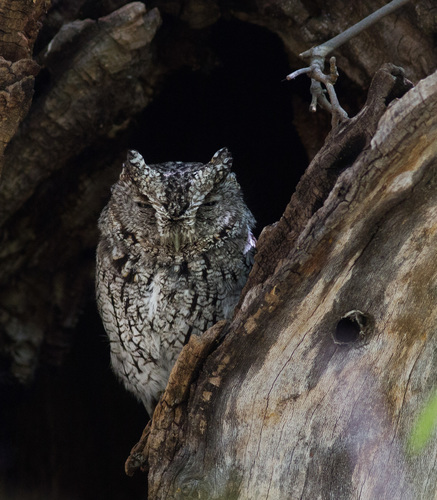
Close Relative (c) Fyn Kynd, some rights reserved (CC BY-SA), uploaded by Fyn Kynd · cc-by-sa
Keep collecting in Fauna
Found in Collections
Species set
Moonlight Marvels
Western Screech-Owl is found in this collection. Identify it in Fauna to fill this slot and continue your progress.
—/7
Help improve the field guideSomething wrong?
Checking your Fauna account…Report a name, category, or profile issue for review.