
Bird · GBIF taxon 2489317
Black Robin
Petroica traversiAlso known as Chatham Island Robin, Chatham Robin, Kakaruia
Black robins are entirely charcoal-black songbirds endemic to the remote Chatham Islands, famous for their miraculous recovery from a single breeding pair in the 1980s. They spend much of their day on or near the forest floor, hopping through leaf litter to hunt invertebrates and worms. Females construct cup nests in low tree hollows or dense vegetation, relying on predator-free island sanctuaries to rear their young.
EndemicInsectivorousForest Bird
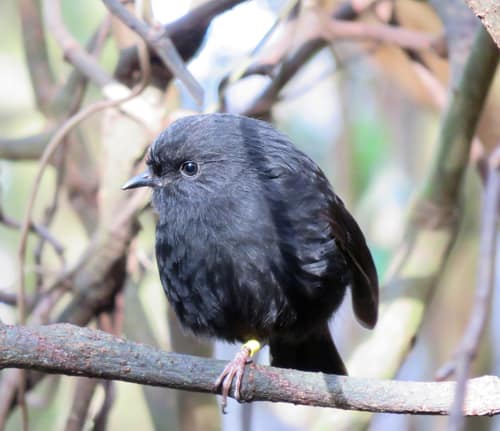
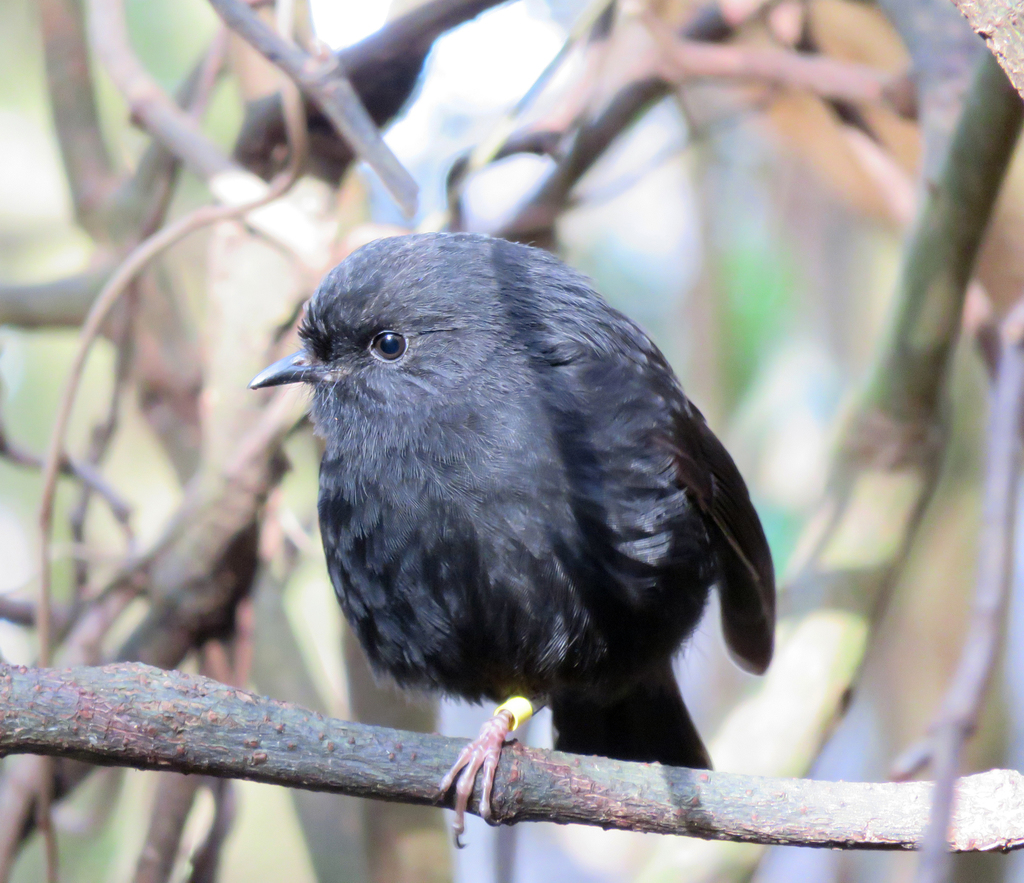
Licensed referenceno rights reserved, uploaded by Peter de Lange · cc0
—observations
—countries
—peak records
VulnerableConservation statusIUCN Red List categoriesLCNTVUENCREWEXVulnerableRed List categories, explained →
Diet & prey
- Insects
- Grubs
- Earthworms
Predators
- Feral Cats
- Rats
- Morepork
ThreatsIntroduced mammalian predators, extreme genetic bottlenecks, and severe weather events
HabitatsCoastal forest, dense scrubland, and regenerated bush
Life span6–13 years
Size / weightNot available
Classification
- FamilyPetroicidae
- SpeciesPetroica traversi
Range data is not available yet.
Interaction riskLow
- Low
- Moderate
- High
- Very high
- Why interaction risk is low
- Safe to observe at a normal distance.
- What to notice
- Recognizable by its small size, dark charcoal plumage, short wings, and dark legs with pale toes.
- Support conservation
- Keep distance near nest sites and follow all guide instructions on predator-free reserve islands.
Responsible observation
- Quiet observation: Black robins are inquisitive birds that often approach low branches near motionless observers.
- Sanctuary etiquette: Follow strict island biosecurity protocols when visiting protected Chatham nature reserves.

Close Relative (c) Stewart Armstrong, some rights reserved (CC BY), uploaded by Stewart Armstrong · cc-by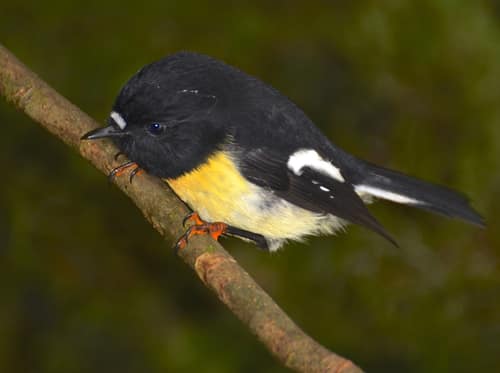
Close Relative (c) Mike Bowie, some rights reserved (CC BY), uploaded by Mike Bowie · cc-by
Help improve the field guideSomething wrong?
Checking your Fauna account…Report a name, category, or profile issue for review.