
Bird
South Island Robin
Petroica australisAlso known as Toutouwai, South Island Toutouwai
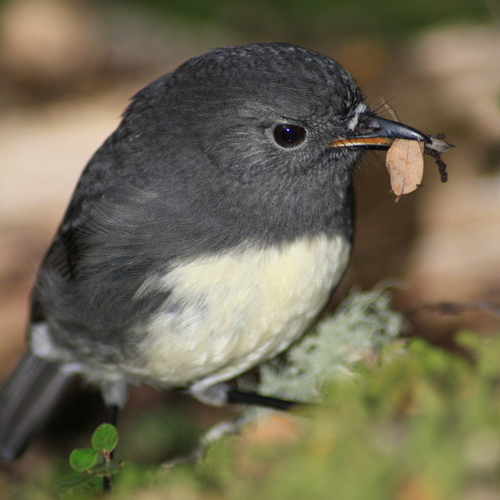
South Island robins are famously friendly, inquisitive songbirds that often hop right up to resting hikers to forage in soil disturbed by boots. These terrestrial insectivores rely on keen eyesight to detect tiny invertebrates among the leaf litter, frequently caching excess worms and grubs in tree crevices for later consumption. While introduced mammalian predators like stoats and rats have severely reduced their mainland populations, intensive pest management allows them to thrive in protected sanctuaries.
EndemicInquisitiveSongbird

—observations
—countries
—peak records
Least ConcernConservation statusIUCN Red List categoriesLCNTVUENCREWEXLeast ConcernRed List categories, explained →
Diet & preyEarthworms, Beetles, Spiders
Predators
- Stoat
- Black Rat
- Feral Cat
ThreatsPredation by introduced mammals (stoats, rats, feral cats), habitat fragmentation
HabitatsNative beech forests, podocarp forests, regenerated scrubland, island sanctuaries
Life span3–10 years
Classification
- FamilyPetroicidae
- SpeciesPetroica australis
Range data is not available yet.
Interaction riskLow
- Low
- Moderate
- High
- Very high
- Why interaction risk is low
- Safe to observe at a normal distance.
- What to notice
- Look for a long-legged, dark charcoal-grey bird with a pale off-white belly hopping along the forest floor.
- Support conservation
- Observe quietly from established trails and ensure all food waste is packed out to avoid attracting pests.
Responsible observation
- Scrape the Ground: Gently scuffing leaf litter with a boot heel often attracts curious individuals looking for exposed worms.
- Keep Distance: Allow the bird to approach voluntarily without attempting to touch or hand-feed human food.
- Check Your Gear: Ensure footwear and daypacks are clean of soil and seed debris before entering island sanctuaries.
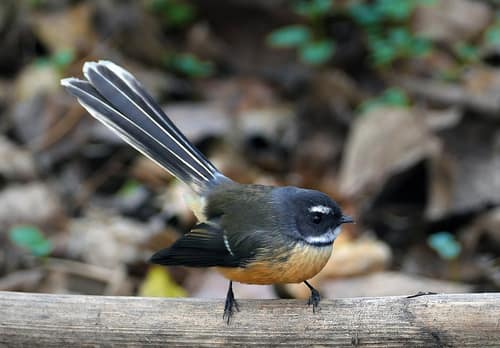
Frequent Companion Bernard Spragg. NZ from Christchurch, New Zealand / CC0 · cc0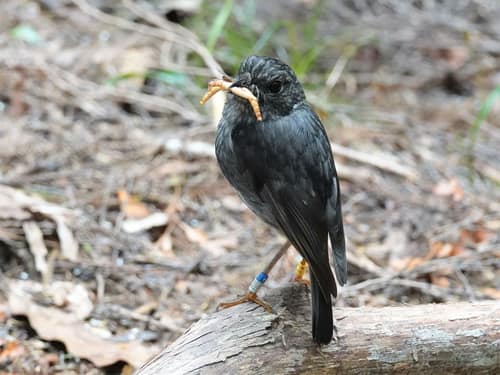
Close Relative (c) Jacqui Geux, some rights reserved (CC BY), uploaded by Jacqui Geux · cc-by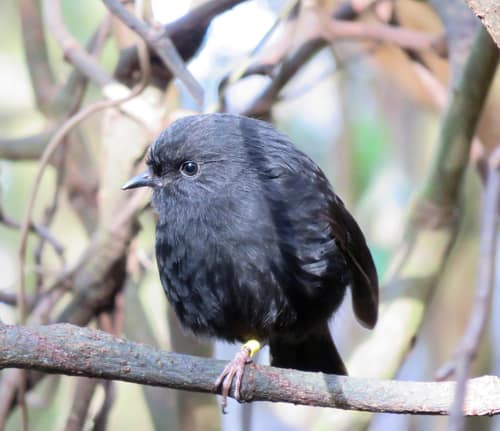
Close Relative no rights reserved, uploaded by Peter de Lange · cc0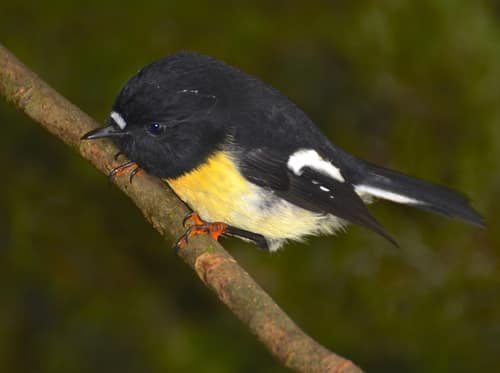
Genus Relative (c) Mike Bowie, some rights reserved (CC BY), uploaded by Mike Bowie · cc-by
Keep collecting in Fauna
Found in Collections
Ecosystem chain
The Forest Floor
South Island Robin is found in this collection. Identify it in Fauna to fill this slot and continue your progress.
—/12
Help improve the field guideSomething wrong?
Checking your Fauna account…Report a name, category, or profile issue for review.