
Bird
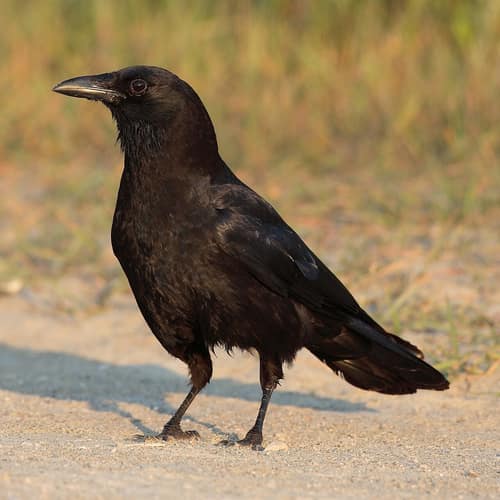
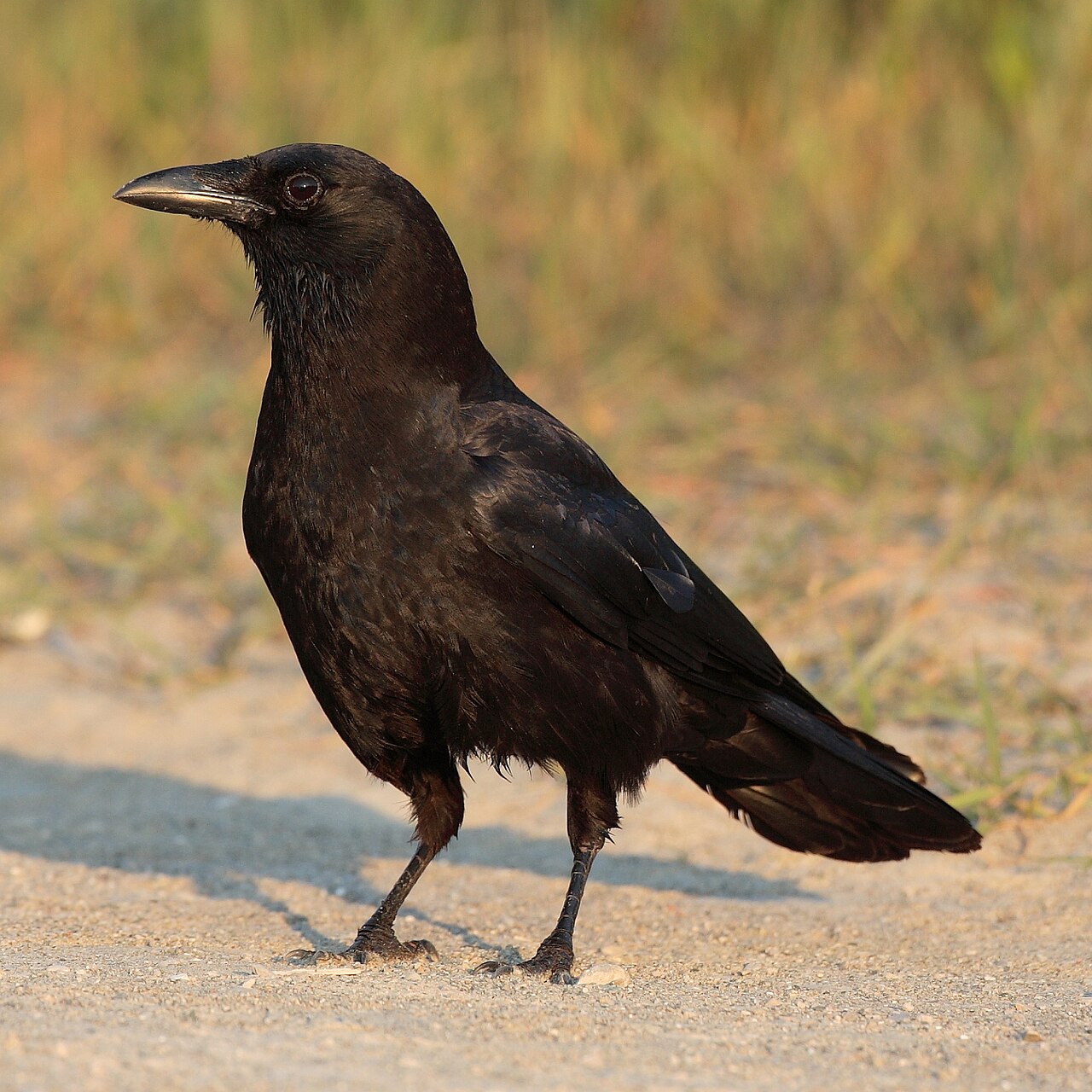
American Crow
Corvus brachyrhynchosAlso known as Common Crow
American crows are famed for their extraordinary problem-solving ability, facial recognition, and complex social networks that include long-term family bonds. Families work together to defend territories, gather food, and help raise new offspring, often forming winter roosts that count tens of thousands of birds. Their adaptable omnivorous habits and harsh caw calls make them one of North America's most recognizable wildlife species.
IntelligentAdaptableSocial
—observations
—countries
—peak records
Least ConcernConservation statusIUCN Red List categoriesLCNTVUENCREWEXLeast ConcernRed List categories, explained →
Diet & preyInsects, Grains, Carrion
Predators
- Great Horned Owl
- Red-tailed Hawk
- Cooper's Hawk
ThreatsWest Nile virus, secondary poisonings, minor human persecution
HabitatsForests, woodlands, agricultural fields, suburban parks, urban areas
Life span7–15 years in the wild
Classification
- OrderPasseriformes
- FamilyCorvidae
- GenusCorvus
- SpeciesCorvus brachyrhynchos
Range data is not available yet.
Interaction riskLow
- Low
- Moderate
- High
- Very high
- Why interaction risk is low
- Safe to observe at a normal distance.
Responsible observation
- Observation: Look for group mobbing behavior when crows spot a hawk or owl in trees.
- Identification: Listen for a sharp caw call to distinguish them from deeper raven croaks.
- Attracting: Offer unsalted peanuts in the shell or clean fresh water in elevated baths.
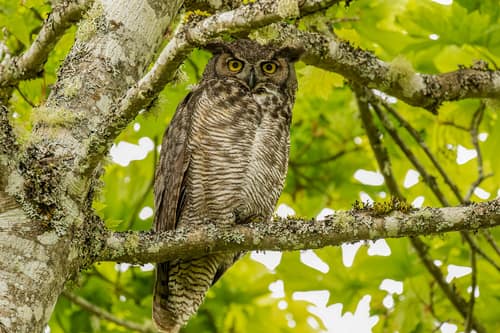
Predator "Great Horned Owl, the first I've seen in decent light this year. Didn't want to disturb it for too long so we continued along the trail" by island deborah- is licensed under CC BY-SA 2.0. To view a copy of this license, visit https://creativecommons.org/licenses/by-sa/2.0/. · cc-by-sa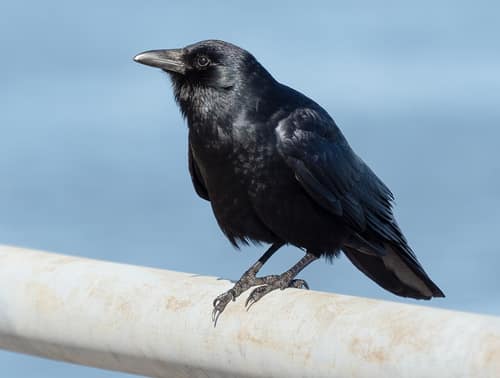
Close Relative Rhododendrites / CC BY-SA 4.0 · cc-by-sa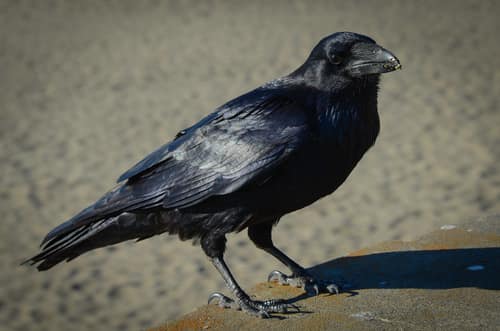
Close Relative "Common Raven (Corvus corax)" by Franco Folini is licensed under CC BY-SA 2.0. To view a copy of this license, visit https://creativecommons.org/licenses/by-sa/2.0/. · cc-by-sa
Keep collecting in Fauna
Found in Collections
Species set Pro
Backyard Birds
American Crow is found in this collection. Identify it in Fauna to fill this slot and continue your progress.
Unlock to track progress
Help improve the field guideSomething wrong?
Checking your Fauna account…Report a name, category, or profile issue for review.