
Bird · GBIF taxon 2481433
Northern Fulmar
Fulmarus glacialisAlso known as Arctic Fulmar, Fulmar Petrel, Mallemuck
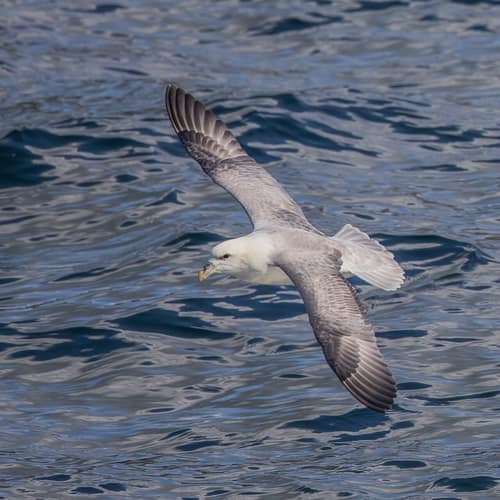
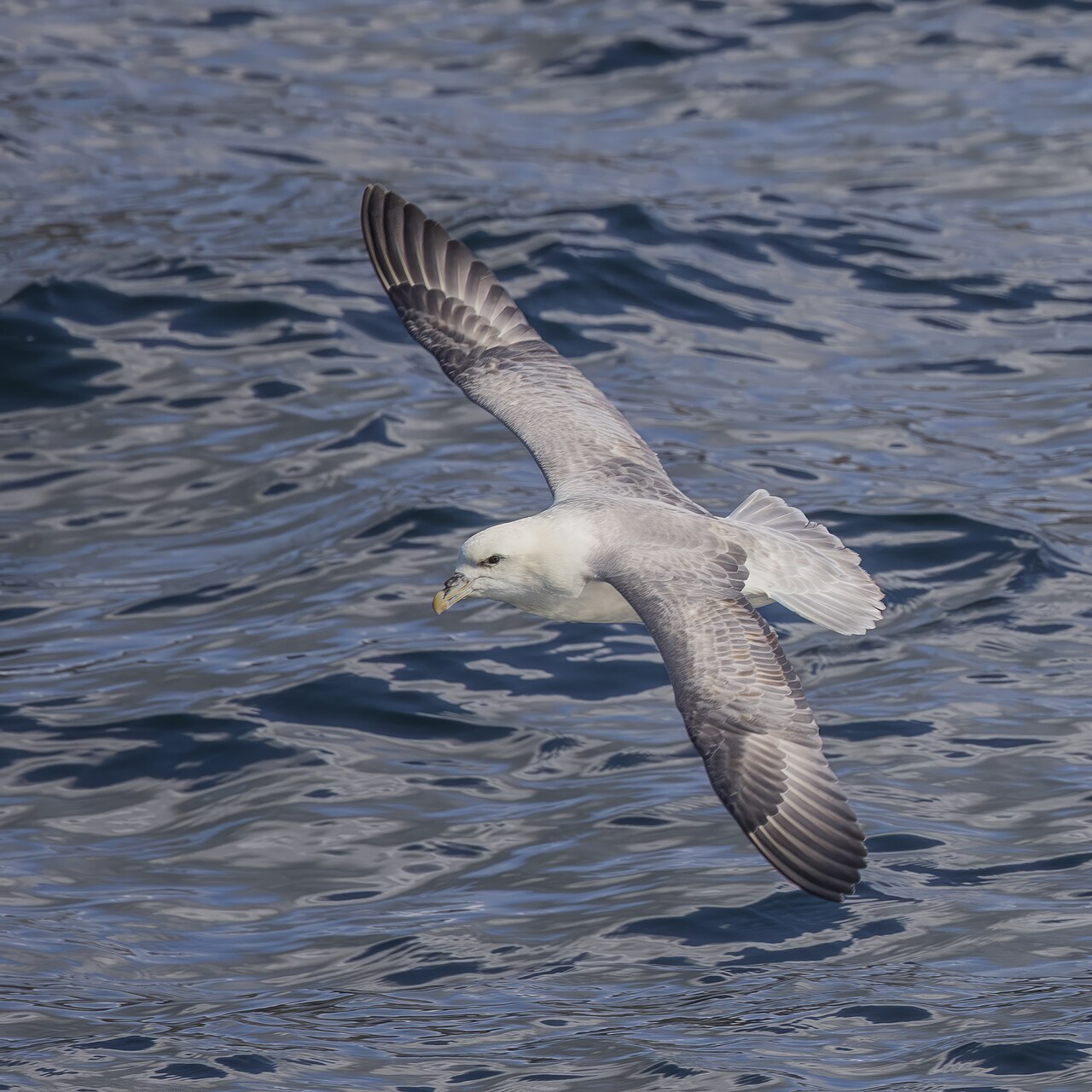
Northern fulmars glide effortlessly over stormy subarctic waves on stiff, unbending wings, relying on dynamic soaring to cover thousands of ocean kilometers without flapping. When threatened at their cliffside nests, adults and chicks defend themselves by forcefully projectile-vomiting a noxious, oily orange fluid that ruins the waterproofing of predator feathers. Long-lived and slow to mature, mated pairs return each spring to the same rocky ledge to raise a single chick.
SeabirdPelagicTubenose
—observations
—countries
—peak records
Least ConcernConservation statusIUCN Red List categoriesLCNTVUENCREWEXLeast ConcernRed List categories, explained →
Diet & prey
- Small Fish
- Squid
- Krill
Predators
- Arctic Fox
- Glaucous Gull
- Common Raven
ThreatsIngestion of ocean plastic debris, fisheries bycatch, and marine pollution
HabitatsOpen ocean, subarctic pelagic waters, and coastal sea cliffs
Life span30–50+ years
Size / weightNot available
Classification
- OrderProcellariiformes
- FamilyProcellariidae
- GenusFulmarus
- SpeciesFulmarus glacialis
Range data is not available yet.
Interaction riskLow
- Low
- Moderate
- High
- Very high
- Why interaction risk is low
- May spit foul stomach oil or bite if cornered; observe nesting colonies from a safe distance.
Responsible observation
- Cliff Etiquette: Keep a respectful distance from cliff edges to avoid startling nesting pairs or triggering defensive stomach oil spat.
- Pelagic Spotting: Scan offshore waters behind fishing boats where individuals gather in large rafts to scavenge on discards.
- Binocular Cues: Look for the prominent tubenose nostrils along the top of the hooked bill and a characteristic stiff-winged flight.
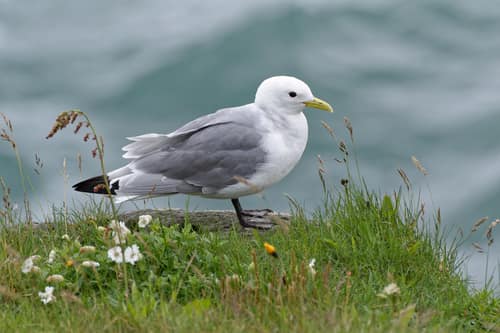
Nesting Neighbor (c) Donald Davesne, some rights reserved (CC BY), uploaded by Donald Davesne · cc-by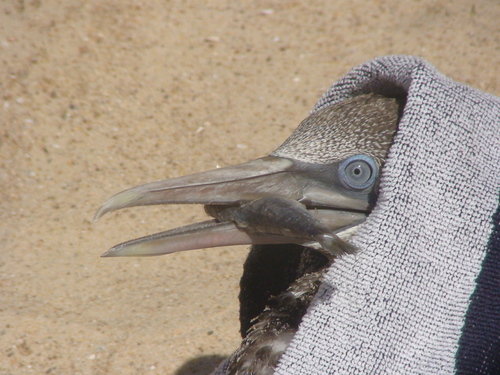
Ocean Competitor (c) Júlio Reis, some rights reserved (CC BY-SA) · cc-by-sa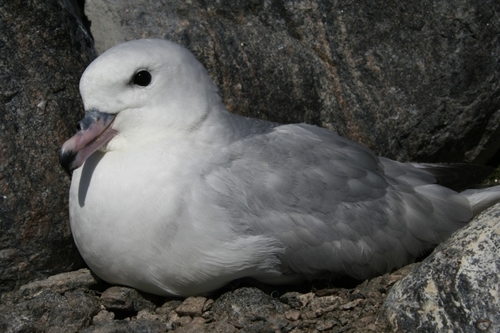
Close Relative (c) Wikimedia Commons, some rights reserved (CC BY-SA) · cc-by-sa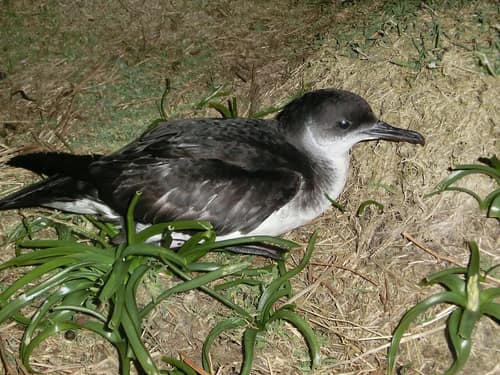
Family Relative Martin Reith / CC BY-SA 3.0 · cc-by-sa
Help improve the field guideSomething wrong?
Checking your Fauna account…Report a name, category, or profile issue for review.