
Bird
Masked Booby
Sula dactylatraAlso known as Masked Gannet, Blue-faced Booby, White Booby
Masked boobies are spectacular plunge-divers that hurtle into tropical seas from heights of up to 30 meters, slicing into bait balls to seize flying fish and squid. Nesting in loose colonies on remote oceanic atolls, mated pairs establish ground nests scraped directly into coral sand or volcanic gravel. Females typically lay two eggs, but obligate siblicide invariably occurs within days of hatching, leaving only the stronger firstborn chick to fledge.
SeabirdPelagicPlunge Diver
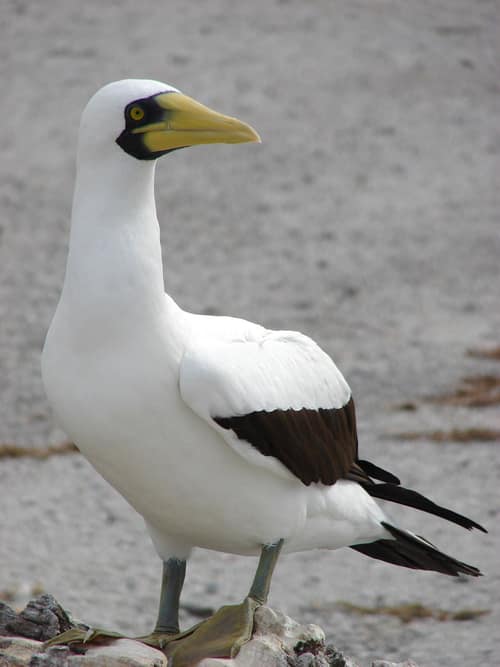
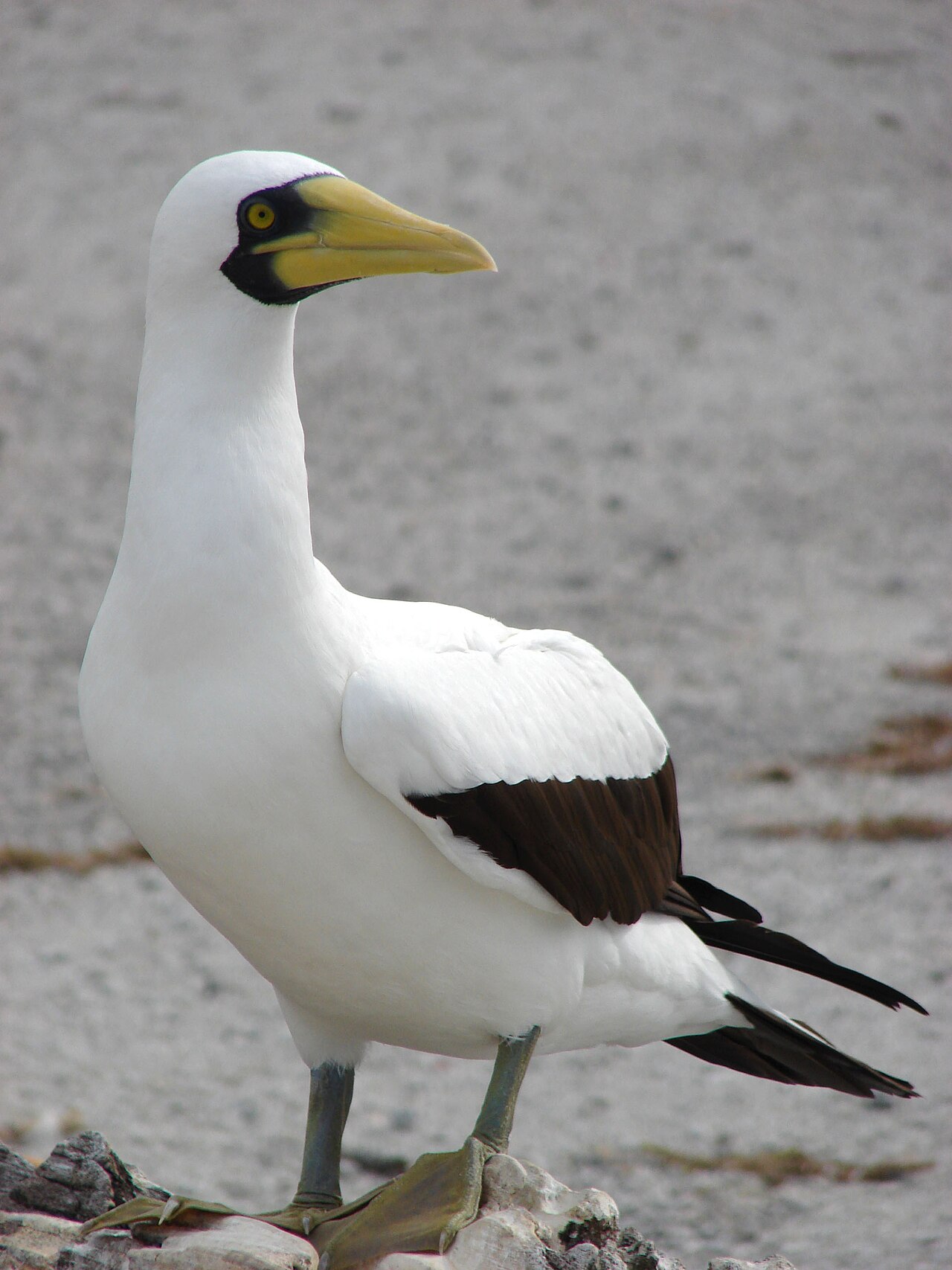
—observations
—countries
—peak records
Least ConcernConservation statusIUCN Red List categoriesLCNTVUENCREWEXLeast ConcernRed List categories, explained →
Diet & preyFlying fish, Pelagic squid, Mullet
Predators
- Feral cat
- Black rat
- Great frigatebird
ThreatsIntroduced mammalian predators on breeding islands, commercial longline fisheries, and marine plastic pollution
HabitatsTropical open oceans, coral atolls, and oceanic islands
Life span15–25 years
Classification
- FamilySulidae
- SpeciesSula dactylatra
Range data is not available yet.
Interaction riskLow
- Low
- Moderate
- High
- Very high
- Why interaction risk is low
- Nesting adults defend ground scrapes with sharp bill jabs; keep several meters back.
- Why it is dangerous
- Possesses a stout, dagger-like bill with fine serrations capable of slicing skin and causing puncture wounds when provoked.
- How to recognize a risky encounter
- Distinguished by bright white plumage, jet-black wing edges and tail, and a dark facial mask framing a pale yellowish bill.
- What to do
- Do not corner ground-nesting adults or reach toward scrapes; step away slowly if a bird stands and points its bill toward you.
- What to notice
- Recognized in colonies by their shallow scrape nests on bare rock, sand, or turf surrounded by guano borders.
- Support conservation
- Stick strictly to marked trails on protected breeding islands, avoid sudden movements, and never stand over an active nest.
Responsible observation
- Viewing distance: Give nesting adults at least 5 meters of clearance on breeding trails to prevent defensive strikes.
- Pelagic spotting: Scan open tropical waters for lone white birds trailing fishing vessels or dive-bombing surface fish.
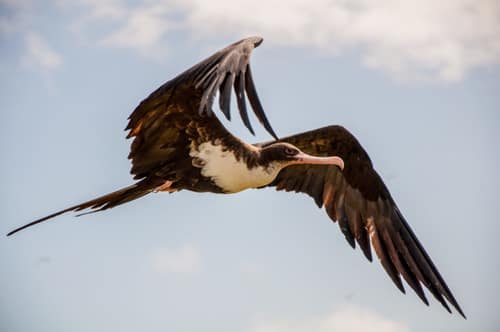
Competitor (c) James Weaver, some rights reserved (CC BY), uploaded by James Weaver · cc-by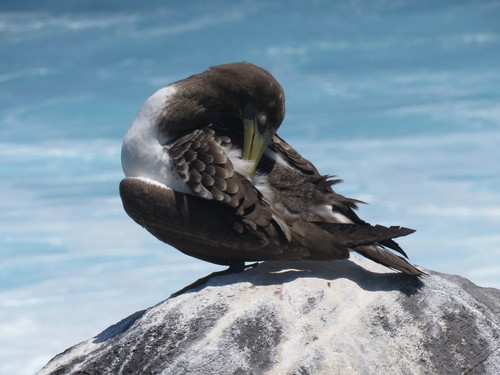
Close Relative (c) Juan Carlos Caicedo Hernández, some rights reserved (CC BY), uploaded by Juan Carlos Caicedo Hernández · cc-by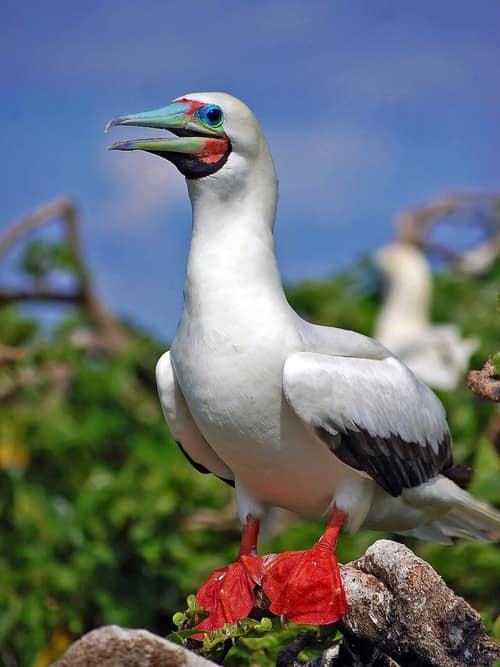
Close Relative Gregg Yan / CC BY-SA 3.0 · cc-by-sa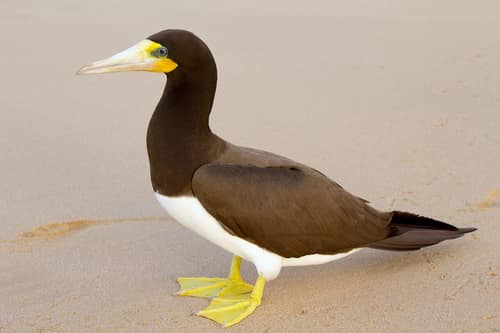
Close Relative Danilo da Castro / CC BY-SA 3.0 · cc-by-sa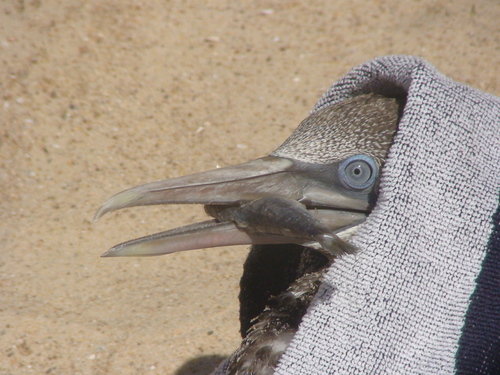
Same Family (c) Júlio Reis, some rights reserved (CC BY-SA) · cc-by-sa
Help improve the field guideSomething wrong?
Checking your Fauna account…Report a name, category, or profile issue for review.