
Bird · GBIF taxon 2480971
Nazca Booby
Sula grantiAlso known as Grant's Booby
Nazca boobies nest in dense colonies along the rocky cliffs of the Galápagos and other tropical eastern Pacific islands, where they perform elaborate courtship rituals involving synchronized sky-pointing and the presentation of small pebbles. They practice obligate siblicide, with the first-hatched chick routinely ejecting its younger sibling from the nest scrape within days of hatching. Offshore, adults plunge-dive vertically from heights of up to thirty meters to spear schooling flying fish and squid beneath the waves.
PelagicColonialPlunge-diver
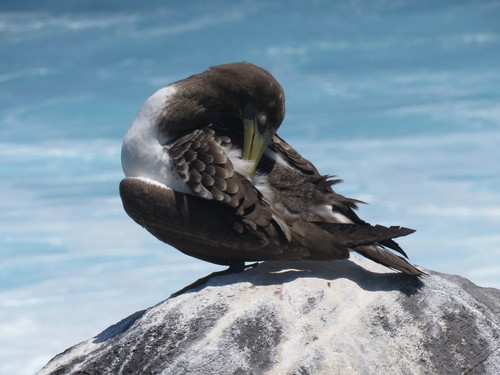
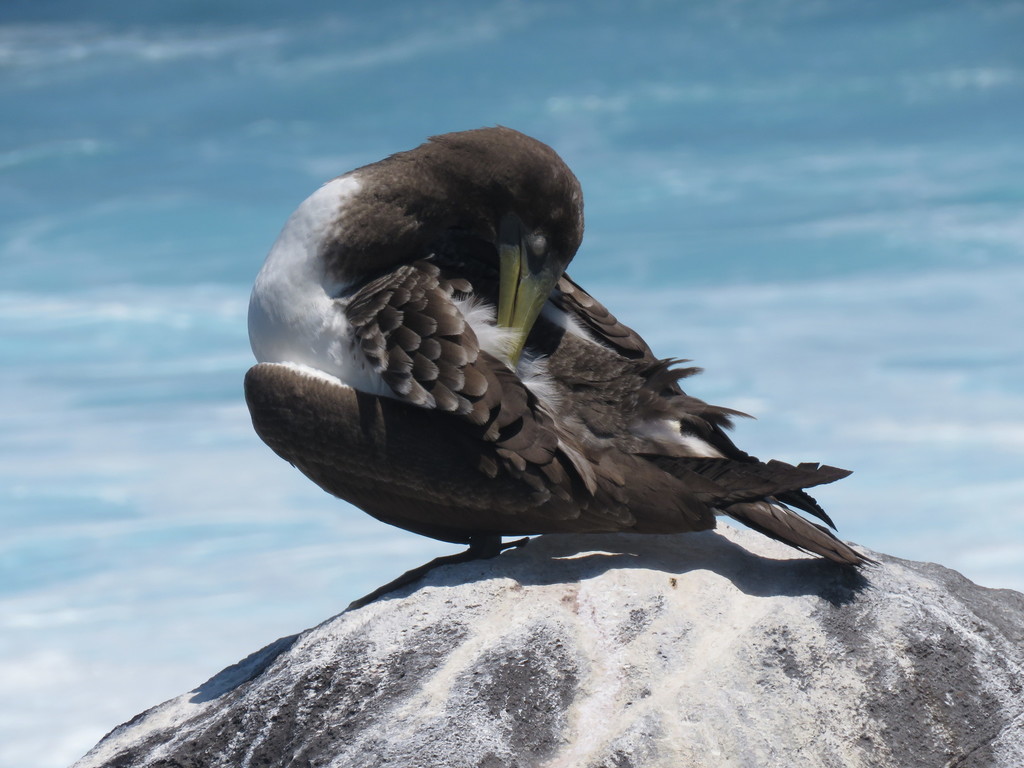
—observations
—countries
—peak records
Least ConcernConservation statusIUCN Red List categoriesLCNTVUENCREWEXLeast ConcernRed List categories, explained →
Diet & prey
- Flying Fish
- Sardine
- Pacific Squid
Predators
- Galápagos Hawk
- Feral Cat
- Galápagos Sea Lion
ThreatsDisruption of marine food webs from El Niño warming events, invasive predators at nest colonies, and plastic ingestion.
HabitatsPelagic tropical ocean waters, rocky oceanic islands, and arid volcanic cliff tops.
Life span15–25 years
Classification
- FamilySulidae
- SpeciesSula granti
Range data is not available yet.
Interaction riskLow
- Low
- Moderate
- High
- Very high
- Why interaction risk is low
- Adults defend ground nests with razor-sharp bills; maintain at least two meters distance on paths.
- Why it is dangerous
- Possesses a heavy, serrated bill adapted to grip slippery fish, capable of inflicting deep puncture wounds if cornered.
- How to recognize a risky encounter
- Recognized by its bright orange-yellow bill set against an unfeathered black facial mask and white head.
- What to do
- Do not crouch or reach toward ground-nesting adults, and back away if the bird clatters its bill in warning.
- What to notice
- Breeds directly on bare volcanic rock encircled by distinctive rings of white guano.
- Support conservation
- Maintain a minimum buffer of two meters at all times and avoid blocking a bird's access to the cliff edge.
Responsible observation
- Trail Etiquette: Stay strictly on marked trails to avoid crushing shallow nest scrapes in the lava gravel.
- Courtship Watching: Look for mutual bill-touching and pointing postures during early breeding season.
- Pelagic Viewing: Scan open water near coastal drop-offs to watch coordinated plunge-diving into fish schools.
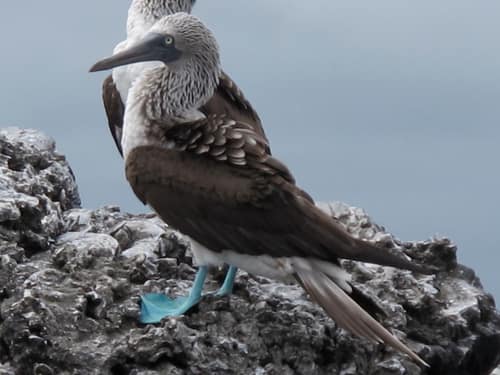
Frequent Companion (c) Mikko Koponen, some rights reserved (CC BY) · cc-by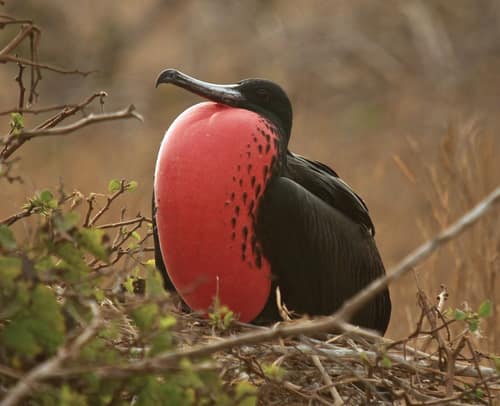
Kleptoparasite Andrew Turner from Washington, DC, United States / CC BY 2.0 · cc-by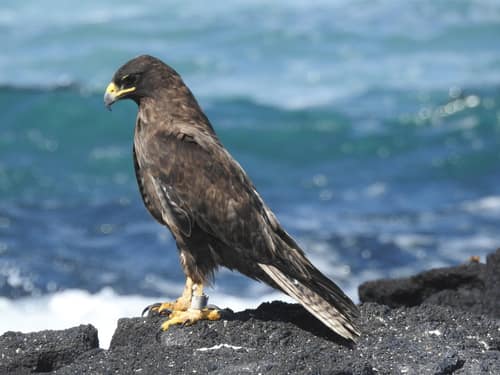
Predator (c) Tristan Jobin, some rights reserved (CC BY), uploaded by Tristan Jobin · cc-by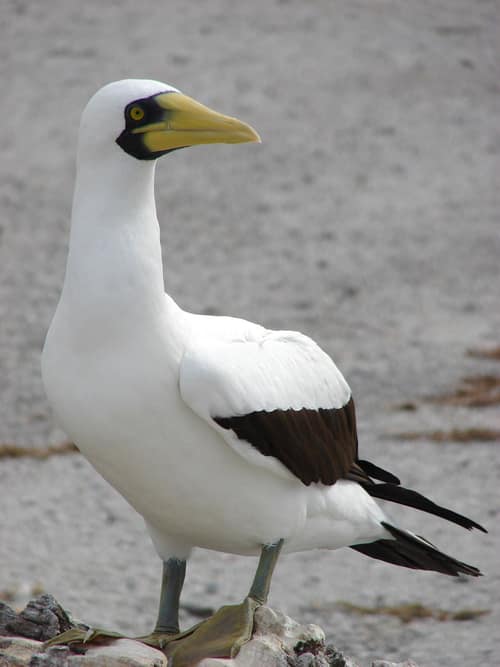
Close Relative Forest & Kim Starr / CC BY 3.0 · cc-by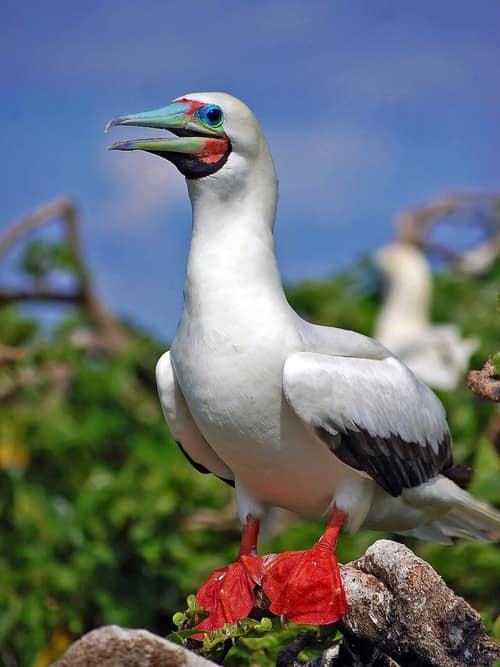
Close Relative Gregg Yan / CC BY-SA 3.0 · cc-by-sa
Help improve the field guideSomething wrong?
Checking your Fauna account…Report a name, category, or profile issue for review.