
Bird
Bearded Vulture
Gypaetus barbatusAlso known as Lammergeier, Ossifrage, Bearded Vulture-Eagle
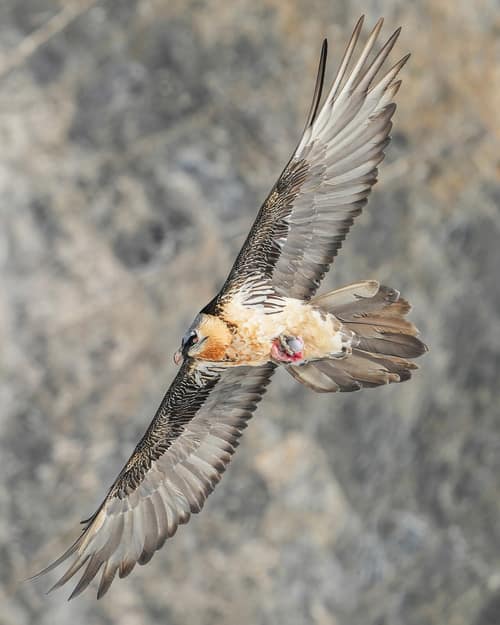
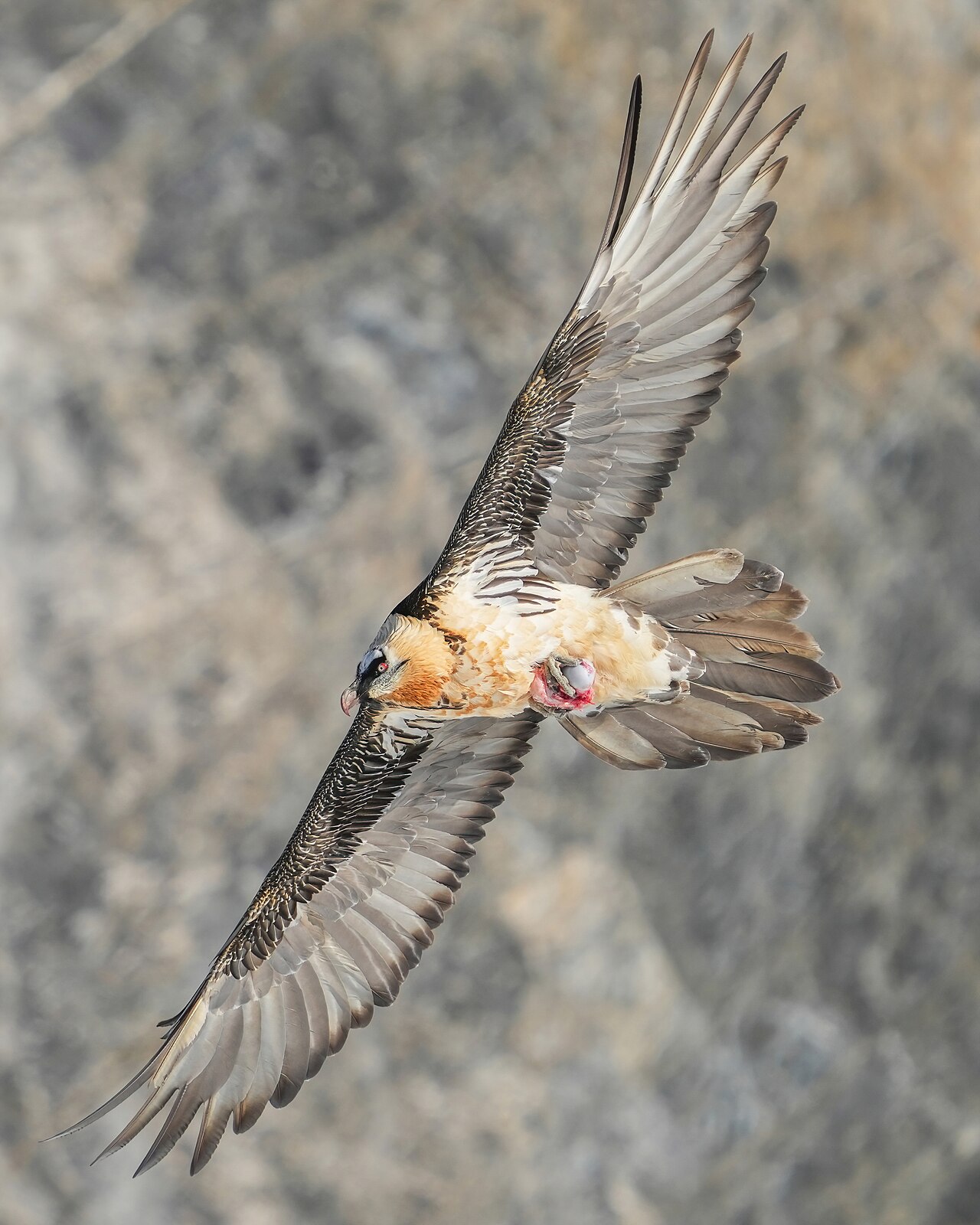
Bearded vultures soar high above alpine peaks, patrolling mountain valleys for the osteo-rich remains of large mammals. Unlike other scavengers, adults drop heavy bones from heights of up to 100 meters onto rocky break-areas to shatter them into manageable, marrow-filled pieces. They stain their naturally white head and chest plumage a striking rust-orange by deliberately bathing in iron-rich mineral muds.
ScavengerMountain WildlifeSoaring Bird
—observations
—countries
—peak records
Near ThreatenedConservation statusIUCN Red List categoriesLCNTVUENCREWEXNear ThreatenedRed List categories, explained →
Diet & preyMammal bones, Bone marrow, Small carcasses
Predators
- Golden Eagle
ThreatsPoisoned livestock bait, power line collisions, nest disturbance, and habitat loss
HabitatsHigh mountain crags, alpine meadows, steep canyons, and rocky plateaus
Life span20–30 years in the wild; up to 45 years in captivity
Classification
- FamilyAccipitridae
- SpeciesGypaetus barbatus
Range data is not available yet.
Interaction riskLow
- Low
- Moderate
- High
- Very high
- Why interaction risk is low
- Nests high on remote cliff ledges; observe from a respectful distance to avoid disturbing brooding adults.
- What to notice
- Massive mountain raptor with long pointed wings, a diamond-shaped tail, and black facial tufts.
- Support conservation
- Keep a generous distance from active nesting cliffs and report wild sightings to local raptor monitoring groups.
Responsible observation
- Cliff scanning: Use high-powered optics to scan ridge lines and thermal updrafts where birds soar.
- Feather coloration: Look for orange breast feathers, which reveal access to iron-rich mineral mud springs.
- Breeding sensitivity: Keep hundreds of meters away from cliff faces containing active stick nests.
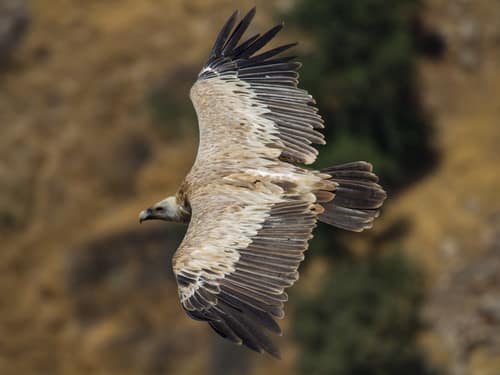
Scavenger Competitor (c) Вых Пыхманн, some rights reserved (CC BY-SA) · cc-by-sa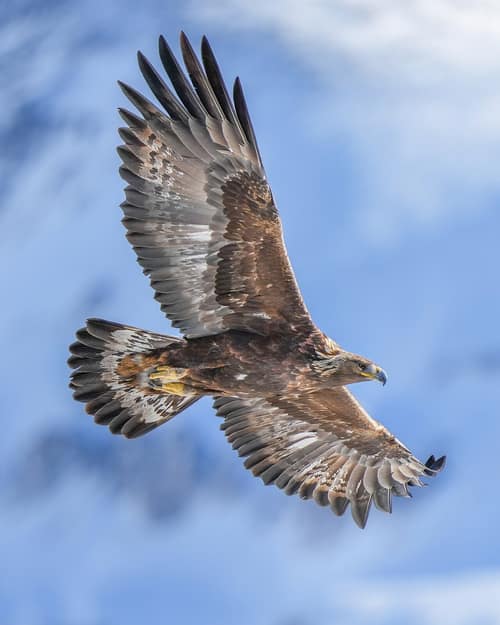
Mountain Neighbor Giles Laurent / CC BY-SA 4.0 · cc-by-sa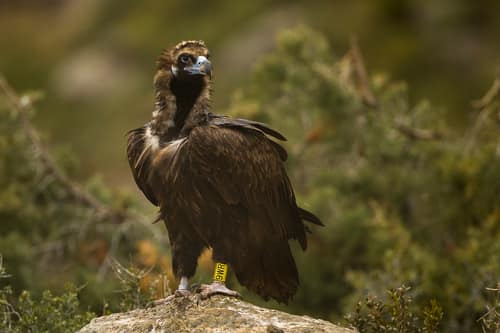
Co-occurring Scavenger "Cinereous Vulture - Catalan Pyrenees - Spain_S4E7599" by fveronesi1 is licensed under CC BY-SA 2.0. To view a copy of this license, visit https://creativecommons.org/licenses/by-sa/2.0/. · cc-by-sa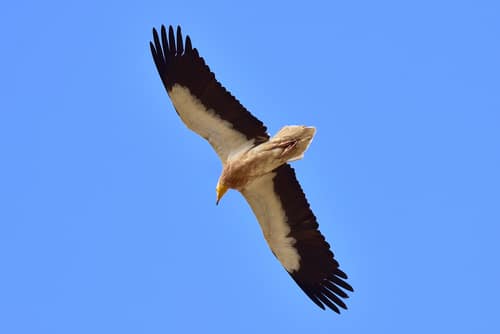
Close Relative (c) Kudaibergen Amirekul, some rights reserved (CC BY-SA), uploaded by Kudaibergen Amirekul · cc-by-sa
Help improve the field guideSomething wrong?
Checking your Fauna account…Report a name, category, or profile issue for review.