
Bird
Ridgway's Hawk
Buteo ridgwayiAlso known as Hispaniolan Hawk
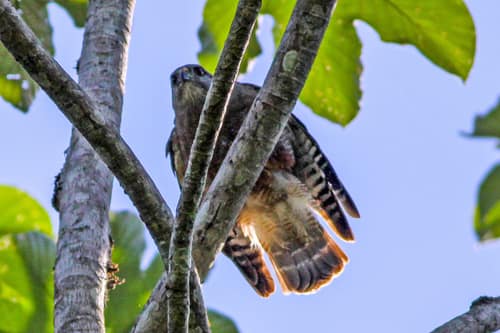
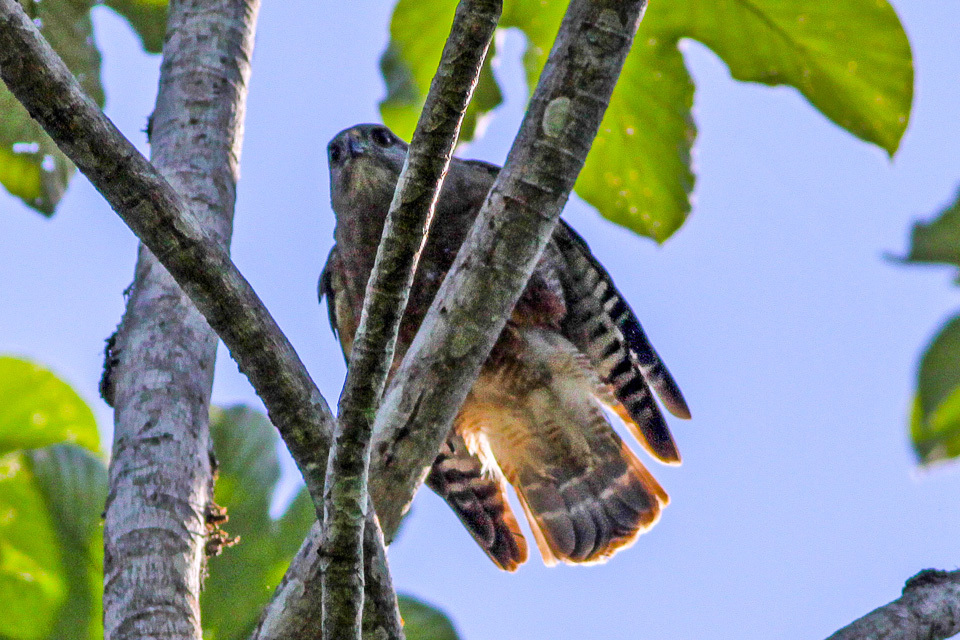
Ridgway's hawks are compact Caribbean raptors recognizable by their rich rufous thighs, brown-and-gray upperparts, and heavily barred tails. Endemic to Hispaniola, these hunters perch quietly in forest canopies before dropping swiftly to capture lizards, snakes, and small mammals. Intensive community conservation and nest protection programs are currently helping populations recover across protected parklands.
EndemicRaptor
—observations
—countries
—peak records
Critically EndangeredConservation statusIUCN Red List categoriesLCNTVUENCREWEXCritically EndangeredRed List categories, explained →
Diet & preyAnole Lizards, Snakes, Small Rodents
Predators
- Humans
- Feral Cats
- Invasive Rats
ThreatsHabitat destruction, human persecution, parasitic nest flies
HabitatsTropical lowland forests, rainforests, pine forests
Life span10 to 15 years
Classification
- FamilyAccipitridae
- SpeciesButeo ridgwayi
Range data is not available yet.
Interaction riskLow
- Low
- Moderate
- High
- Very high
- Why interaction risk is low
- Safe to observe at a normal distance.
- What to notice
- Look for a medium-sized hawk with bright rufous thighs, a barred tail, and a high-pitched whistling call.
- Support conservation
- Keep a wide distance from nesting trees to prevent nest abandonment, and do not publish exact nest coordinates.
Responsible observation
- Observation Distance: Keep a respectful distance and use binoculars, particularly during the spring nesting season.
- Prime Spotting: Visit Los Haitises National Park in the early morning when adults actively hunt along forest edges.
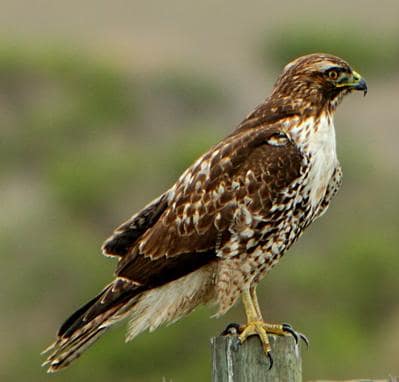
Close Relative Buteo_jamaicensis_1.jpg: Alan Vernon derivative work: Berichard (talk) / CC BY 2.0 · cc-by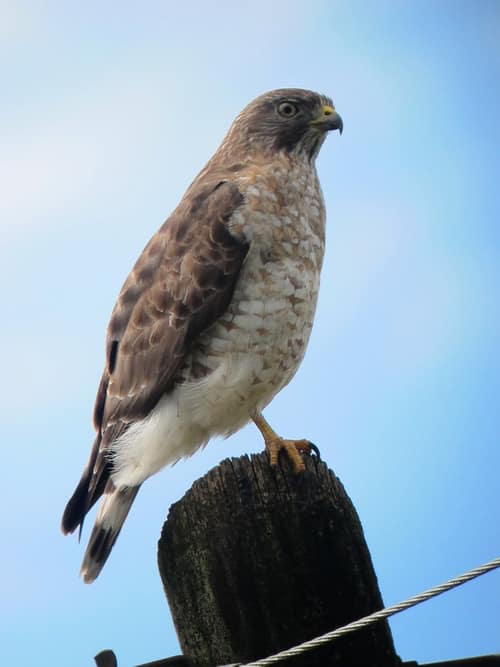
Close Relative "Buteo platypterus / Gavilán aliancho / Broad-winged Hawk" by felixú is licensed under CC BY-SA 2.0. To view a copy of this license, visit https://creativecommons.org/licenses/by-sa/2.0/. · cc-by-sa
Help improve the field guideSomething wrong?
Checking your Fauna account…Report a name, category, or profile issue for review.