
Bird · GBIF taxon 2480386
Cape Vulture
Gyps coprotheresAlso known as Cape Griffon, Kolbe's Vulture
Cape vultures are massive, highly social scavengers that soar vast distances over southern African landscapes in search of large mammal carcasses. They nest and roost in communal colonies on steep mountain cliffs, relying on thermal updrafts to lift their heavy bodies into the sky. Adults use their keen eyesight to follow other scavengers to meals, where dozens of birds may gather in loud, frenzied feeding aggregations.
ScavengerCliff-NestingEndemic
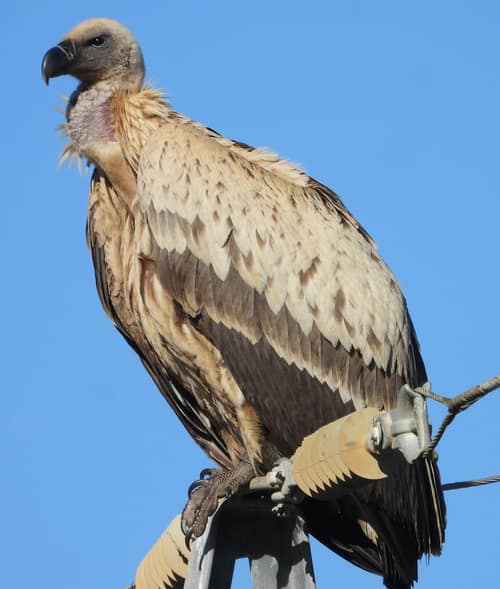
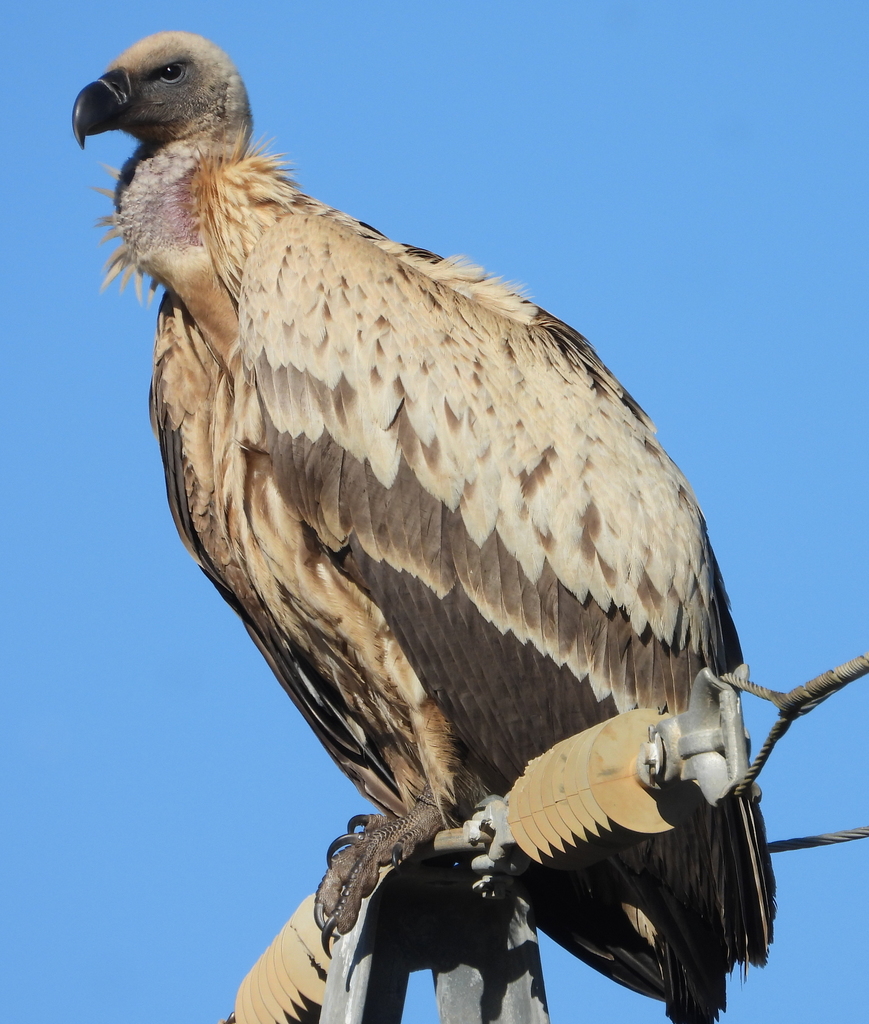 1 / 7
1 / 7—observations
—countries
—peak records
VulnerableConservation statusIUCN Red List categoriesLCNTVUENCREWEXVulnerableRed List categories, explained →
Diet & prey
- Large mammal carcasses
- Bone fragments
Predators
- Leopard
- Verreaux's Eagle
ThreatsPoisoning, power line collisions, electrocution, bone harvesting
HabitatsMountain cliffs, savannas, open grasslands
Life span25–30 years
Size / weightNot available
Classification
- FamilyAccipitridae
- SpeciesGyps coprotheres
Range data is not available yet.
Interaction riskLow
- Low
- Moderate
- High
- Very high
- Why interaction risk is low
- Safe to observe at a normal distance.
- What to notice
- Recognizable by its pale plumage, bare bluish neck, creamy back, and massive wingspan.
- Support conservation
- Keep a safe distance from active nesting cliffs to avoid disturbing breeding pairs and vulnerable chicks.
Responsible observation
- Observation Viewpoints: Scan high basalt or sandstone cliff faces in mountain reserves using a spotting scope.
- Sky Monitoring: Watch for massive thermalling flocks wheeling overhead near game reserves on warm afternoons.
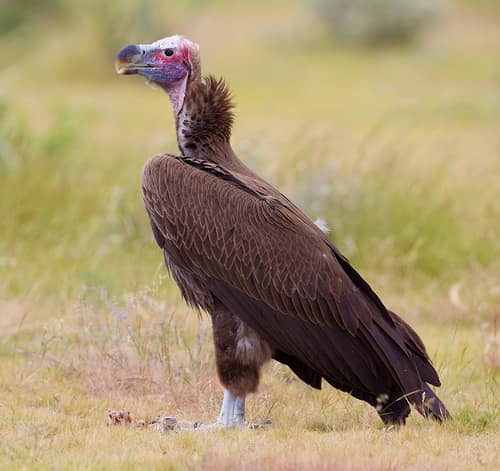
Competitor (c) Yathin sk, some rights reserved (CC BY-SA) · cc-by-sa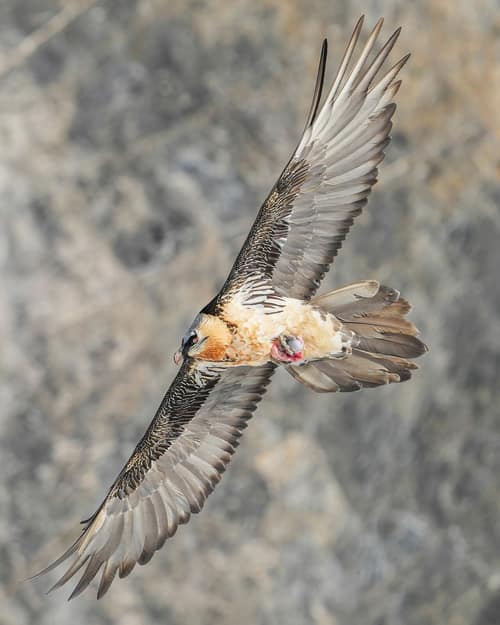
Frequent Companion Giles Laurent / CC BY-SA 4.0 · cc-by-sa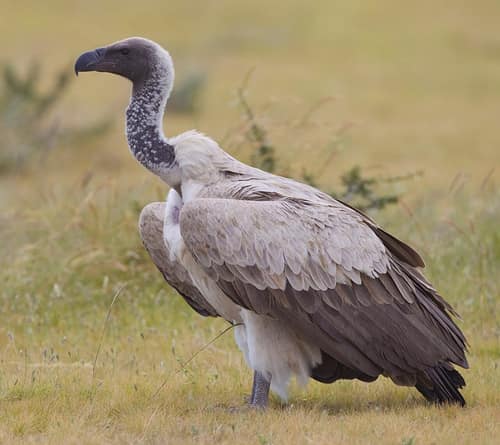
Close Relative Yathin sk / CC BY-SA 3.0 · cc-by-sa
Help improve the field guideSomething wrong?
Checking your Fauna account…Report a name, category, or profile issue for review.