
Bird
Killdeer
Charadrius vociferusAlso known as Noisy Plover, Chattering Plover
Killdeer are loud, active plovers famous for nesting on gravel patches, open fields, and lawns rather than coastal shorelines. When a threat approaches their ground nest, adults perform an elaborate broken-wing display, feigning a grave injury while calling distressfully to draw intruders away from camouflaged eggs. Their double black breast bands and bright reddish-orange rump patches make them easy to recognize on the ground and in flight.
Ground-NestingShorebirdVocal
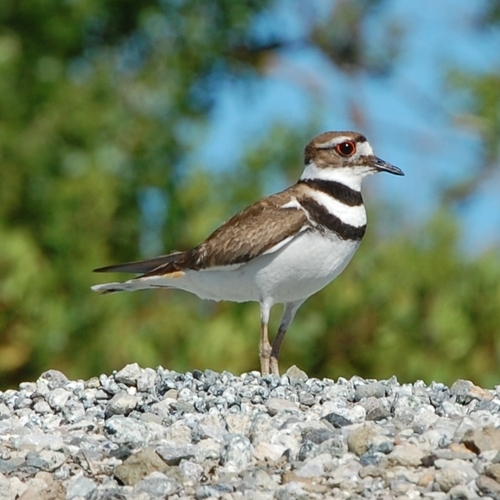
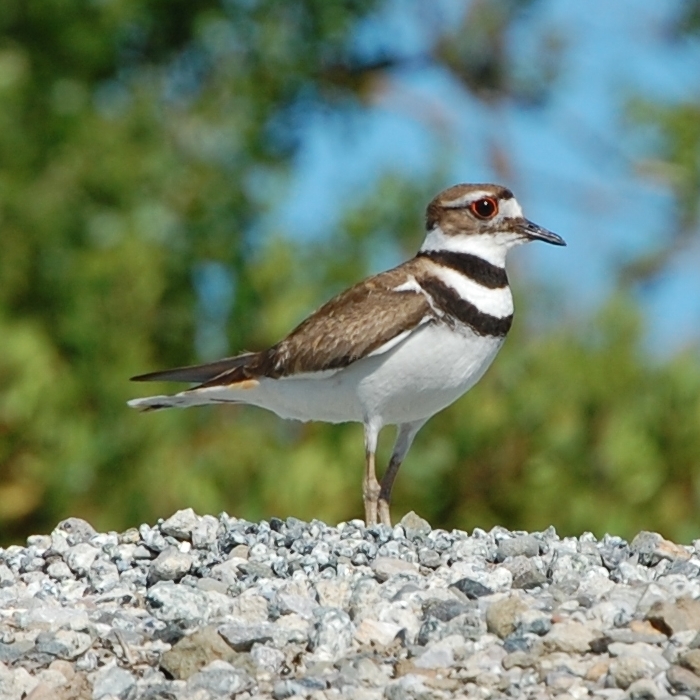
—observations
—countries
—peak records
Near ThreatenedConservation statusIUCN Red List categoriesLCNTVUENCREWEXNear ThreatenedRed List categories, explained →
Diet & preyInsects, Earthworms, Beetles
Predators
- Domestic Cats
- Coyotes
- Raptors
ThreatsMowing operations, vehicle traffic, domestic pets, and nest trampling
HabitatsFields, lawns, mudflats, gravel shores, and rooftops
Life span3–10 years
Classification
- OrderCharadriiformes
- FamilyCharadriidae
- GenusCharadrius
- SpeciesCharadrius vociferus
Range data is not available yet.
Interaction riskLow
- Low
- Moderate
- High
- Very high
- Why interaction risk is low
- Safe to observe at a normal distance.
- What to notice
- Look for two dark bands across a white chest and a orange-rufous patch visible on the lower back in flight.
- Support conservation
- Maintain a respectful distance during breeding season, watching where you walk in gravelly or sparse open areas.
Responsible observation
- Watch your step: Look carefully when walking in gravelly areas or pastures during spring to avoid stepping on hidden eggs.
- Give space when feigning injury: Back off immediately if an adult begins a broken-wing display to avoid stressing the parent.
- Leash pets: Keep dogs on a leash near open grassy fields to prevent nest destruction.
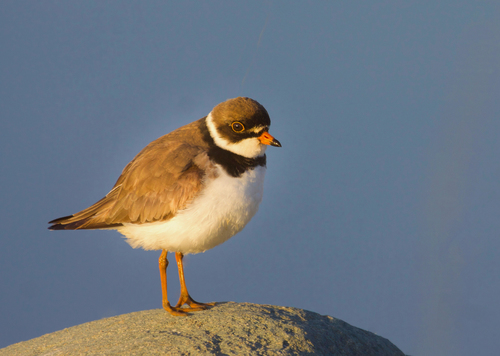
Close Relative (c) Gregory Smith, some rights reserved (CC BY-SA) · cc-by-sa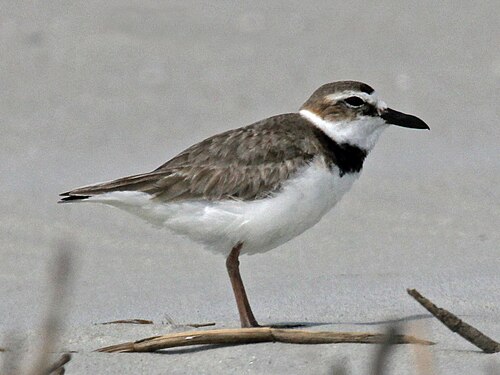
Close Relative DickDaniels (http://carolinabirds.org/) / CC BY-SA 3.0 · cc-by-sa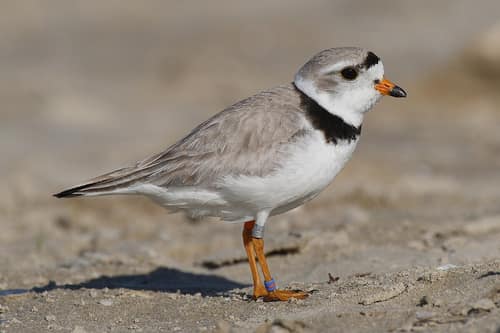
Close Relative Mdf derivative work: User:Tmv23 (talk) / CC BY-SA 3.0 · cc-by-sa
Help improve the field guideSomething wrong?
Checking your Fauna account…Report a name, category, or profile issue for review.