
Bird
Thick-billed Parrot
Rhynchopsitta pachyrhynchaAlso known as Thick-Billed Macaw, Thick-Billed Conure
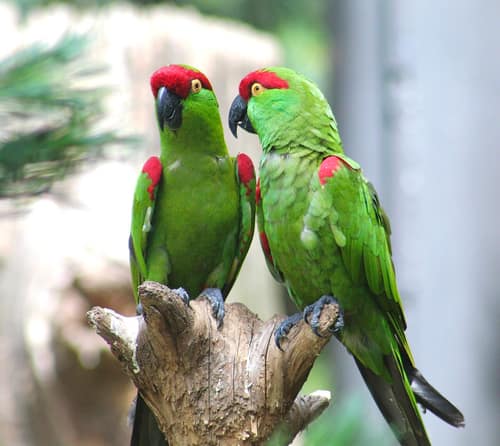
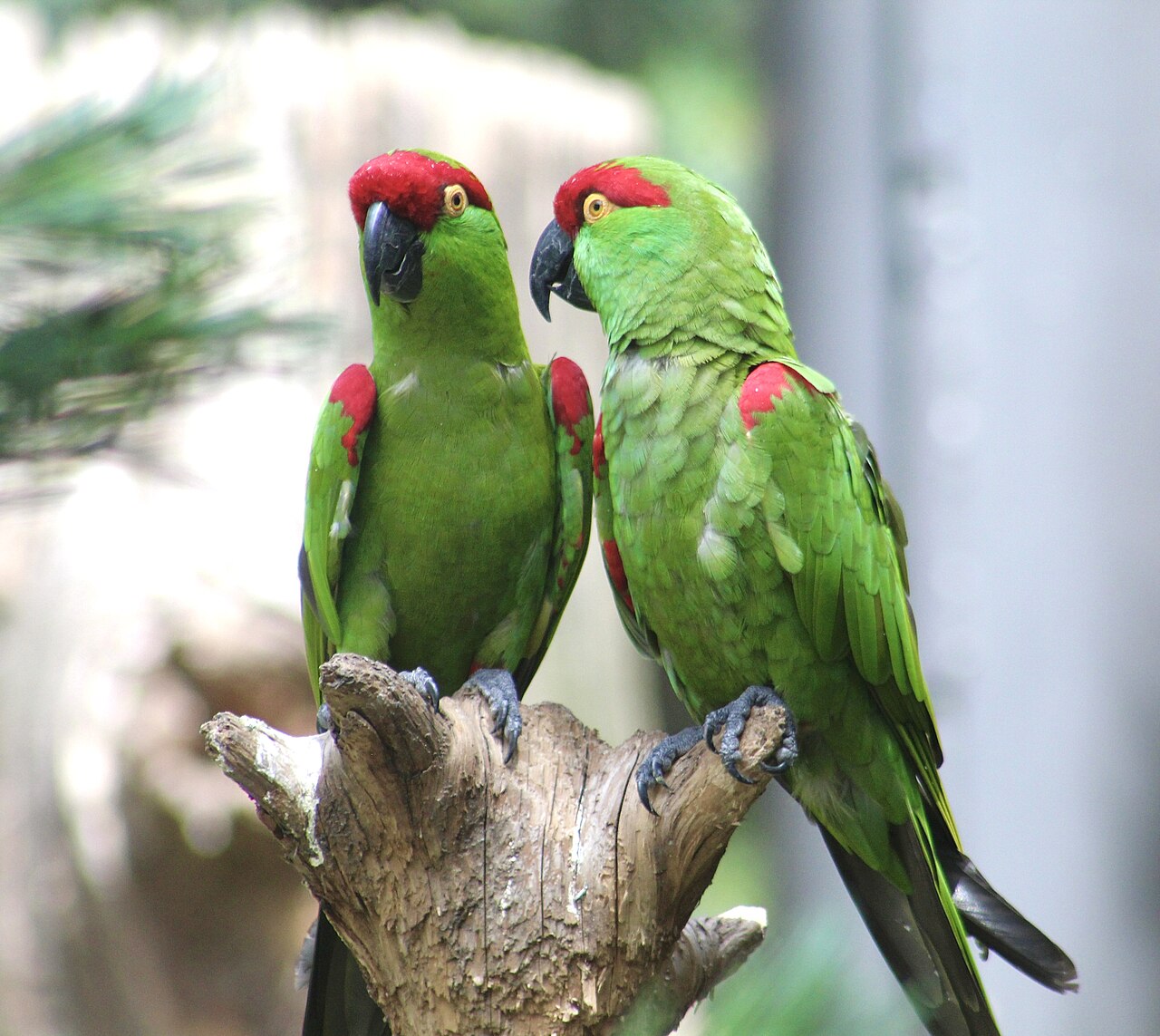
Thick-billed parrots form noisy, cohesive flocks that travel through high-altitude pine forests in search of conifer seeds. They rely on old-growth trees for both food and cavity nesting, using heavy black beaks to tear open unopened pine cones with remarkable efficiency. Their loud, rolling calls resemble distant human laughter and echo across mountain valleys long before the flock comes into view.
AlpineFlocking
—observations
—countries
—peak records
EndangeredConservation statusIUCN Red List categoriesLCNTVUENCREWEXEndangeredRed List categories, explained →
Diet & preyPine seeds, Douglas-fir seeds, Acorns
Predators
- Northern Goshawk
- Red-tailed Hawk
- Peregrine Falcon
ThreatsLogging of old-growth trees, habitat fragmentation, climate change
HabitatsHigh-elevation temperate pine-oak and fir forests
Life span30–50 years
Classification
- FamilyPsittacidae
- SpeciesRhynchopsitta pachyrhyncha
Range data is not available yet.
Interaction riskLow
- Low
- Moderate
- High
- Very high
- Why interaction risk is low
- Possesses a massive beak capable of severe bites if cornered; observe quietly from a distance.
- What to notice
- Emerald green body with bright crimson forehead and shoulder patches, paired with a massive black bill.
- Support conservation
- Keep a respectful distance from nesting cavities, avoid loud noises, and keep exact location details private.
Responsible observation
- Listening for Calls: Listen for loud, laugh-like screeching echoing through high-altitude forest valleys.
- Nest Protection: Give standing dead pine trees wide berth during summer breeding months to avoid nest disturbance.
- Binocular Viewing: Use optics from established trails to observe flocks foraging high in the pine canopy.
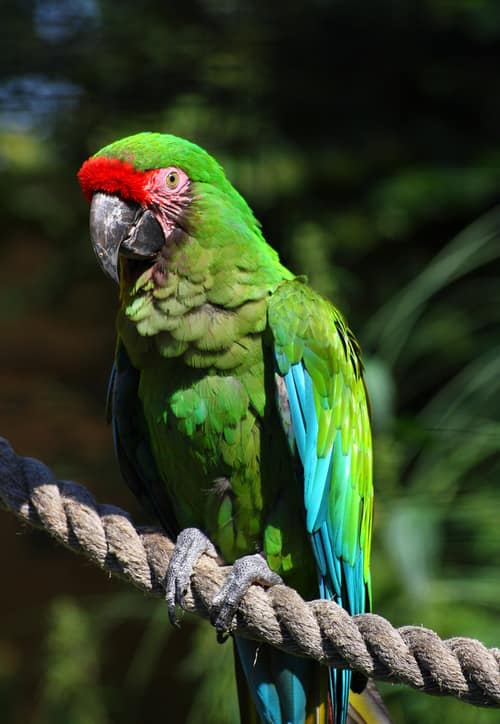
Co-occurring Parrot neiljs / CC BY 2.0 · cc-by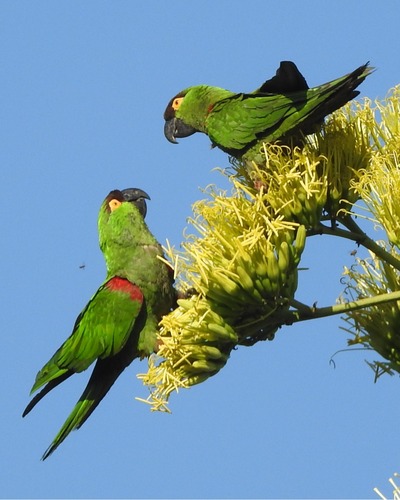
Close Relative (c) Adriana Nelly Correa Sandoval, some rights reserved (CC BY) · cc-by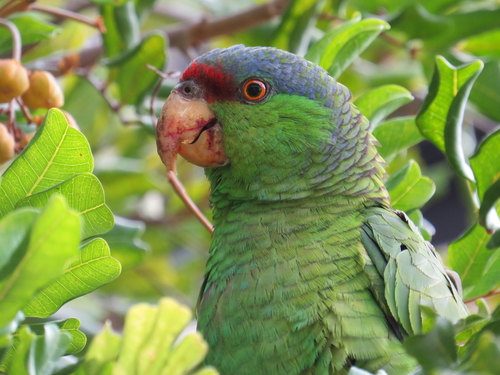
Regional Relative (c) James M. Maley, some rights reserved (CC BY), uploaded by James M. Maley · cc-by
Help improve the field guideSomething wrong?
Checking your Fauna account…Report a name, category, or profile issue for review.