
Bird · GBIF taxon 2479902
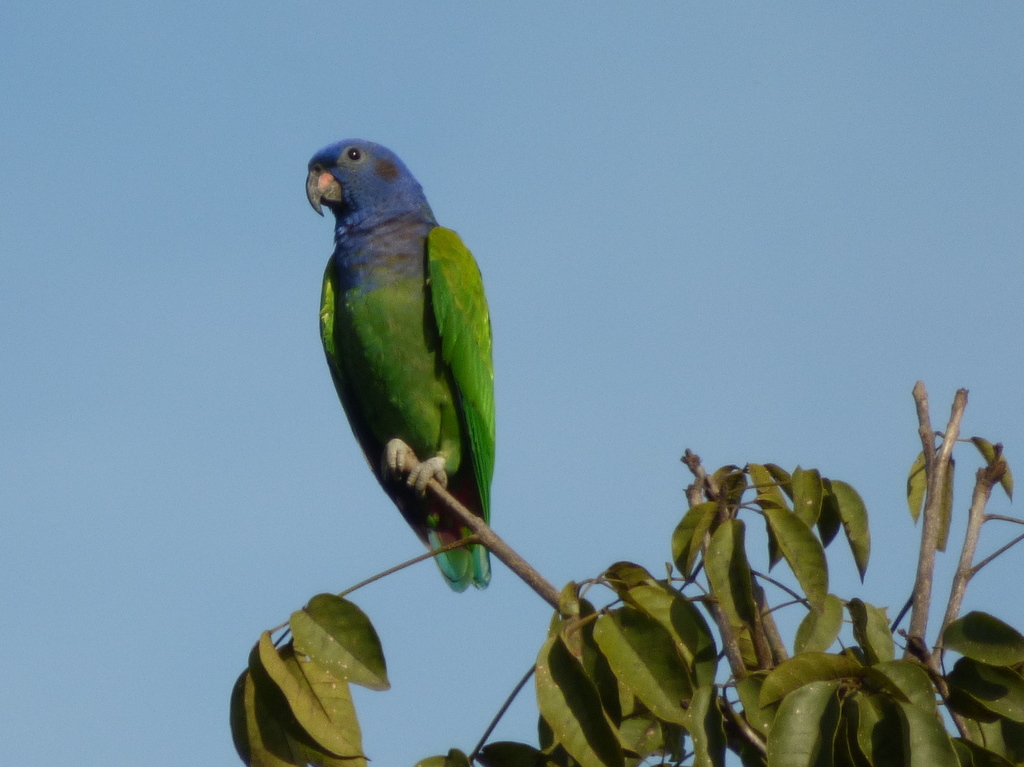
Blue-headed Parrot
Pionus menstruusAlso known as Blue-headed Pionus, Red-vented Parrot
Blue-headed parrots traverse the canopy in noisy flocks, announcing their presence with sharp, high-pitched screeching calls while flying between roosts and feeding grounds. Pairs nest high in tree cavities, often occupying abandoned woodpecker holes or rotting palm stumps where both adults defend the clutch. At mineral-rich river clay licks across the western Amazon basin, hundreds congregate alongside other parrots to consume soil that neutralizes dietary toxins.
Canopy DwellerFrugivoreCavity Nester

 1 / 7
1 / 7—observations
—countries
—peak records
Least ConcernConservation statusIUCN Red List categoriesLCNTVUENCREWEXLeast ConcernRed List categories, explained →
Diet & prey
- Palm fruits
- Fig tree seeds
- Inga tree seeds
Predators
- Harpy Eagle
- Black-and-white Hawk-Eagle
- Ocelot
ThreatsDeforestation and capture for the local cage-bird trade
HabitatsHumid lowland rainforests, gallery forests, edges, and plantations
Life span25–40 years
Size / weightNot available
Classification
- OrderPsittaciformes
- FamilyPsittacidae
- GenusPionus
- SpeciesPionus menstruus
Range data is not available yet.
Interaction riskLow
- Low
- Moderate
- High
- Very high
- Why interaction risk is low
- Can deliver a powerful bite with its hooked bill if handled; observe from a distance.
- Why it is dangerous
- Possesses a heavy, curved bill capable of exerting immense crushing force that can puncture skin and crush finger bones if cornered or restrained.
- How to recognize a risky encounter
- Recognizable by the bright cobalt-blue hood contrasting sharply with a solid green body, black ear patches, and bright red undertail feathers.
- What to do
- Do not attempt to touch or rescue grounded individuals without heavy bite-proof gloves; contact a licensed wildlife rehabilitator instead.
Responsible observation
- Binocular Spotting: Scan high dead snags and fruiting fig trees early in the morning for perched pairs.
- Clay Lick Etiquette: Maintain silence in observation blinds along riverbanks to avoid spooking feeding flocks.

Frequent Companion (c) Esteban Poveda, some rights reserved (CC BY), uploaded by Esteban Poveda · cc-by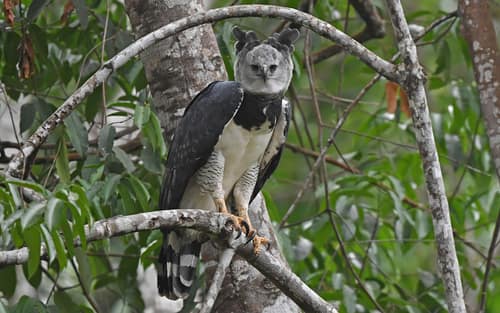
Predator (c) Christoph Moning, some rights reserved (CC BY), uploaded by Christoph Moning · cc-by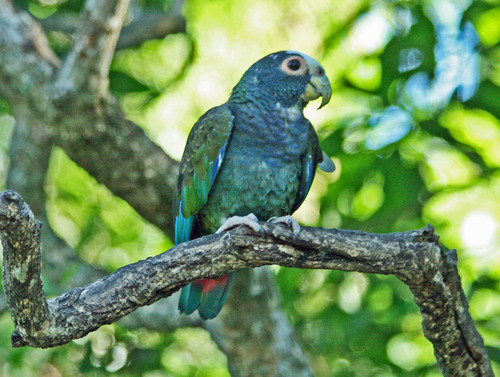
Close Relative (c) SandyCole, some rights reserved (CC BY-SA) · cc-by-sa
Close Relative (c) Randy, some rights reserved (CC BY) · cc-by
Help improve the field guideSomething wrong?
Checking your Fauna account…Report a name, category, or profile issue for review.