
Bird
Mealy Amazon
Amazona farinosaAlso known as Mealy Parrot, Southern Mealy Amazon, Floury Parrot
Mealy amazons forage high in the tropical canopy in bonded pairs or loose flocks, often gathering in massive communal roosts at twilight. Their green plumage carries a distinctive powdery cast that resembles a dusting of flour, giving them their common name. Pairs maintain lifelong monogamous bonds, communicating across vast rainforest expanses with deep, resonant bugling calls and low throaty murmurs during mutual grooming.
Canopy DwellingVocalFrugivore


—observations
—countries
—peak records
Least ConcernConservation statusIUCN Red List categoriesLCNTVUENCREWEXLeast ConcernRed List categories, explained →
Diet & preyWild Figs, Palm Nuts, Legume Seeds
Predators
- Harpy Eagle
- Black Hawk-Eagle
- Boa Constrictor
ThreatsCanopy deforestation, forest fragmentation, and targeted poaching for the wild bird trade
HabitatsDense humid lowland rainforest, gallery forest, and wooded river edges
Life span40–60 years
Classification
- OrderPsittaciformes
- FamilyPsittacidae
- GenusAmazona
- SpeciesAmazona farinosa
Range data is not available yet.
Interaction riskLow
- Low
- Moderate
- High
- Very high
- Why interaction risk is low
- Wields a powerful beak capable of cracking hardwood nuts; observe from a distance and do not handle.
- Why it is dangerous
- Possesses a heavy, hooked bill evolved for cracking dense palm nuts that can easily crush bone or produce deep puncture wounds if cornered.
- How to recognize a risky encounter
- Recognizable by its large stocky frame, slate-blue nape tint, faint flour-dusted feather wash, and red wing speculum.
- What to do
- Keep hands away from grounded or injured individuals; use heavy towels and contact licensed wildlife rehabilitators.
- What to notice
- Look for one of the largest green parrots in Central and South America, distinguished by its white eye-ring and resonant bugling voice.
- Support conservation
- Avoid using call playback near mature hollow-bearing nest trees and maintain a respectful distance from active breeding cavities.
Responsible observation
- Listening for Calls: Tune in at dawn and dusk when flocks vocalize loudly during transit between roosts and feeding grounds.
- Clay Lick Etiquette: Maintain quiet and stay behind designated blinds when watching them ingest riverbank minerals.
- Canopy Scanning: Use a spotting scope to pick out their pale green silhouettes camouflaged within the upper foliage.
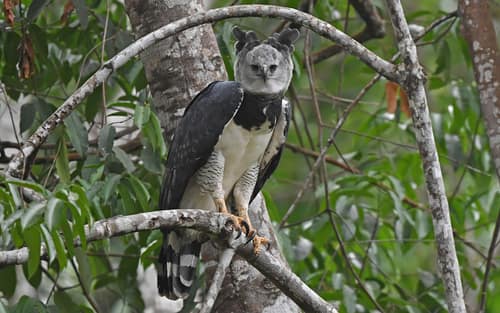
Predator (c) Christoph Moning, some rights reserved (CC BY), uploaded by Christoph Moning · cc-by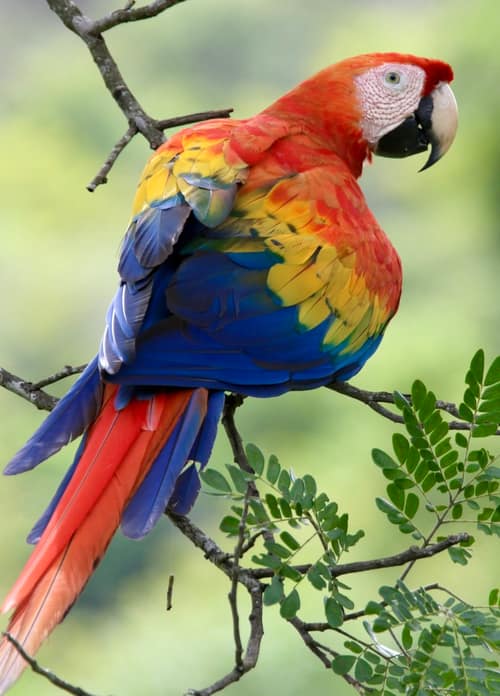
Frequent Companion (c) Cricket Raspet, some rights reserved (CC BY), uploaded by Cricket Raspet · cc-by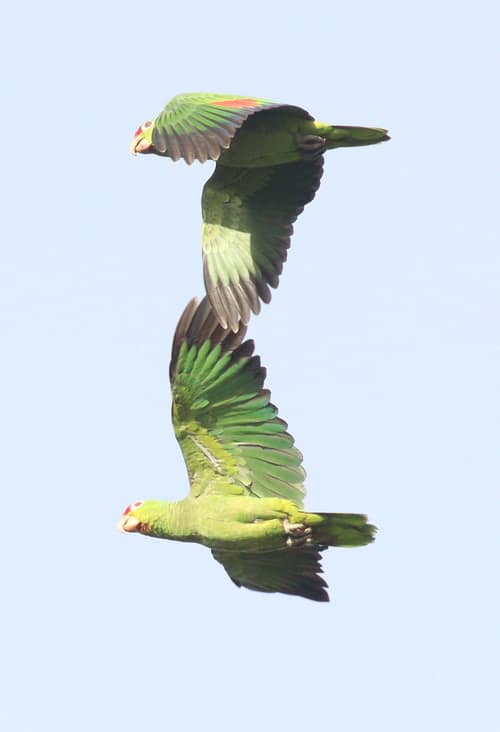
Close Relative (c) Jan Ebr & Ivana Ebrová, some rights reserved (CC BY), uploaded by Jan Ebr & Ivana Ebrová · cc-by
Close Relative (c) Alejandro Bayer Tamayo, some rights reserved (CC BY-SA) · cc-by-sa
Help improve the field guideSomething wrong?
Checking your Fauna account…Report a name, category, or profile issue for review.