
Bird
Orange-winged Amazon
Amazona amazonicaAlso known as Orange-Winged Parrot, Loro Guaro
Orange-winged amazons travel in boisterous pairs or large flocks, filling dawn and dusk skies with grating squawks and whistling calls as they commute between forest feeding grounds and riverside roosts. Pairs bond for life and nest high off the ground in natural tree hollows or decaying palm trunks, taking turns guarding clutches against arboreal predators. They play a vital ecological role across South American wetlands and lowland forests by dispersing large seeds and pruning canopy vegetation.
VocalFlockingTropical


—observations
—countries
—peak records
Least ConcernConservation statusIUCN Red List categoriesLCNTVUENCREWEXLeast ConcernRed List categories, explained →
Diet & preyPalm fruits, Wild figs, Canopy tree seeds
Predators
- Harpy Eagle
- Boa Constrictor
- Ocelot
ThreatsPoaching for the cage-bird trade, deforestation, and retaliatory shooting by farmers
HabitatsTropical rainforests, gallery forests, mangroves, swamp woodlands, and agricultural edges
Life span20–30 years in the wild
Classification
- OrderPsittaciformes
- FamilyPsittacidae
- GenusAmazona
- SpeciesAmazona amazonica
Range data is not available yet.
Interaction riskLow
- Low
- Moderate
- High
- Very high
- Why interaction risk is low
- Possesses a powerful hooked bill capable of inflicting deep bites; observe perched birds from a safe distance.
- Why it is dangerous
- Possesses a heavy, curved bill capable of exerting immense crushing force meant for hard nuts, which can cause severe lacerations or puncture wounds.
- How to recognize a risky encounter
- Recognizable by bright green body plumage, pale yellow and violet-blue facial patches, and distinct orange wing patches visible in flight.
- What to do
- Never attempt to corner, grab, or handle wild or feral parrots; admire them through binoculars from a respectful distance.
Responsible observation
- Commuter Spotting: Watch the sky at sunrise and sunset when vocal pairs fly in tight formation between communal roosts and feeding trees.
- Wing Flash Identification: Look for bright orange speculum feathers on the wings and orange tail tips when viewing birds in flight.
- Canopy Patience: Listen for quiet cracking sounds overhead, as feeding flocks often fall completely silent while devouring fruits.

Competitor (c) Alejandro Bayer Tamayo, some rights reserved (CC BY-SA) · cc-by-sa
Frequent Companion (c) Esteban Poveda, some rights reserved (CC BY), uploaded by Esteban Poveda · cc-by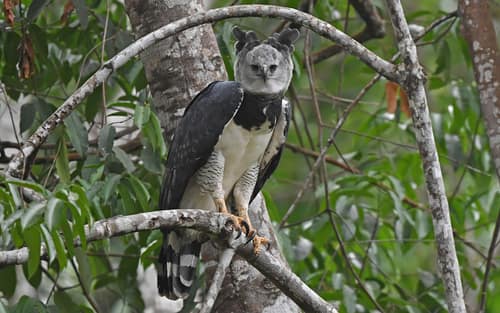
Predator (c) Christoph Moning, some rights reserved (CC BY), uploaded by Christoph Moning · cc-by
Close Relative (c) Rodrigo Paiva Lázaro, some rights reserved (CC BY) · cc-by
Help improve the field guideSomething wrong?
Checking your Fauna account…Report a name, category, or profile issue for review.