
Bird
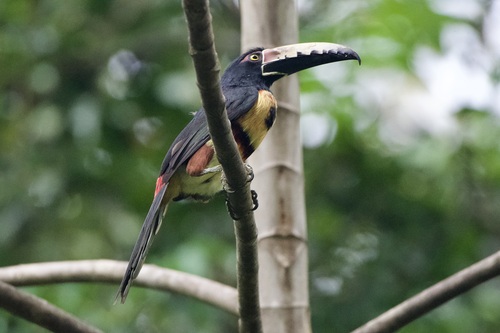
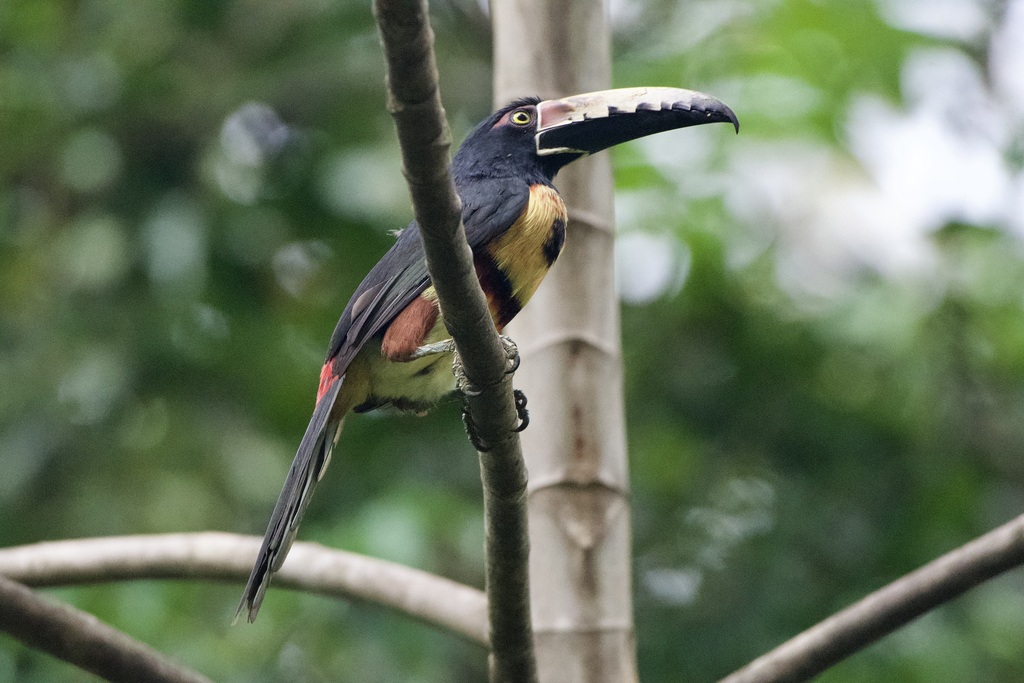
Collared Aracari
Pteroglossus torquatusAlso known as Collared Araçari, Banded Aracari, Ringed Aracari
Collared aracaris are highly social, medium-sized toucans that travel through the forest canopy in noisy family groups of up to fifteen individuals. They roost communally in old woodpecker cavities, often squeezing several adults into a single hollow with their long tails folded over their backs. Their striking yellow breasts are marked by a distinct black spot and a rusty red collar on the hindneck.
SocialFrugivorousCanopy Dweller
—observations
—countries
—peak records
Least ConcernConservation statusIUCN Red List categoriesLCNTVUENCREWEXLeast ConcernRed List categories, explained →
Diet & preyFigs, Palm fruits, Insects
Predators
- Forest falcons
- Large snakes
- Capuchin monkeys
ThreatsDeforestation, habitat fragmentation, and capture for the pet trade
HabitatsTropical rainforests, wet lowland forests, plantations, and secondary woodlands
Life span10 to 15 years
Classification
- FamilyRamphastidae
- SpeciesPteroglossus torquatus
Range data is not available yet.
Interaction riskLow
- Low
- Moderate
- High
- Very high
- Why interaction risk is low
- Safe to observe at a normal distance.
Responsible observation
- Listen for calls: Listen for their sharp, high-pitched pseek or peeseek calls to locate active foraging flocks.
- Scan fruiting trees: Look for them in canopy-level fig trees and palms where they gather to feed in the early morning.
- Watch old woodpecker holes: Observe dead tree trunks at dusk to spot family groups piling into communal roosting cavities.
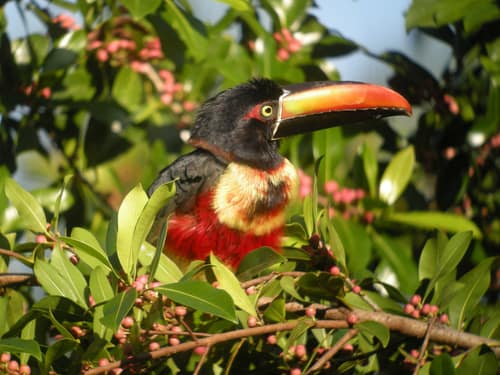
Close Relative (c) Frank Vassen, some rights reserved (CC BY) · cc-by Image unavailable
Close Relative 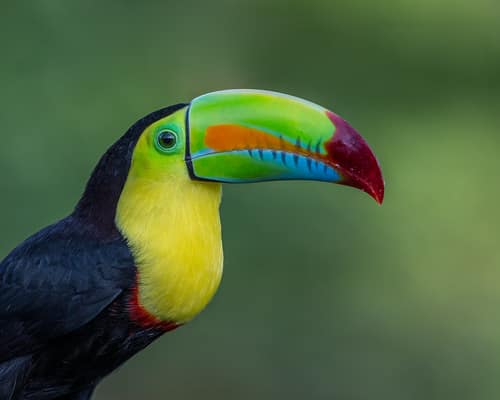
Family Member "Keel-billed Toucan" by Andy Morffew is licensed under CC BY 2.0. To view a copy of this license, visit https://creativecommons.org/licenses/by/2.0/. · cc-by
Help improve the field guideSomething wrong?
Checking your Fauna account…Report a name, category, or profile issue for review.