
Species · GBIF taxon 2478774
White-throated Toucan
Ramphastos tucanusAlso known as Red-billed Toucan, Cuvier's Toucan
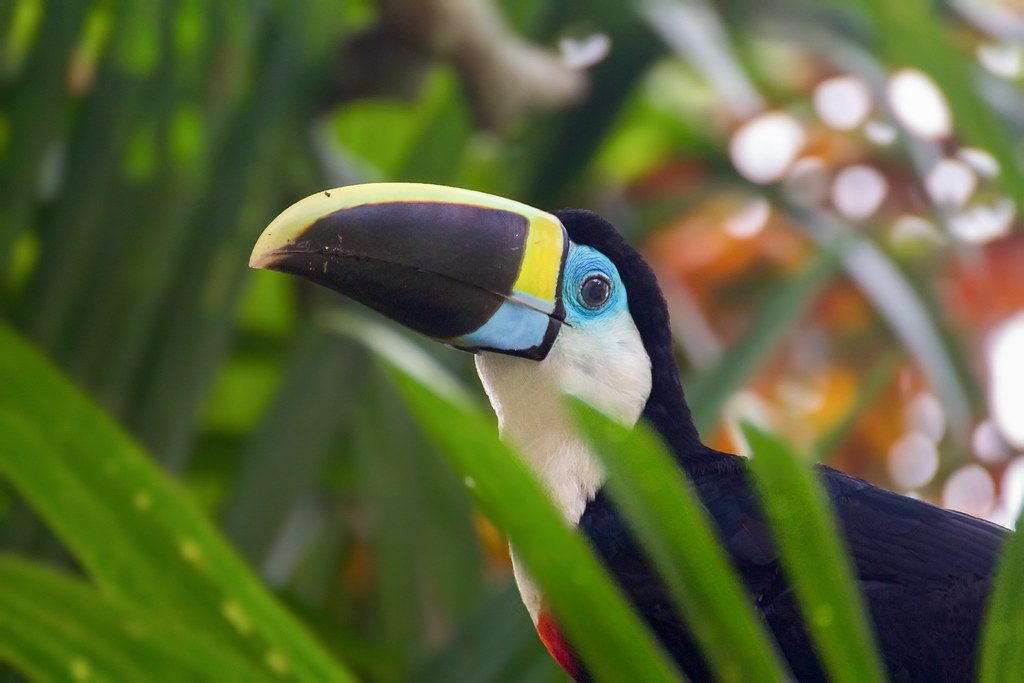
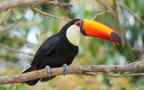
White-throated Toucans are striking canopy dwellers easily recognized by their massive, colorful bills and bright white throats bordered by a thin red line. They travel through the Amazonian treetops in small family groups, communicating with loud, yelping calls that carry far across the forest. These birds play a vital ecological role by dispersing the seeds of large forest fruits they swallow whole.
Canopy DwellerFrugivoreVocal

—observations
—countries
—peak records
VulnerableConservation statusIUCN Red List categoriesLCNTVUENCREWEXVulnerableRed List categories, explained →
Diet & prey
- Figs
- Palm Fruits
- Insects
Predators
- Harpy Eagles
- Large Snakes
- Forest Cats
ThreatsHabitat loss from deforestation, forest fragmentation, and hunting.
HabitatsTropical humid forests, woodlands, and riverine forests.
Life spanApproximately 15 to 20 years in the wild.
Size / weightNot available
Classification
- FamilyRamphastidae
- SpeciesRamphastos tucanus
Range data is not available yet.
Interaction riskLow
- Low
- Moderate
- High
- Very high
- Why interaction risk is low
- Capable of delivering a powerful bite with its large bill if cornered; observe from a safe distance.
- Why it is dangerous
- The massive bill is strong enough to crush seeds and can deliver a painful, skin-breaking bite if the bird is cornered or handled.
- How to recognize a risky encounter
- Identified by its large size, white throat, and a massive bill that is mostly dark or reddish with a yellow ridge.
- What to do
- Never attempt to corner, capture, or handle wild toucans; admire them through binoculars in their canopy habitat.
- What to notice
- Look for a large canopy bird with a white bib, yellow-and-red bill details, and a blue eye-ring.
- Support conservation
- Avoid using loud playback of their calls during the nesting season to prevent disrupting their breeding behavior.
Responsible observation
- Listen for calls: Locate them by listening for their loud, puppy-like yelping calls echoing through the canopy.
- Scan fruiting trees: Look for them in large canopy trees, especially wild figs and palms, during early morning feeding hours.
- Watch for flight: Observe their distinctive undulating flight pattern as they cross forest gaps one by one.

Competitor 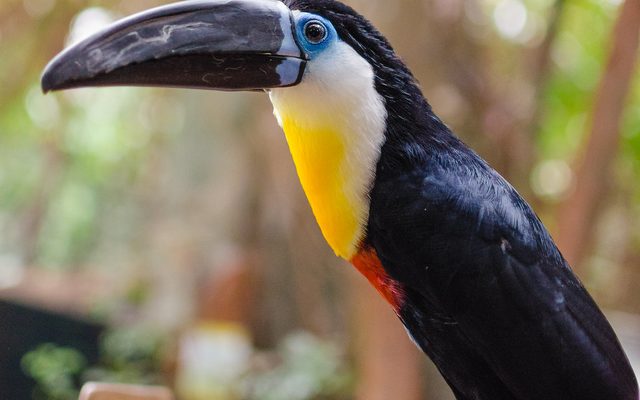
Close Relative "Channel-billed toucan" by Mathias Appel is marked with CC0 1.0. To view the terms, visit https://creativecommons.org/publicdomain/zero/1.0/. · cc0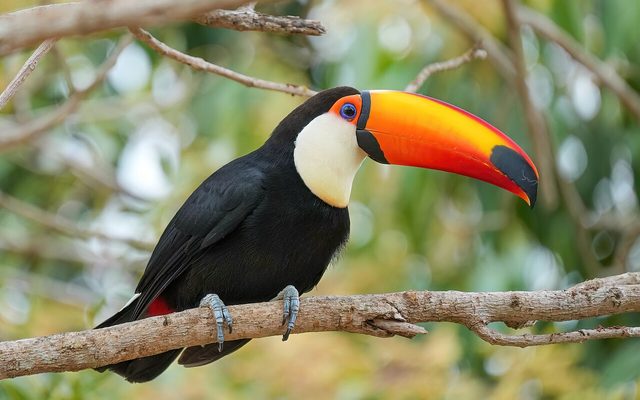
Close Relative Giles Laurent / CC BY-SA 4.0 · cc-by-sa
Help improve the field guideSomething wrong?
Checking your Fauna account…Report a name, category, or profile issue for review.