
Bird
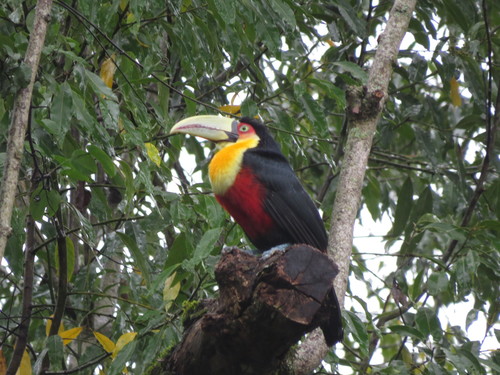
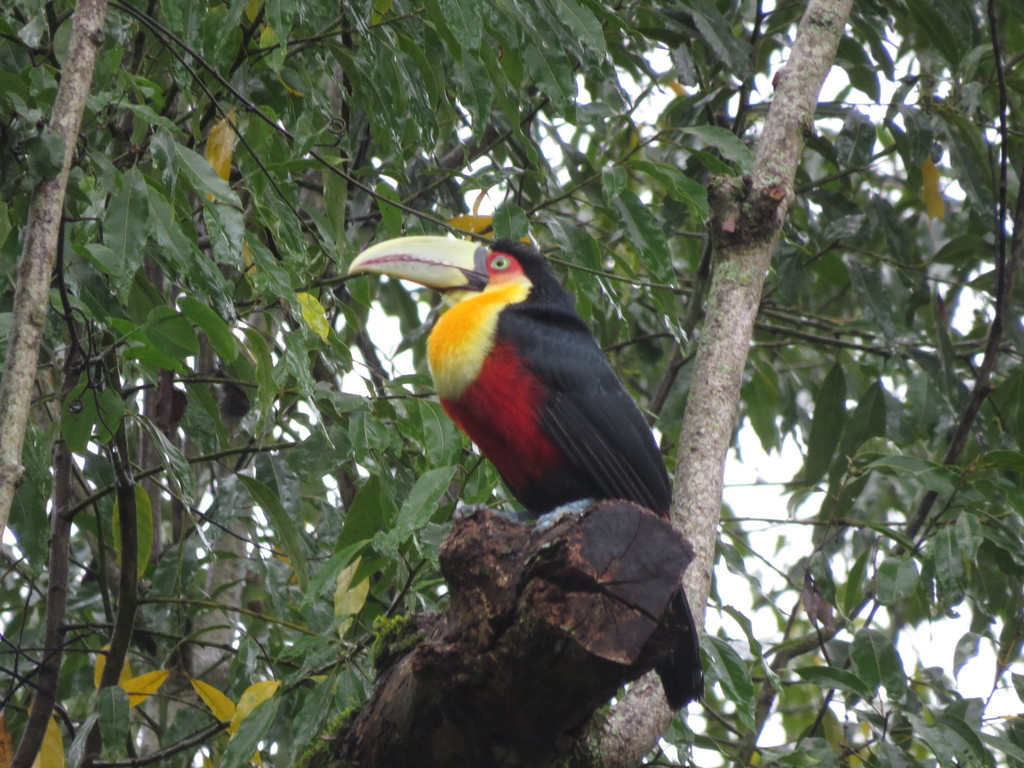
Red-breasted Toucan
Ramphastos dicolorusAlso known as Green-billed Toucan
Red-breasted toucans inhabit the dense canopy of the Atlantic Forest, traveling in small, noisy flocks that bounce among fruiting trees. Their oversized bills help them reach hanging fruits on delicate branches and serve as effective thermal radiators in fluctuating montane temperatures. Breeding pairs nest in abandoned woodpecker cavities high off the ground, defending their territory with dry, croaking calls that echo through the misty canopy.
Canopy DwellerFrugivoreForest Bird
—observations
—countries
—peak records
Least ConcernConservation statusIUCN Red List categoriesLCNTVUENCREWEXLeast ConcernRed List categories, explained →
Diet & preyPalm fruits, Tree crickets, Tree frogs
Predators
- Harpy Eagle
- Ocelot
- Tayra
ThreatsHabitat fragmentation, deforestation, and occasional illegal capture for the pet trade
HabitatsSubtropical and tropical moist lowland forests, montane Atlantic Forest, and Araucaria woodlands
Life span15–20 years in the wild
Classification
- FamilyRamphastidae
- SpeciesRamphastos dicolorus
Range data is not available yet.
Interaction riskLow
- Low
- Moderate
- High
- Very high
- Why interaction risk is low
- Safe to observe at a normal distance.
Responsible observation
- Listen for Calls: Locate flocks by tuning in to their repetitive, rhythmic, toad-like croaking calls in the morning.
- Scan Fruiting Canopies: Watch canopy trees bearing ripe figs or palm nuts, where these birds gather quietly to feed.
- Use Binoculars: Keep a respectful distance, as toucans easily spook and fly deeper into the canopy if approached.
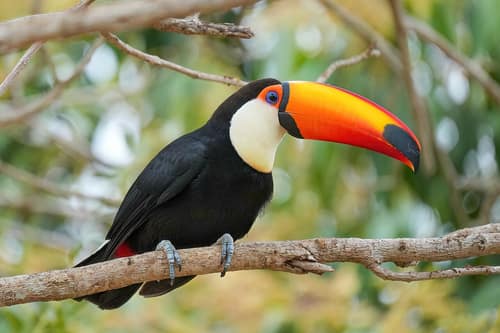
Close Relative Giles Laurent / CC BY-SA 4.0 · cc-by-sa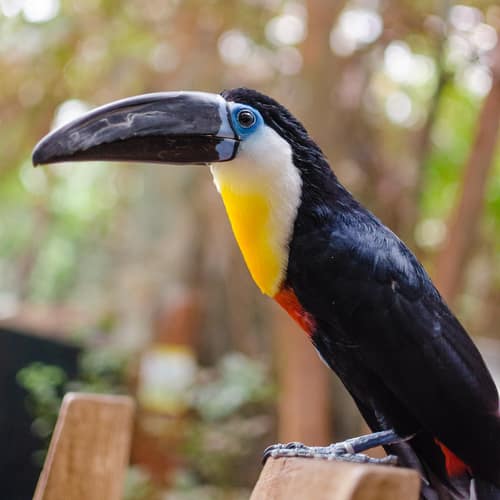
Close Relative "Channel-billed toucan" by Mathias Appel is marked with CC0 1.0. To view the terms, visit https://creativecommons.org/publicdomain/zero/1.0/. · cc0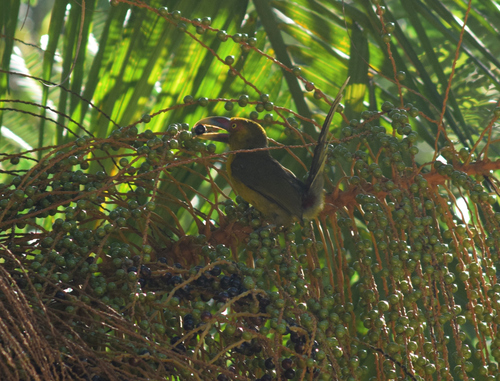
Same Family (c) Cajá-manga, some rights reserved (CC BY) · cc-by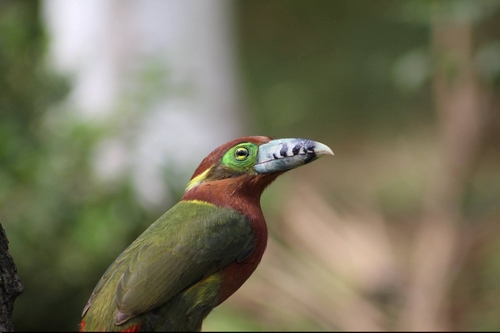
Same Family (c) Eduardo Gomyde, some rights reserved (CC BY-SA) · cc-by-sa
Help improve the field guideSomething wrong?
Checking your Fauna account…Report a name, category, or profile issue for review.