
Reptile · GBIF taxon 2470741
Blue-spotted Tree Monitor
Varanus macraeiAlso known as Blue Tree Monitor, Batanta Island Monitor
Blue-spotted tree monitors navigate the tropical rainforest canopy of Batanta Island using exceptionally long, prehensile tails and curved claws engineered for vertical climbing. Their vivid turquoise-and-black mosaic pattern provides deceptive camouflage among sun-dappled foliage while absorbing warmth during morning basking. Highly alert and agile, these slender arboreal hunters patrol high epiphytic root mats for prey and swiftly vanish into dense vine tangles when approached.
ReptileArboreal
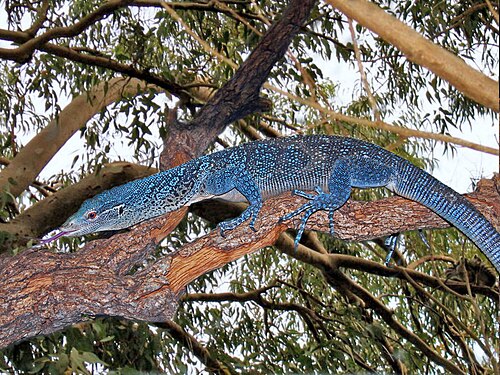
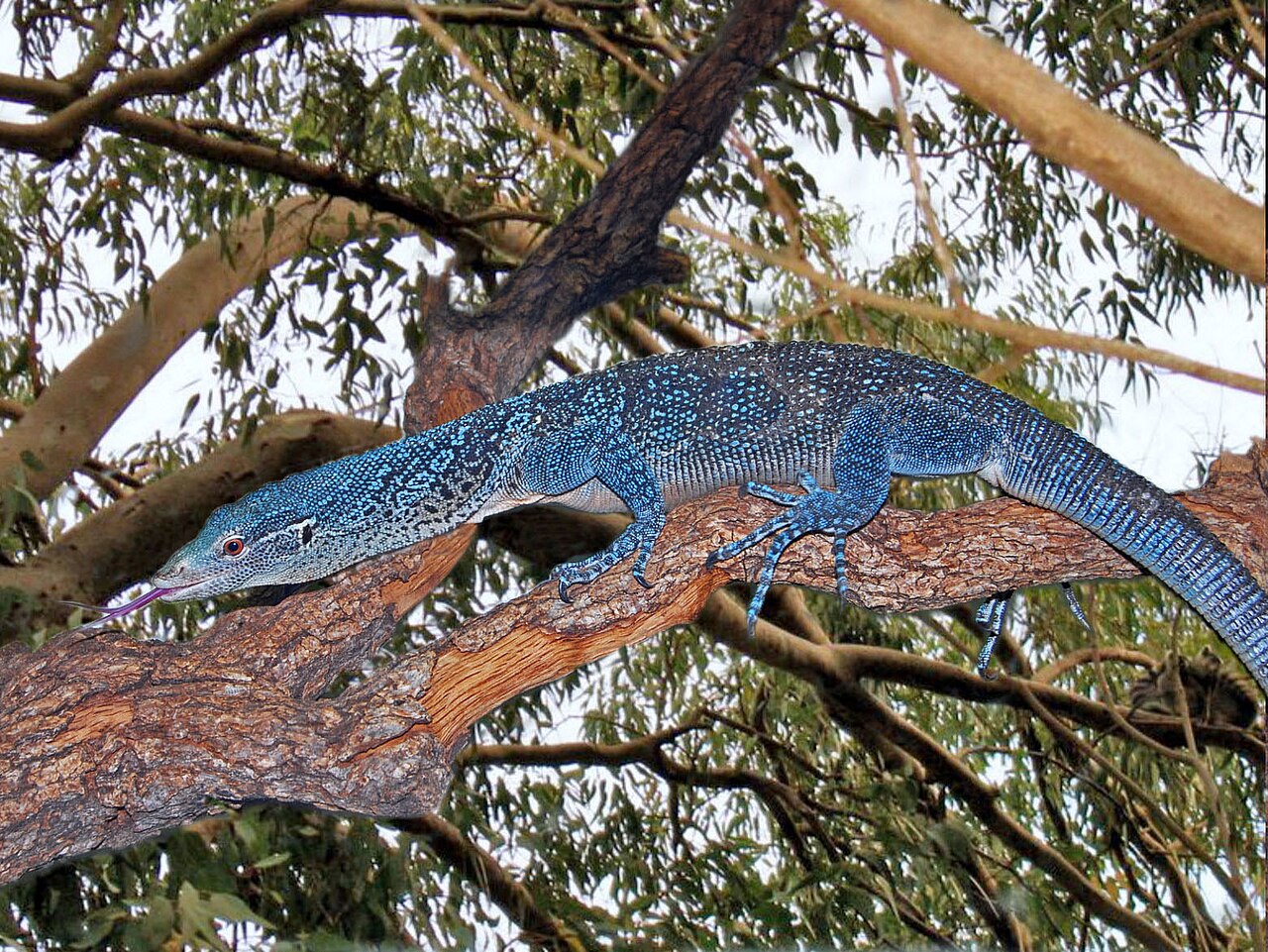
Licensed referenceHectonichus / CC BY-SA 4.0 · cc-by-sa
—observations
—countries
—peak records
EndangeredConservation statusIUCN Red List categoriesLCNTVUENCREWEXEndangeredRed List categories, explained →
Diet & prey
- Stick insects
- Tree geckos
- Bird eggs
Predators
- Birds of prey
- Arboreal snakes
ThreatsIllegal wildlife trade poaching, deforestation, and extreme geographic restriction
HabitatsTropical lowland rainforest canopy
Life span12–15 years
Classification
- FamilyVaranidae
- GenusVaranus
- SpeciesVaranus macraei
Range data is not available yet.
Interaction riskLow
- Low
- Moderate
- High
- Very high
- Why interaction risk is low
- Can inflict painful bites and deep scratches if cornered; observe safely from the forest floor.
- Why it is dangerous
- Possesses sharp, backward-curved teeth harboring bacteria and exceptionally long claws that tear skin when defending itself.
- How to recognize a risky encounter
- Recognized by its jet-black body adorned with striking turquoise-blue dorsal rings and an exceedingly long, prehensile tail.
- What to do
- Never attempt to restrain or grasp wild lizards; maintain viewing distance and leave escape routes open.
- What to notice
- Look for electric blue spot patterns against dark scales high in pristine tropical foliage.
- Support conservation
- Withhold specific location coordinates when posting wild encounters publicly to safeguard individuals from commercial poachers.
Responsible observation
- Canopy Scanning: Use binoculars to scan dense vine tangles and horizontal limbs during sunny mornings.
- Habitat Protection: Avoid disturbing canopy epiphytes, as monitors rely on them for thermal shelter and nesting.
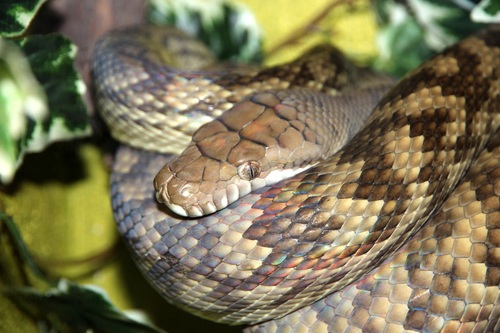
Predator (c) Гурьева Светлана (zooclub.ru), some rights reserved (CC BY-SA) · cc-by-sa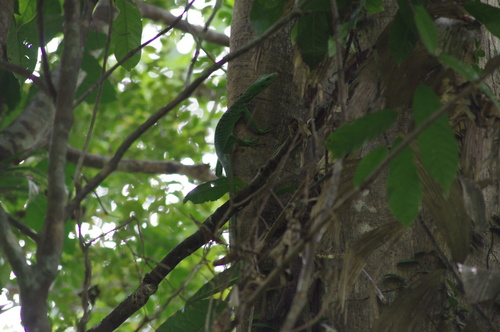
Close Relative (c) coenobita, some rights reserved (CC BY), uploaded by coenobita · cc-by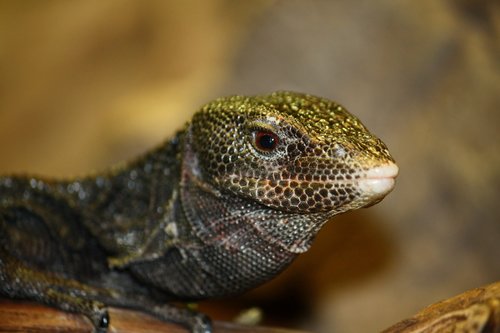
Close Relative (c) Ltshears, some rights reserved (CC BY-SA) · cc-by-sa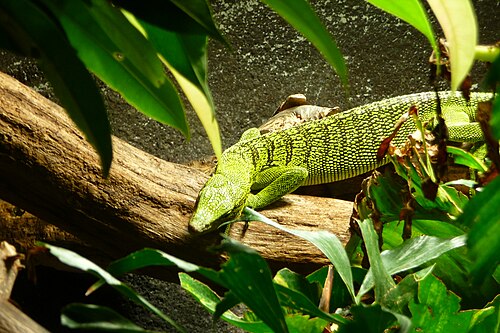
Close Relative Vincent Malloy / CC BY-SA 3.0 · cc-by-sa
Help improve the field guideSomething wrong?
Checking your Fauna account…Report a name, category, or profile issue for review.