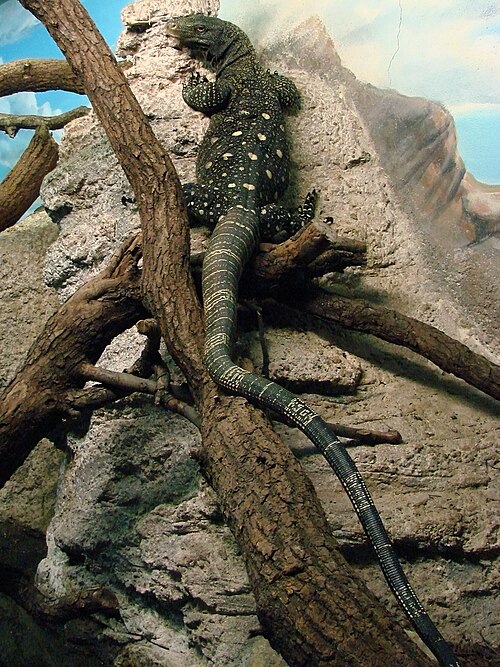
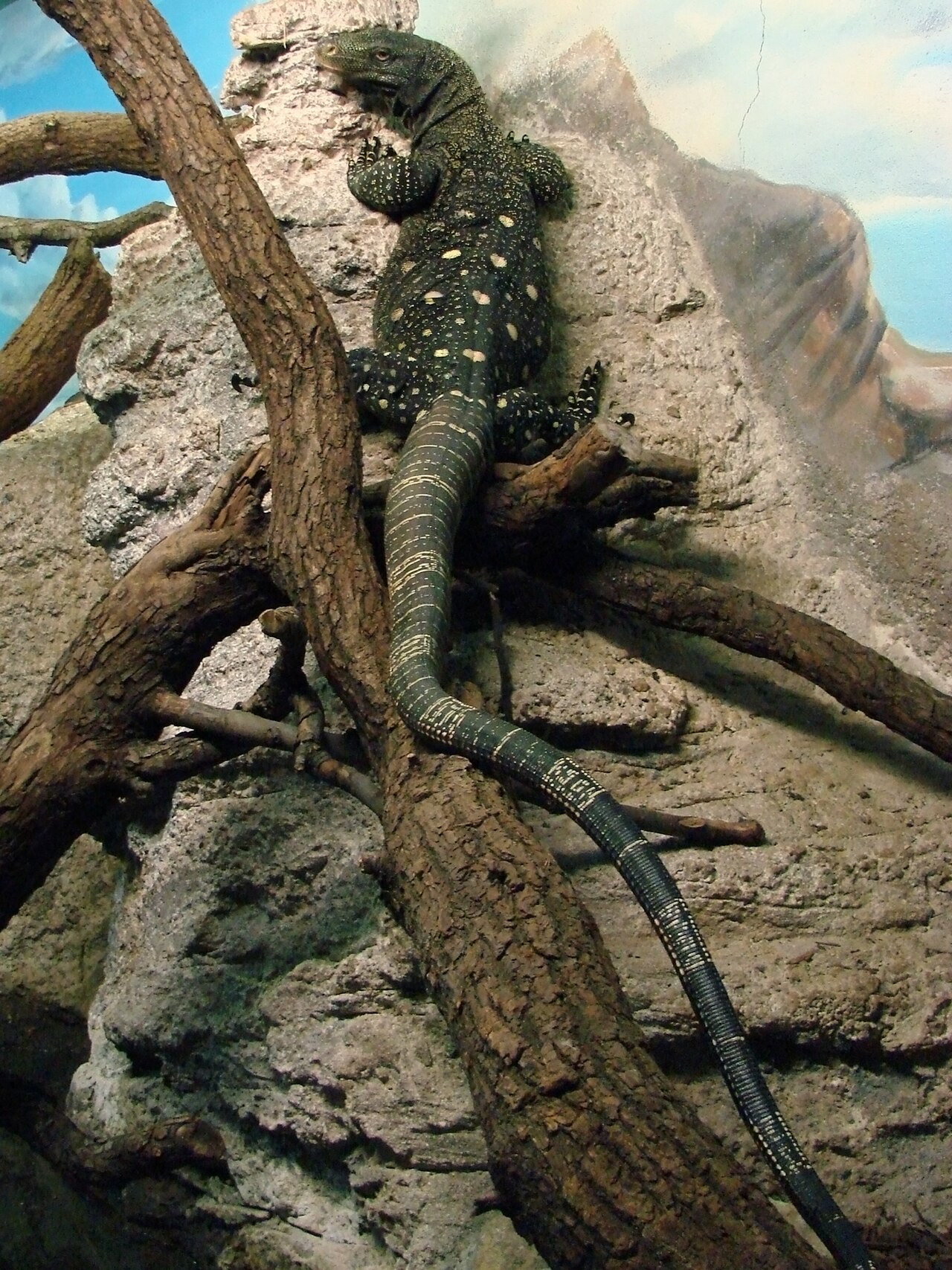
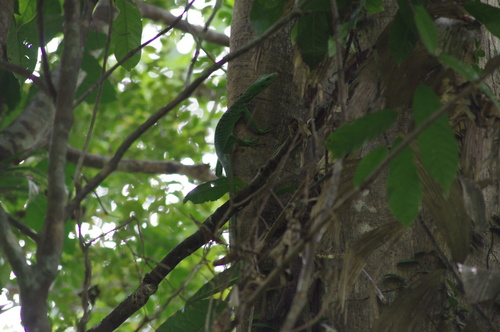
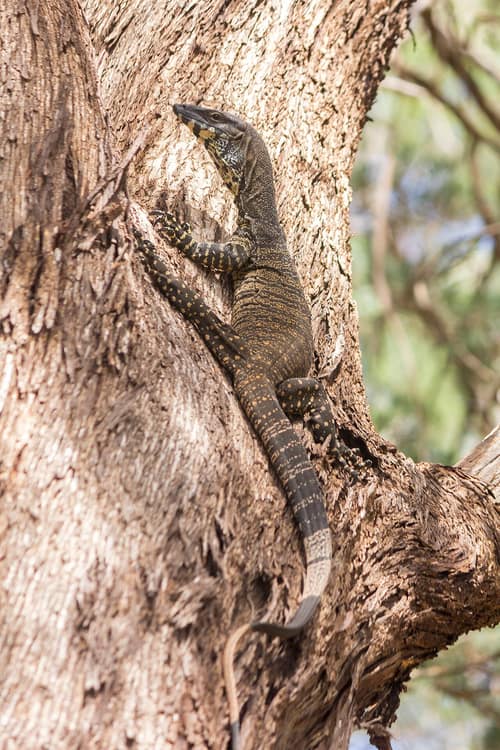
Crocodile monitors reign as the apex arboreal predators of New Guinea canopy forests, equipped with long curved claws and prehensile tails that anchor them high in the trees. Their jaws carry straight, serrated teeth suited for tearing flesh rather than catching fish, functioning much like the teeth of theropod dinosaurs. Wary and secretive by nature, they bask on high branches above rivers and drop swiftly into the undergrowth or water at the first sign of disturbance.
ThreatsHabitat loss from logging, oil palm expansion, and hunting for skins and pet trade
HabitatsLowland tropical rainforests and coastal mangrove swamps
Life span12–20 years
Size / weightNot available
Classification
FamilyVaranidae
GenusVaranus
SpeciesVaranus salvadorii
Range & activity
Range data is not available yet.
Safe observation
Interaction riskVery high
Low
Moderate
High
Very high
Why interaction risk is very high
Sharp serrated teeth and powerful claws cause severe lacerations; maintain a respectful distance in the wild.
Why it is dangerous
Possesses razor-sharp, knife-like teeth and robust curved claws capable of inflicting deep lacerations and structural tissue damage prone to bacterial infection.
How to recognize a risky encounter
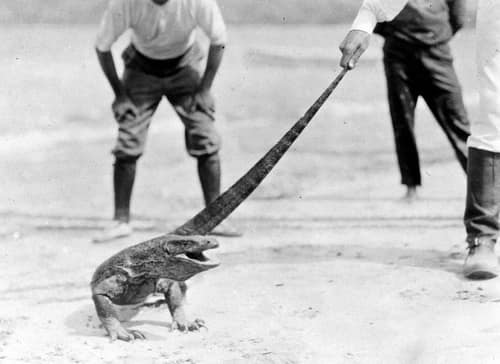
Recognizable by an extraordinarily long whip-like tail, blunt snout, and dark body patterned with yellowish spots and bands.
What to do
Never attempt to handle or corner a wild monitor; back away quietly and allow the animal an unobstructed escape route up into the canopy.
Responsible observation
Binoculars Recommended: Look high into the canopy along river edges where adults bask undisturbed.
Do Not Corner: Retreat calmly if encountered on the ground, as defensive tail whips and bites are severe.
Respect Local Protocols: Rely on licensed indigenous guides when exploring remote New Guinea forests.