
Reptile · GBIF taxon 2464991
Emerald Tree Boa
Corallus caninusAlso known as Guianan Emerald Tree Boa, Emerald Boa
Emerald tree boas spend their lives high in the canopy of South American rainforests, resting during the day draped neatly in coils over horizontal branches. At night, they use deep, heat-sensing pits along their lips to detect warm-blooded prey moving through the dark understory. Born a vivid reddish-orange or brick color, juveniles undergo a dramatic transformation, developing their signature emerald green skin as they mature.
ArborealNocturnalRainforest
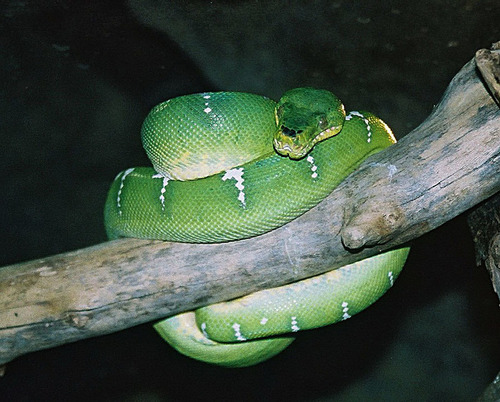
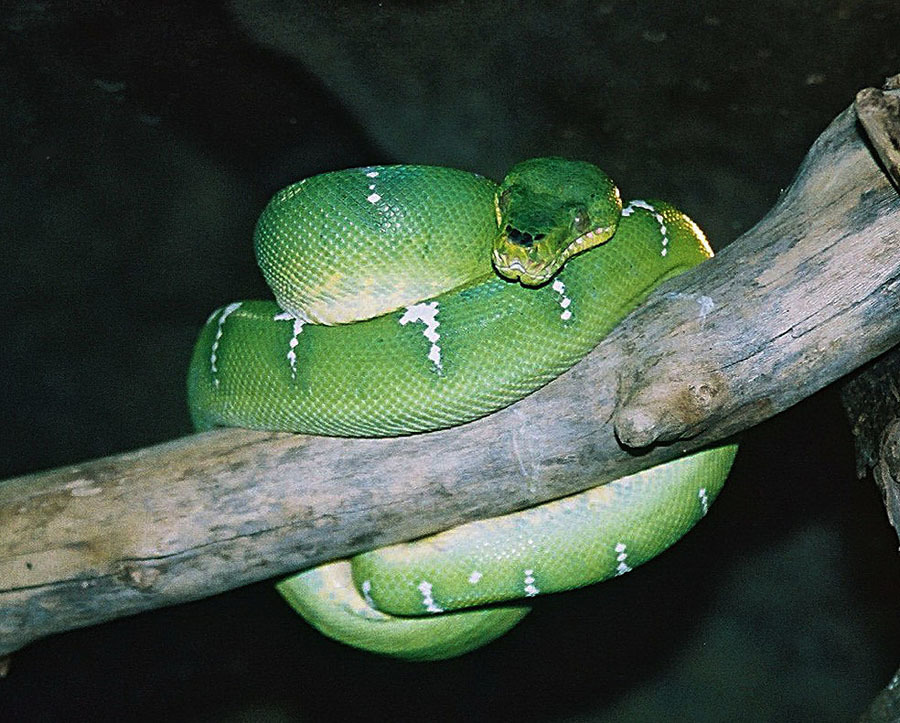
—observations
—countries
—peak records
Least ConcernConservation statusIUCN Red List categoriesLCNTVUENCREWEXLeast ConcernRed List categories, explained →
Diet & prey
- Tree Rodents
- Bats
- Lizards
Predators
- Harpy Eagle
- Large Owls
- Jaguar
ThreatsDeforestation and illegal collection for the pet trade
HabitatsLowland tropical rainforest canopy and understory
Life span15–20 years in the wild
Classification
- FamilyBoidae
- GenusCorallus
- SpeciesCorallus caninus
Range data is not available yet.
Interaction riskLow
- Low
- Moderate
- High
- Very high
- Why interaction risk is low
- Non-venomous but possesses exceptionally large front teeth; observe from a safe distance.
- Why it is dangerous
- Equipped with disproportionately long front teeth to capture prey in the canopy, capable of inflicting deep lacerations if threatened.
- How to recognize a risky encounter
- Vivid green body with white lightning-stripe markings and deep lip pits along the jaws.
- What to do
- Maintain a respectful distance of several meters and never reach toward a coiled individual.
- What to notice
- Bright emerald green snake resting coiled in a saddle shape on horizontal forest branches.
- Support conservation
- Keep precise GPS coordinates private when sharing observations online to deter illegal collectors.
Responsible observation
- Scan lower limbs: Search horizontal branches under canopy foliage during evening twilight hours.
- Keep distance: Avoid reaching toward perches because their strike range is surprisingly long.
- Use red light: Observe nighttime behavior with red-filtered light to avoid blinding the snake.
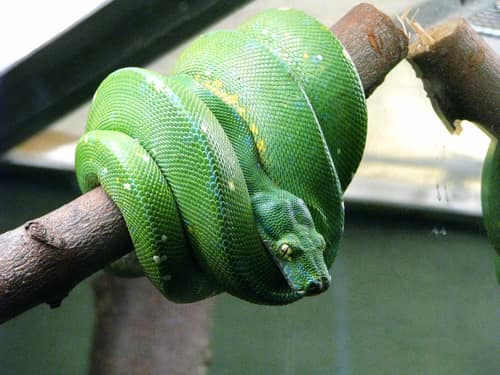
Look-Alike "Green Tree Python" by MSVG is licensed under CC BY 2.0. To view a copy of this license, visit https://creativecommons.org/licenses/by/2.0/. · cc-by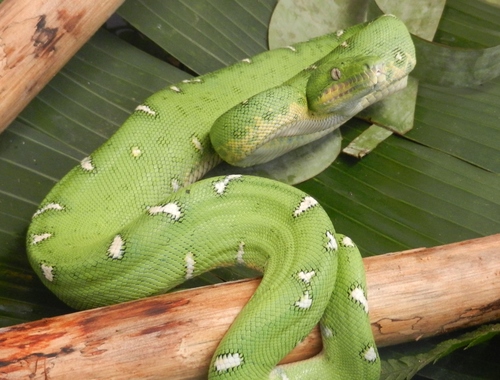
Close Relative (c) Erfil, some rights reserved (CC BY-SA) · cc-by-sa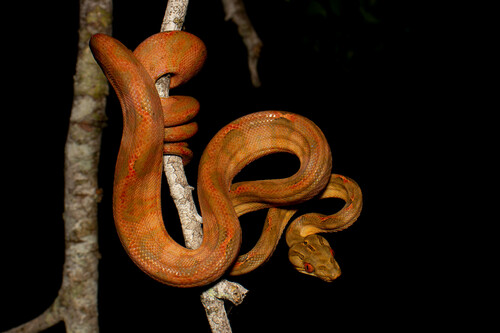
Close Relative (c) Henrique Nogueira, some rights reserved (CC BY), uploaded by Henrique Nogueira · cc-by
Help improve the field guideSomething wrong?
Checking your Fauna account…Report a name, category, or profile issue for review.