
Reptile
Gopher Snake
Pituophis cateniferAlso known as Bullsnake, Pacific Gopher Snake, Blow Snake
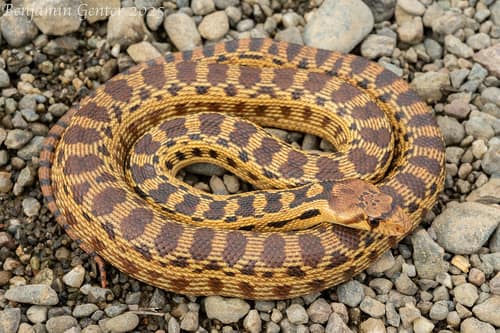
Gopher snakes are powerful, highly adaptable constrictors that play a critical role in controlling rodent populations across North America. When threatened, they perform a convincing defense by flattening their heads, shaking their tails in dry leaf litter, and forcing air through a specialized glottis flap to produce a loud hiss. Their dorsal patterns feature a chain of dark brown or black blotches set against a yellowish or beige background.
ReptileConstrictorHarmless

—observations
—countries
—peak records
Least ConcernConservation statusIUCN Red List categoriesLCNTVUENCREWEXLeast ConcernRed List categories, explained →
Diet & preyPocket gophers, Voles, Mice
Predators
- Hawks
- Coyotes
- Kingsnakes
ThreatsRoad mortality, habitat destruction, persecution due to rattlesnake resemblance
HabitatsGrasslands, deserts, chaparral, open woodlands, farmland
Life span12–15 years in the wild
Classification
- FamilyColubridae
- GenusPituophis
- SpeciesPituophis catenifer
Range data is not available yet.
Interaction riskLow
- Low
- Moderate
- High
- Very high
- Why interaction risk is low
- Non-venomous but will hiss and bite defensively if cornered; observe from a safe distance.
- Why it is dangerous
- Mimics rattlesnakes through violent tail-shaking, head-flattening, and loud hissing, delivering a non-venomous bite if cornered.
- How to recognize a risky encounter
- Look for round pupils, a narrow head, and a tapered tail ending in a smooth tip rather than a rattle.
- What to do
- Give the snake space to retreat and never attempt to corner or grab wild individuals.
Responsible observation
- Observation: Maintain a distance of a few meters to avoid triggering defensive tail-shaking or hissing.
- Identification: Look for round pupils, a narrow snout, and a pointed tail without a rattle.
- Habitat Awareness: Look for basking individuals along sunny rock outcrops, fallen logs, and field borders.
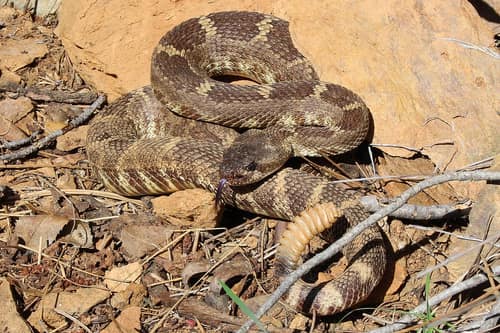
Mimic Target Connor Long / CC BY-SA 4.0 · cc-by-sa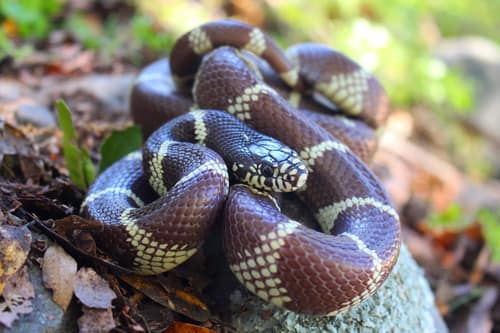
Predator (c) Connor Long, some rights reserved (CC BY-SA) · cc-by-sa
Close Relative Benjamin Genter / CC0 · cc0
Keep collecting in Fauna
Found in Collections
Ecosystem chain Pro
Prairie Plains
Gopher Snake is found in this collection. Identify it in Fauna to fill this slot and continue your progress.
Unlock to track progress
Help improve the field guideSomething wrong?
Checking your Fauna account…Report a name, category, or profile issue for review.