
Reptile
Western Rattlesnake
Crotalus oreganusAlso known as Northern Pacific Rattlesnake, Pacific Rattlesnake
Western rattlesnakes are adaptable pit vipers that rely on heat-sensing facial pits and specialized tail rattles to navigate their environment and deter threats. They spend cold winters coiled together in communal hibernacula before dispersing into grasslands, forests, and rocky hillsides for spring and summer hunting. Ambush predators by nature, these pit vipers play a crucial role in controlling rodent populations across western North America.
VenomousReptilePredator
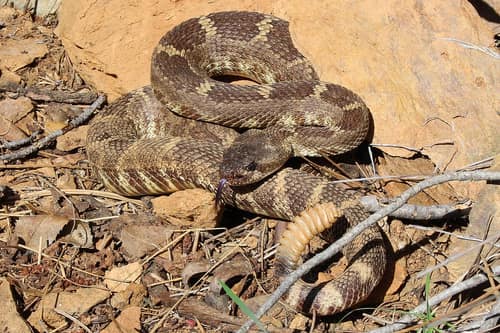
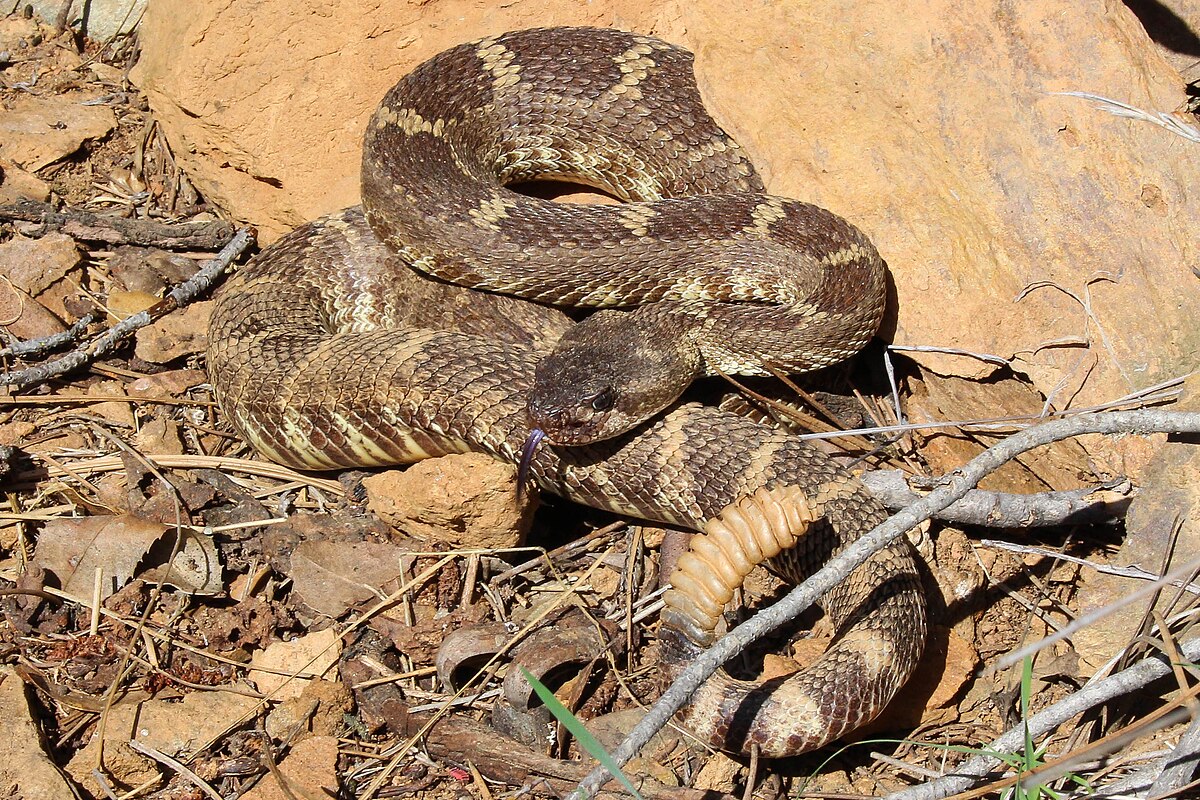
—observations
—countries
—peak records
Least ConcernConservation statusIUCN Red List categoriesLCNTVUENCREWEXLeast ConcernRed List categories, explained →
Diet & preyMice, Ground Squirrels, Lizards
Predators
- Red-tailed Hawk
- California Kingsnake
- Coyote
ThreatsHabitat fragmentation, human persecution, road mortality
HabitatsGrasslands, shrublands, dry forests, rocky slopes
Life span15–20 years in the wild
Classification
- FamilyViperidae
- GenusCrotalus
- SpeciesCrotalus oreganus
Native
Interaction riskVery high
- Low
- Moderate
- High
- Very high
- Why interaction risk is very high
- Delivers a dangerous venomous bite if cornered or stepped on; maintain a safe distance and watch where you step.
- Why it is dangerous
- Possesses hemotoxic venom that causes rapid tissue breakdown, intense pain, severe swelling, and systemic medical complications if left untreated.
- How to recognize a risky encounter
- Look for a triangular head, facial pits between eyes and nostrils, dark blotches along the back, and a segment rattle at the tail tip.
- What to do
- Never attempt to handle, poke, or move a rattlesnake; step back at least two meters and grant it a clear route to retreat.
Responsible observation
- Watch Your Step: Look carefully before stepping over logs, rocks, or into dense brush in snake country.
- Give Space: Back away slowly if you hear a rattle or spot a snake coiled in a defensive posture.
- Keep Pets Leashed: Dogs are frequently bitten when investigating off-trail vegetation.
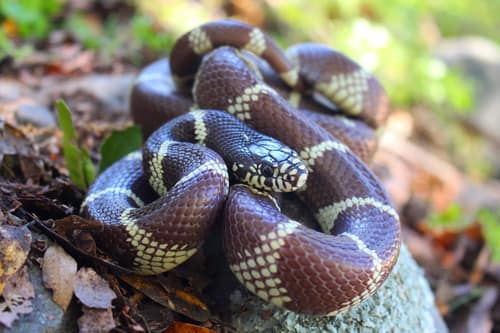
Predator (c) Connor Long, some rights reserved (CC BY-SA) · cc-by-sa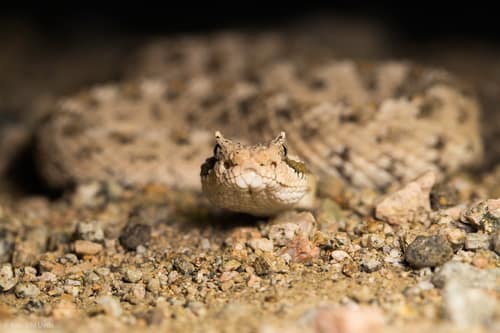
Close Relative (c) Ken-ichi Ueda, some rights reserved (CC BY) · cc-by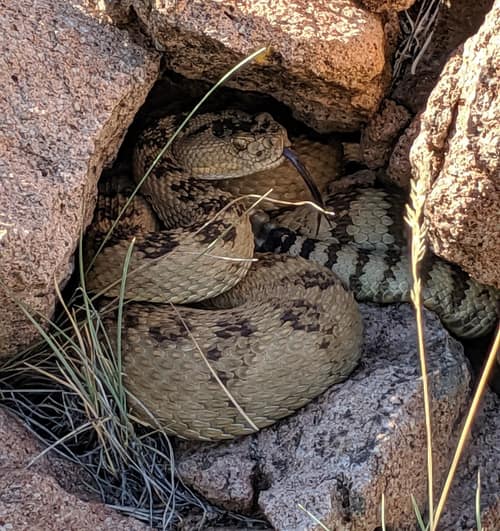
Close Relative Morgan Hansen / CC BY 4.0 · cc-by
Keep collecting in Fauna
Found in Collections
Ecosystem chain Pro
Desert Sands
Western Rattlesnake is found in this collection. Identify it in Fauna to fill this slot and continue your progress.
Unlock to track progress
Help improve the field guideSomething wrong?
Checking your Fauna account…Report a name, category, or profile issue for review.