
Reptile
Indian Chameleon
Chamaeleo zeylanicusAlso known as Ceylon Chameleon
Indian chameleons navigate forest canopies with a slow, rocking gait that mimics foliage trembling in the wind, using fused mitten-like feet and a prehensile tail for secure climbing. Turreted eyes rotate independently to search in all directions until stereoscopic focus locks onto prey, prompting the lightning-fast release of an elastic, club-shaped tongue. Color shifts reflect physiological states like temperature regulation and social signalling rather than deliberate background matching.
ArborealReptileInsectivore
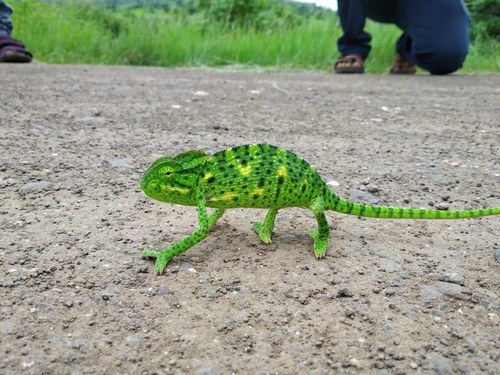
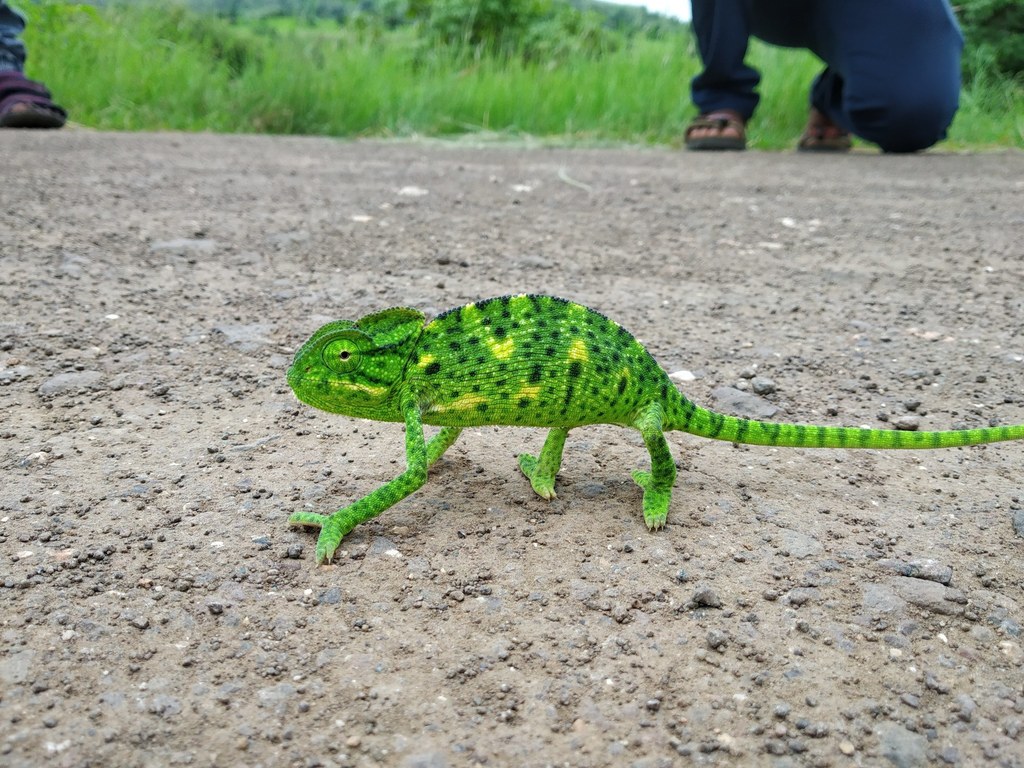
—observations
—countries
—peak records
Least ConcernConservation statusIUCN Red List categoriesLCNTVUENCREWEXLeast ConcernRed List categories, explained →
Diet & preyGrasshoppers, Mantises, Moths
Predators
- Birds of prey
- Tree snakes
- Small carnivores
ThreatsHabitat destruction, pesticide application, road collisions, and localized poaching
HabitatsDry and moist deciduous forests, scrublands, plantations, and thorn woodlands
Life span4–7 years
Classification
- FamilyChamaeleonidae
- SpeciesChamaeleo zeylanicus
Range data is not available yet.
Interaction riskLow
- Low
- Moderate
- High
- Very high
- Why interaction risk is low
- Safe to observe at a normal distance.
Responsible observation
- Scanning Foliage: Look carefully along thin branches for a telltale curled tail or rhythmic rocking gait.
- Observing Distance: Maintain a steady gap of a few meters so the animal does not hiss or compress its body in distress.
- Night Spotting: Scan trees with a flashlight after dusk, when roosting individuals turn pale green or yellow against leaves.
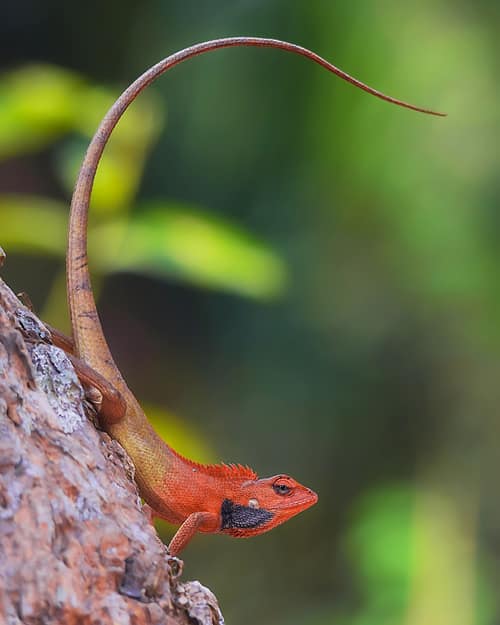
Neighbor Sifat Sharker / CC BY-SA 4.0 · cc-by-sa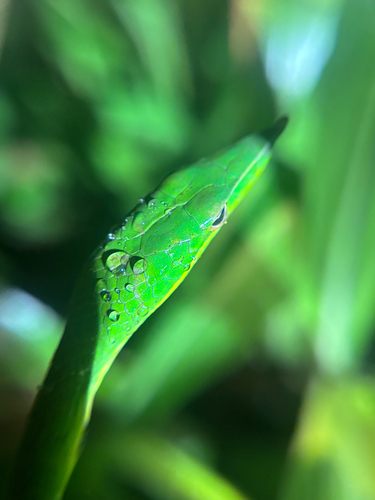
Predator no rights reserved · cc0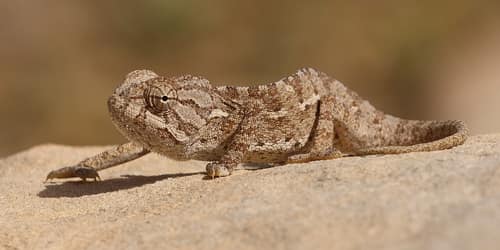
Close Relative Charles J. Sharp / CC BY-SA 4.0 · cc-by-sa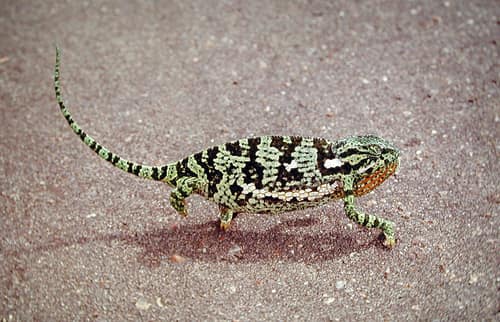
Close Relative (c) Christoph Moning, some rights reserved (CC BY), uploaded by Christoph Moning · cc-by
Help improve the field guideSomething wrong?
Checking your Fauna account…Report a name, category, or profile issue for review.