
Reptile · GBIF taxon 2444433
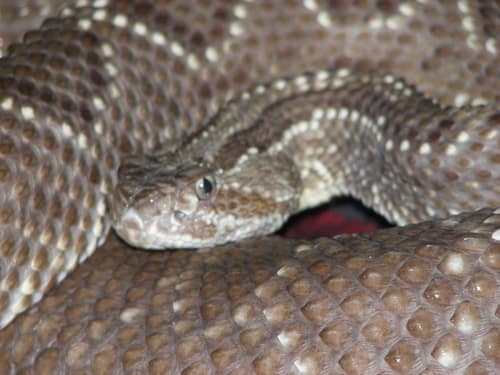
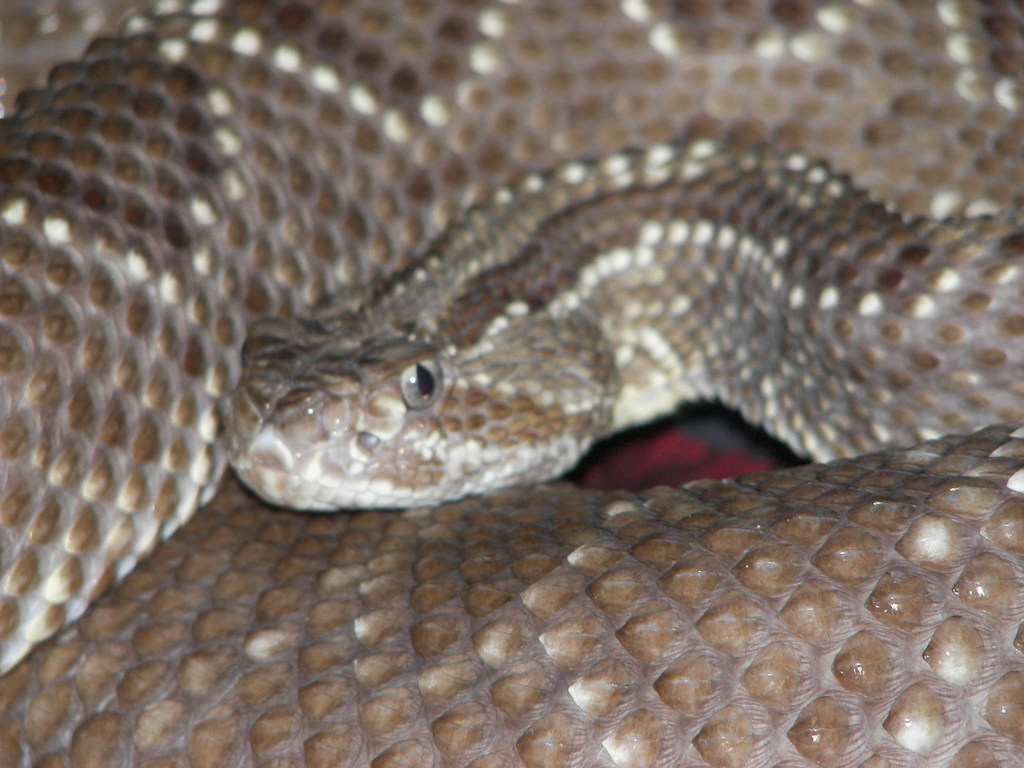
Cascavel Rattlesnake
Crotalus durissusAlso known as South American Rattlesnake, Tropical Rattlesnake, Cascavel
Cascavel rattlesnakes navigate savannas, dry scrublands, and agricultural borders across South America using heat-sensing pit organs to detect prey in total darkness. Their venom combines powerful neurotoxins and myotoxins, setting them apart from most North American pit vipers by causing systemic muscular paralysis rather than localized tissue destruction. When threatened, individuals coil tightly and raise their rattling tail as an audible warning to keep intruders at bay.
VenomousNocturnalReptile
—observations
—countries
—peak records
Least ConcernConservation statusIUCN Red List categoriesLCNTVUENCREWEXLeast ConcernRed List categories, explained →
Diet & prey
- Rats and Mice
- Lizards
- Small Mammals
Predators
- Mussurana Snake
- Birds of Prey
- Coatis
ThreatsHabitat conversion, direct human persecution, and vehicle mortality
HabitatsSavannas, dry forests, scrublands, and agricultural edges
Life span12–20 years
Classification
- FamilyViperidae
- SpeciesCrotalus durissus
Range data is not available yet.
Interaction riskVery high
- Low
- Moderate
- High
- Very high
- Why interaction risk is very high
- Possesses potent neurotoxic venom; stay at least three meters away and never attempt to handle.
- Why it is dangerous
- Produces potent neurotoxic and myotoxic venom that can cause blindness, systemic muscular breakdown, and respiratory failure.
- How to recognize a risky encounter
- Recognizable by dark diamond dorsal patterns, raised spinal keel, twin neck stripes, and iconic tail rattle.
- What to do
- Give a wide berth of at least three meters, wear sturdy boots in brush, and never attempt to capture or poke.
Responsible observation
- Safety: Give coiling snakes a wide berth of several meters and never attempt to handle them.
- Habitat Awareness: Watch footsteps carefully when walking near tall grass, rocky outcrops, or brush.
- Warning Signs: Listen for the loud dry buzzing of the tail rattle, which signals defensive posture.
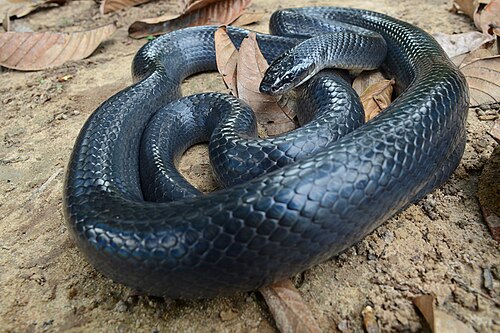
Predator Geoff Gallice (https://www.flickr.com/photos/dejeuxx/) / CC BY 2.0 · cc-by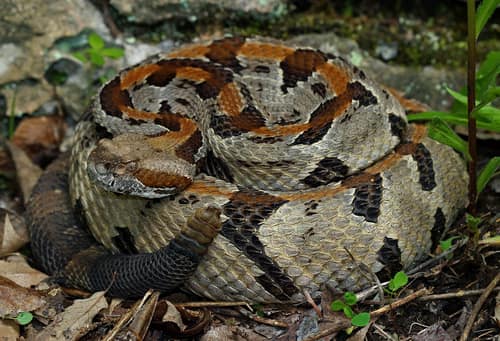
Close Relative Peter Paplanus from St. Louis, Missouri / CC BY 2.0 · cc-by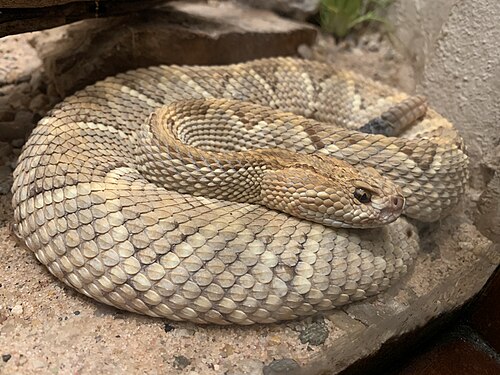
Close Relative Bloopityboop / CC BY-SA 4.0 · cc-by-sa
Help improve the field guideSomething wrong?
Checking your Fauna account…Report a name, category, or profile issue for review.