
Mammal
Zebra Duiker
Cephalophus zebraAlso known as Banded Duiker, Striped-back Duiker
Zebra duikers roam the shaded understory of primary Guinean rainforests, using exceptionally thickened nasal bones to crack hard-shelled fruits that drop from the high canopy. Both males and females defend small shared home ranges as bonded pairs, scent-marking low branches with facial glands positioned beneath their eyes. Their distinct vertical bands provide disruptive camouflage, scattering their silhouette across dappled forest light and dense vegetation.
RainforestDiurnalStriped
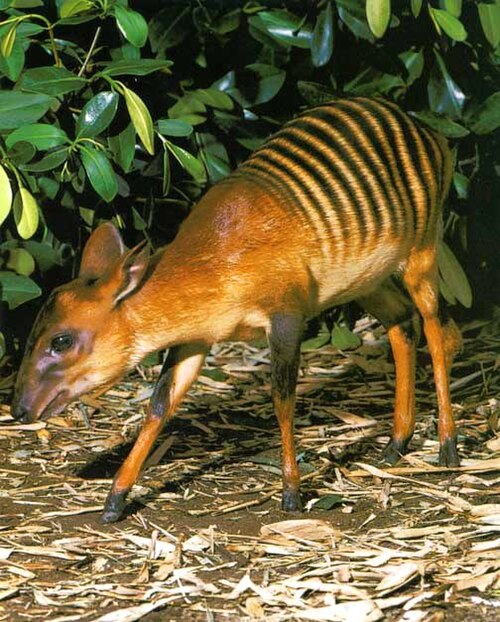
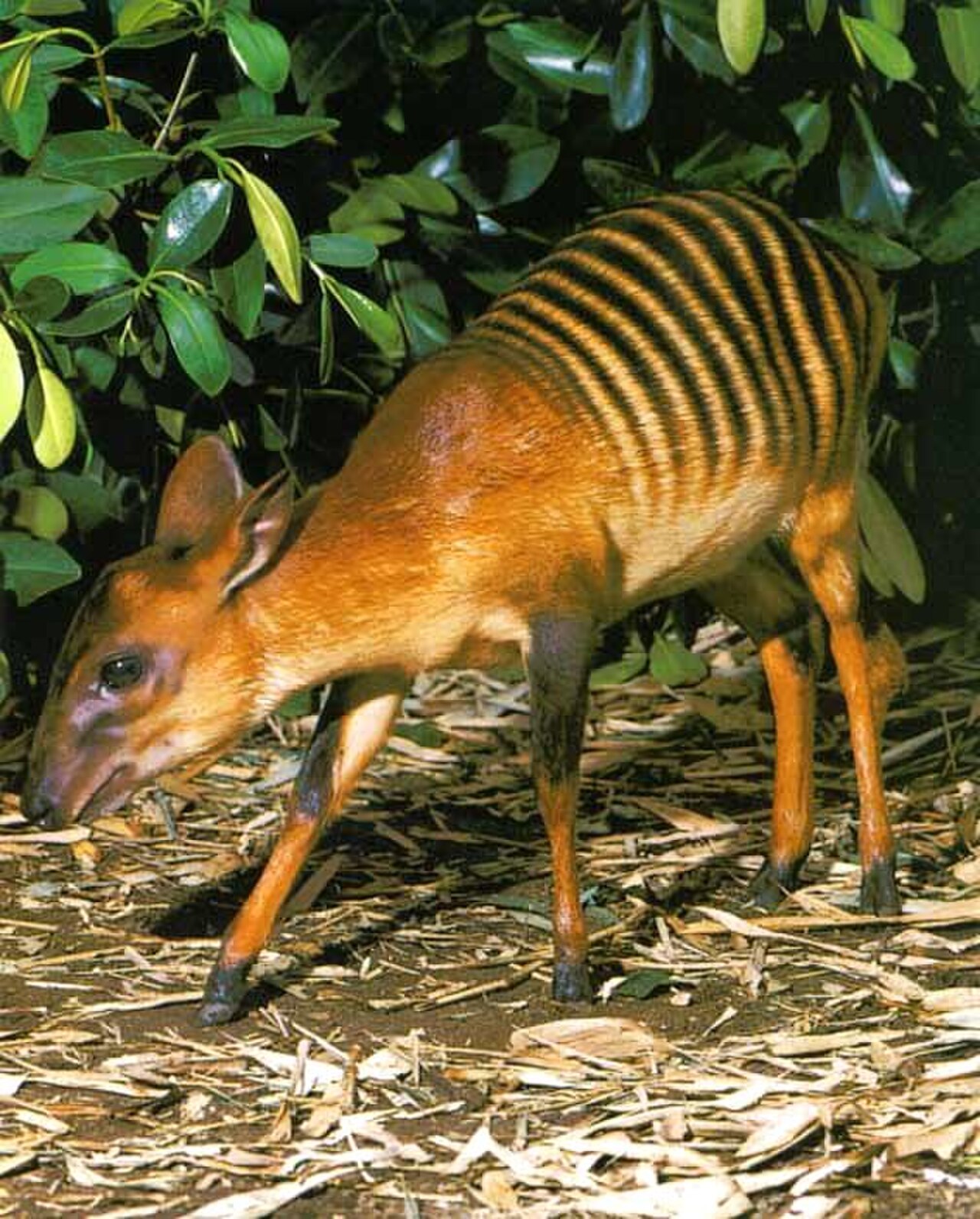
—observations
—countries
—peak records
VulnerableConservation statusIUCN Red List categoriesLCNTVUENCREWEXVulnerableRed List categories, explained →
Diet & preyFallen fruits, Seeds, Understory foliage
Predators
- Leopard
- African golden cat
- African rock python
ThreatsHabitat loss from logging and agriculture, alongside heavy commercial bushmeat hunting
HabitatsDense primary lowland tropical rainforests
Life span10–14 years in the wild
Classification
- OrderArtiodactyla
- FamilyBovidae
- GenusCephalophus
- SpeciesCephalophus zebra
Range data is not available yet.
Interaction riskLow
- Low
- Moderate
- High
- Very high
- Why interaction risk is low
- Safe to observe from a respectful distance; naturally shy and will flee if approached.
- What to notice
- Look for a bright golden-red coat marked with 12 to 16 bold, dark vertical bars across the back.
- Support conservation
- Maintain a generous distance to avoid triggering flight, and never purchase wild meat products when traveling.
Responsible observation
- Patience: Wait quietly near fruiting canopy trees where falling fruit attracts ground foragers.
- Observation: Scan low forest gaps during daylight hours, as this species is predominantly diurnal.
- Footwear: Wear tall, mud-ready boots when walking along damp primary rainforest pathways.
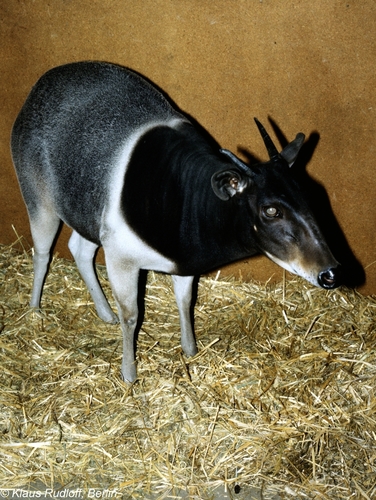
Same Genus (c) Klaus Rudloff (kdrudloff@web.de), The photographer gave me permission to upload the photos, some rights reserved (CC BY-SA) · cc-by-sa Image unavailable
Same Genus 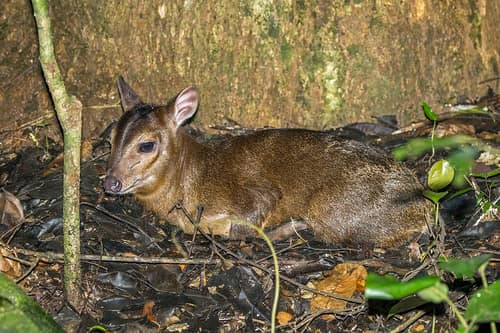
Competitor Charles J. Sharp / CC BY-SA 4.0 · cc-by-sa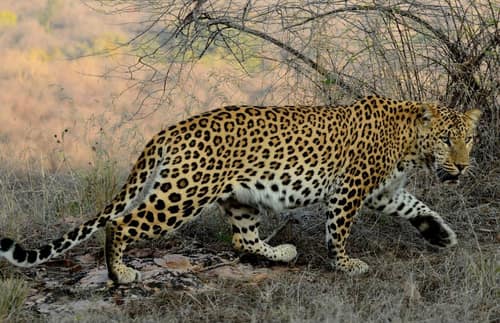
Predator (c) Raja bandi, some rights reserved (CC BY), uploaded by Raja bandi · cc-by
Help improve the field guideSomething wrong?
Checking your Fauna account…Report a name, category, or profile issue for review.