
Mammal
Addax
Addax nasomaculatusAlso known as White Antelope, Screwhorn Antelope
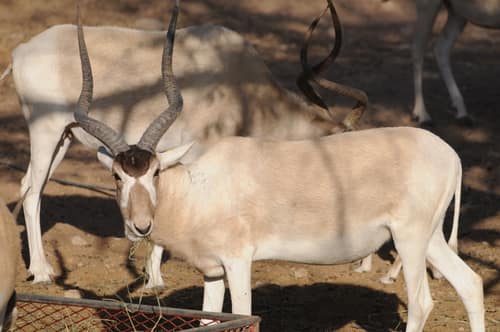
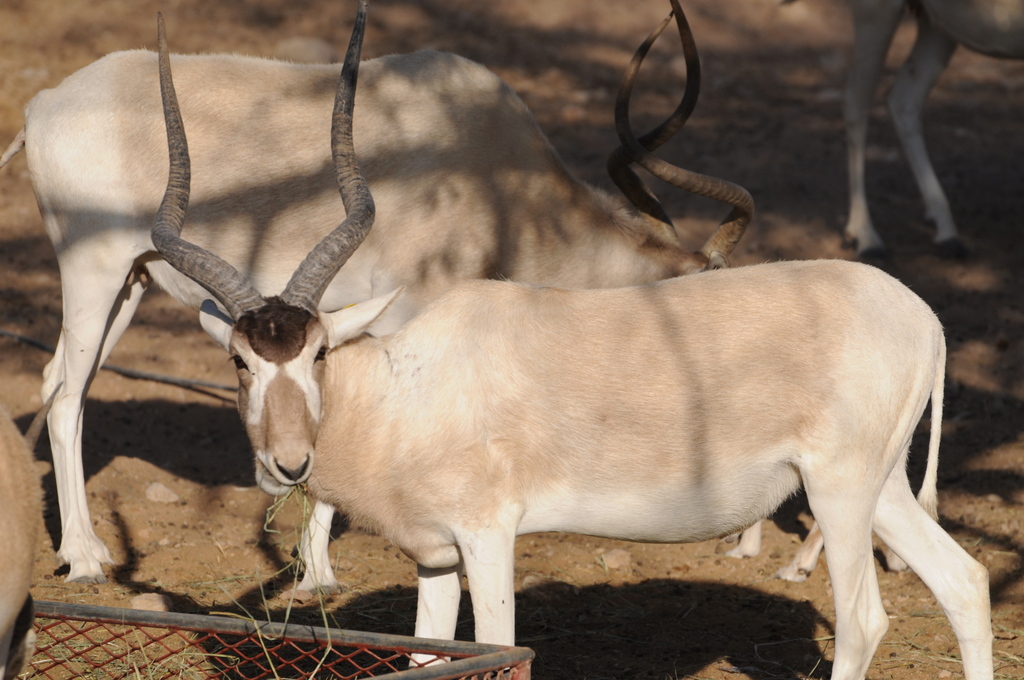
Addax spend their lives wandering the hyper-arid sands of the Sahara, obtaining nearly all their hydration directly from moisture-rich desert succulents and morning dew. Their remarkably wide, flat hooves act like snowshoes to prevent them from sinking into loose dunes while roaming vast territories in search of rare desert rainfall. Heavily decimated by motorized poaching and habitat fragmentation, surviving herds persist as nomadic family bands guided by experienced matriarchs.
Desert DwellerHerbivore
—observations
—countries
—peak records
Critically EndangeredConservation statusIUCN Red List categoriesLCNTVUENCREWEXCritically EndangeredRed List categories, explained →
Diet & preyAristida grass, Desert gourd, Acacia foliage
Predators
- Cheetah
- Lion
- Spotted Hyena
ThreatsIllegal poaching, oil exploration, habitat loss, and prolonged drought
HabitatsSandy deserts, stony plains, and rolling dune fields
Life span15–25 years
Classification
- OrderArtiodactyla
- FamilyBovidae
- GenusAddax
- SpeciesAddax nasomaculatus
Range data is not available yet.
Interaction riskHigh
- Low
- Moderate
- High
- Very high
- Why interaction risk is high
- Long, sharp spiral horns can cause severe puncture wounds if the animal is crowded; observe from a distance.
- Why it is dangerous
- Powerful neck muscles and spiraled horns exceeding 70 centimeters can easily cause deep, severe puncture trauma if the animal feels trapped.
- How to recognize a risky encounter
- Recognizable by spiraled corkscrew horns, pale white-to-blonde coat, and wide splayed hooves.
- What to do
- Never encircle or drive vehicles toward an animal, and give any cornered individual an unobstructed route of retreat.
- What to notice
- Pale-bodied desert antelope with long twisted horns moving across remote Saharan sands.
- Support conservation
- Report all wild sightings to regional conservation authorities without publicizing precise GPS coordinates.
Responsible observation
- Maintain Distance: Stay well back in a vehicle, as pursuit causes fatal heat exhaustion.
- Binoculars Recommended: Scan distant dunes with optics to avoid disturbing fragile herds.
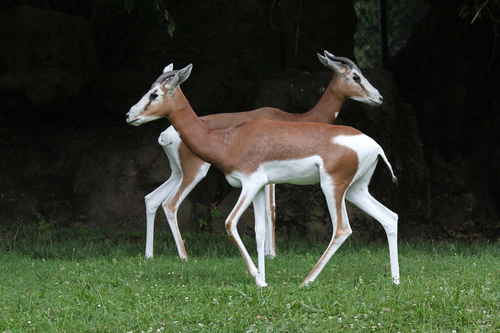
Frequent Companion (c) Jim, the Photographer, some rights reserved (CC BY) · cc-by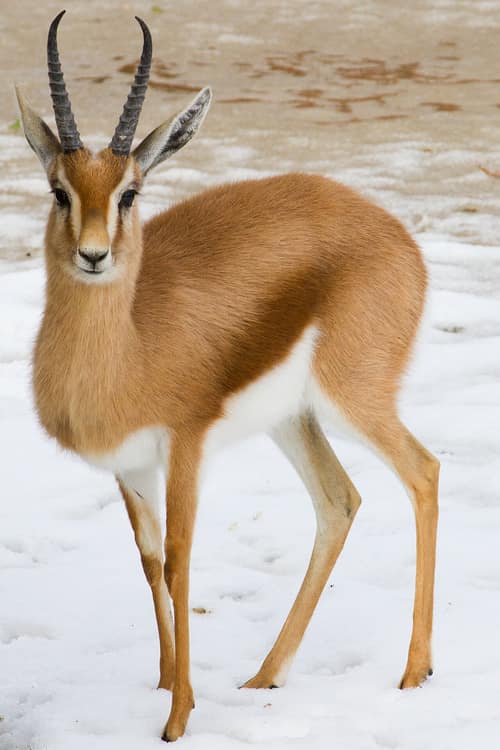
Competitor Khendon / CC BY-SA 3.0 · cc-by-sa Image unavailable
Predator 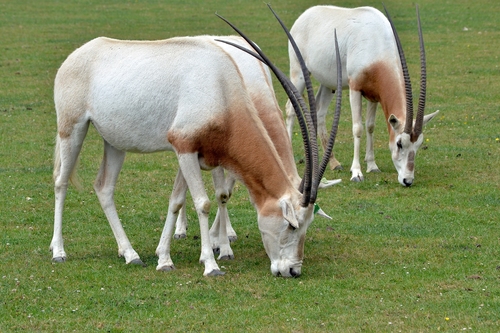
Close Relative (c) Chris K, some rights reserved (CC BY-SA) · cc-by-sa
Help improve the field guideSomething wrong?
Checking your Fauna account…Report a name, category, or profile issue for review.