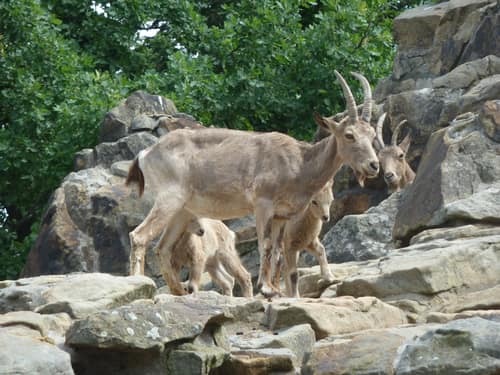
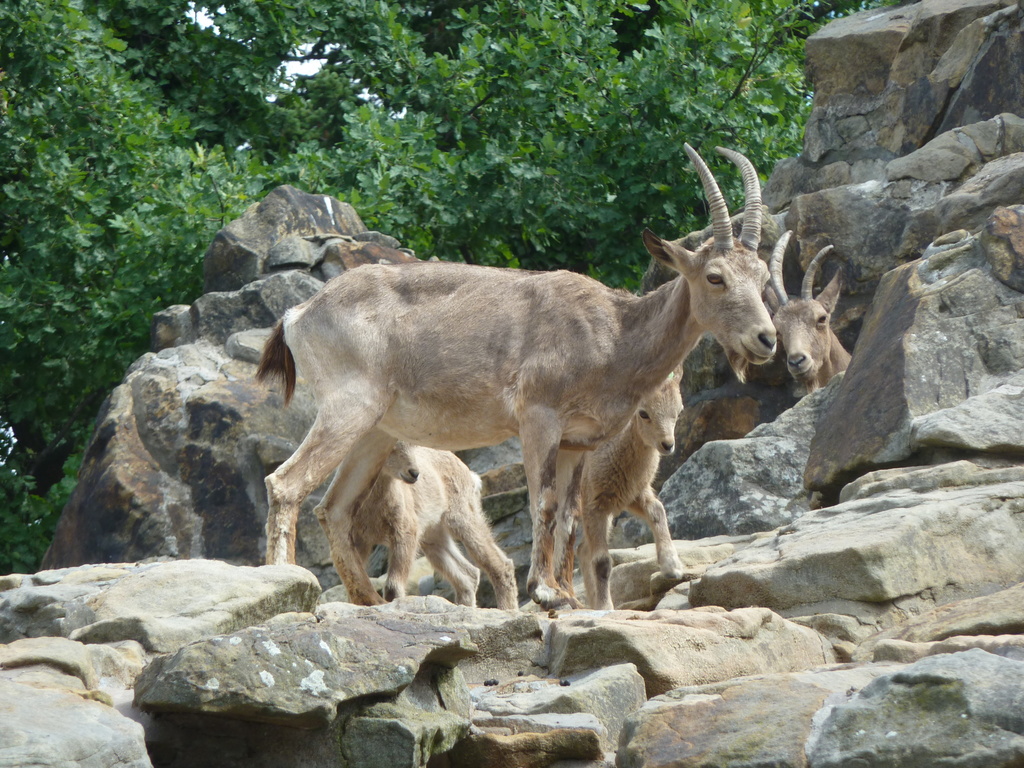
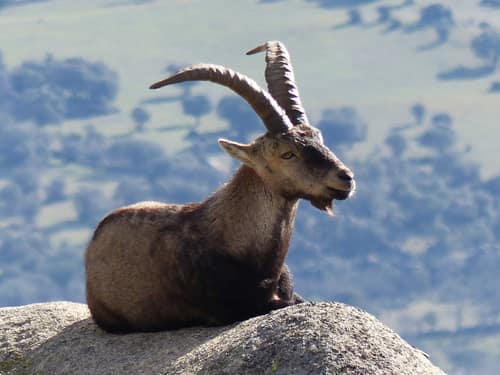
Masters of vertical terrain, Alpine ibex effortlessly navigate sheer rock faces using specialized rubbery-soled hooves that grip granite like climbing shoes. Outside the autumn rutting season, adult males band together in bachelor herds, spending their summer days grazing alpine meadows before retiring to inaccessible ledges for safety. Almost driven to extinction by hunting in the nineteenth century, the entire modern population descends from a protected remnant herd preserved in Italy's Gran Paradiso.
Diet & preyGrasses, sedges, forbs, dwarf shrubs, mosses, and lichens
Predators
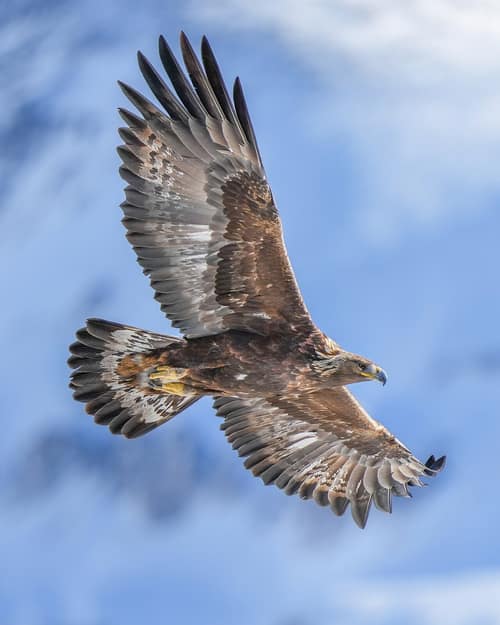
Golden Eagle
Wolf
Eurasian Lynx
ThreatsLow genetic diversity, warming alpine climates, and livestock-transmitted diseases
HabitatsAlpine tundra, rocky cliffs, scree slopes, and subalpine meadows
Life span15–20 years
Classification
OrderArtiodactyla
FamilyBovidae
GenusCapra
SpeciesCapra ibex
Range & activity
Range data is not available yet.
Safe observation
Interaction riskHigh
Low
Moderate
High
Very high
Why interaction risk is high
Large males carry heavy horns and can charge if crowded; give them ample space on trails.
Why it is dangerous
Males weigh up to 120 kilograms and possess ridged horns measuring up to a meter in length, capable of delivering blunt-force trauma during defensive charges.
How to recognize a risky encounter
Look for heavy, backward-curving horns with prominent horizontal ridges and a sturdy, brownish-grey muscular body.
What to do
Never corner an animal against a cliff face or approach during the late autumn mating season; back away steadily if head-lowering displays occur.
Responsible observation
Safe Distance: Maintain at least 20 meters of clearance, particularly when encountering large horned males in the rut.
Falling Rock Awareness: Never hike directly beneath climbing herds, as their hooves frequently dislodge loose scree.
Trail Etiquette: Stay on designated alpine paths to avoid disturbing foraging bands on sensitive high-altitude meadows.