
Mammal · GBIF taxon 2441044
Klipspringer
Oreotragus oreotragusKlipspringers spend their lives balanced on the tips of specialized cylindrical hooves that act like rubberized climbing shoes on sheer rock faces. They live in monogamous pairs that defend permanent territories across rocky kopjes and steep gorges, with one partner constantly keeping watch while the other feeds. Their dense coat of hollow hairs insulates them against mountain climate extremes and protects them against severe scrapes from jagged granite.
AgileRocky HabitatHerbivore
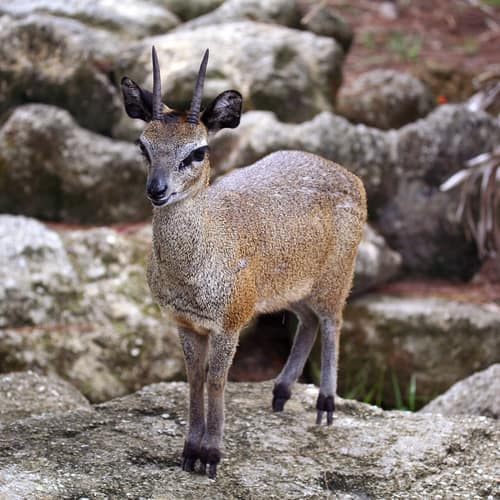
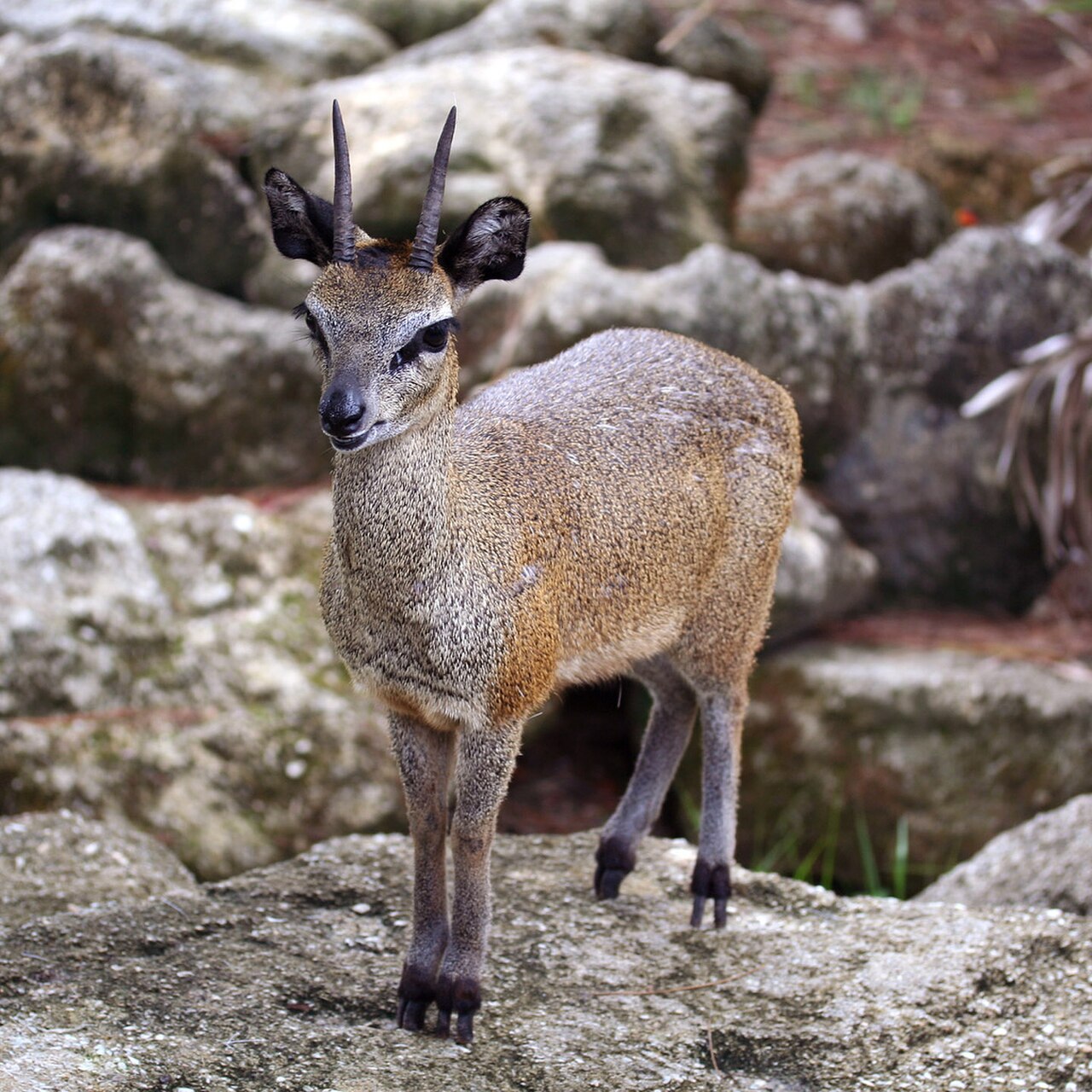
—observations
—countries
—peak records
Least ConcernConservation statusIUCN Red List categoriesLCNTVUENCREWEXLeast ConcernRed List categories, explained →
Diet & prey
- Succulent plants
- Shrub foliage
- Wild fruits
Predators
- Leopard
- Verreaux's Eagle
- Caracal
ThreatsLocal hunting, habitat fragmentation, and feral dogs
HabitatsRocky outcrops, kopjes, mountain slopes, and gorges
Life span10–15 years
Size / weightNot available
Classification
- FamilyBovidae
- SpeciesOreotragus oreotragus
Range data is not available yet.
Interaction riskLow
- Low
- Moderate
- High
- Very high
- Why interaction risk is low
- Safe to observe at a normal distance.
Responsible observation
- Scan Kopjes Carefully: Look along boulder piles and high ledges where their coats blend seamlessly into granite.
- Look for Pairs: Scan nearby rocks when you spot one individual, as the mate is almost always close by.
- Maintain Safe Distance: Avoid sudden movements near cliffs to prevent startling them into risky leaps.
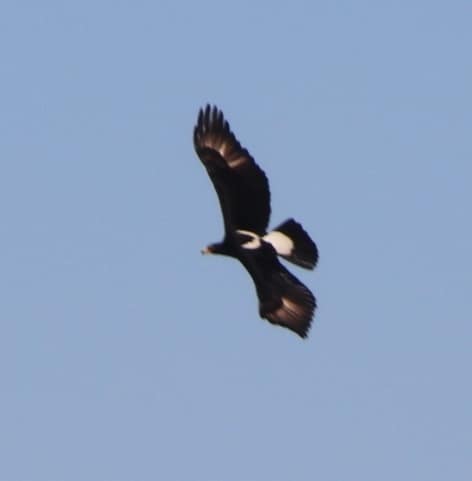
Predator (c) Tony Rebelo, some rights reserved (CC BY-SA), uploaded by Tony Rebelo · cc-by-sa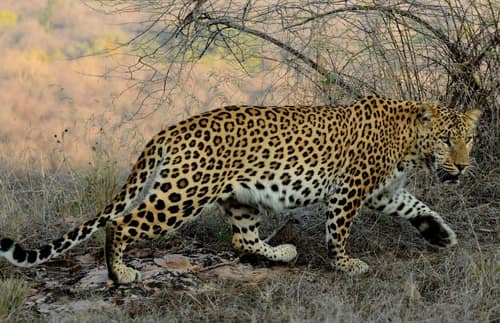
Predator (c) Raja bandi, some rights reserved (CC BY), uploaded by Raja bandi · cc-by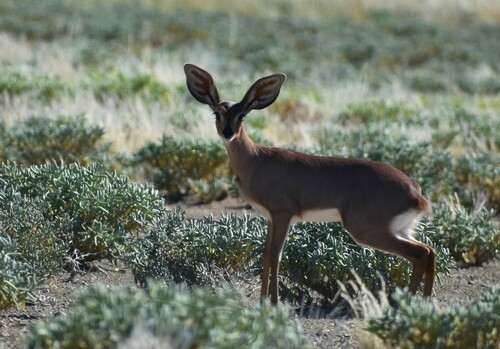
Close Relative (c) Justin Ponder, some rights reserved (CC BY) · cc-by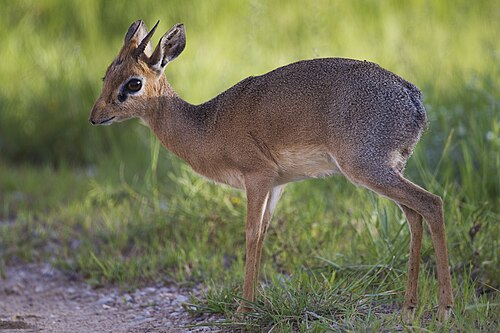
Close Relative Yathin S Krishnappa / CC BY-SA 3.0 · cc-by-sa
Help improve the field guideSomething wrong?
Checking your Fauna account…Report a name, category, or profile issue for review.