
Mammal
Water Deer
Hydropotes inermisAlso known as Chinese Water Deer, Korean Water Deer, Vampire Deer
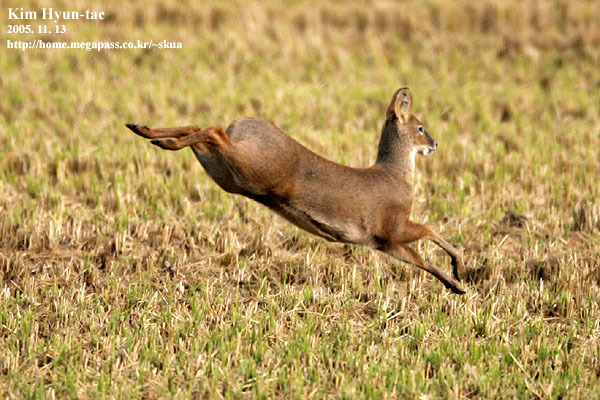
Water deer are unique among living true deer for entirely lacking antlers, relying instead on long, downward-pointing tusks that bucks use to slash rivals during the winter rut. Exceptional swimmers with rounded ears and arched backs, they spend their days weaving through dense riverine grasslands, popping up in bouncing leaps when disturbed. Mothers can give birth to exceptionally large litters of up to six fawns, hiding them separately across reeds to protect them from predators.
TuskedWetlandHerbivore

—observations
—countries
—peak records
VulnerableConservation statusIUCN Red List categoriesLCNTVUENCREWEXVulnerableRed List categories, explained →
Diet & preyHerbivorous grazer feeding on wetland grasses, sedges, reeds, and tender agricultural shoots
Predators
- Leopard Cat
- Red Fox
- Gray Wolf
ThreatsWetland drainage, poaching, and fragmentation from infrastructure development
HabitatsRiparian zones, reed beds, marshes, riverbanks, and adjacent lowlands
Life span10–12 years
Classification
- FamilyCervidae
- SpeciesHydropotes inermis
Range data is not available yet.
Interaction riskLow
- Low
- Moderate
- High
- Very high
- Why interaction risk is low
- Bucks possess sharp, movable canine tusks capable of deep puncture wounds; observe quietly from a distance.
- Why it is dangerous
- Males have mobile upper canine teeth up to eight centimeters long that can slash skin and muscle when cornered.
- How to recognize a risky encounter
- Look for small, teddy-bear-like rounded ears, an arched back, and protruding white tusks flanking the chin.
- What to do
- Maintain a respectful buffer, never attempt to corner or rescue an adult, and keep domestic dogs leashed.
- What to notice
- Easily spotted by its reddish-brown summer coat, distinct lack of antlers, and distinctive hare-like bounding gait.
- Support conservation
- Stay on marked trails to avoid trampling delicate marsh nests where fawns are stashed during early summer.
Responsible observation
- Field Glass Scouting: Scan low reed beds at dawn and dusk when individuals emerge to graze along open bank edges.
- Quiet Approach: Move downwind and avoid sudden noises, as their large ears detect faint rustling from great distances.
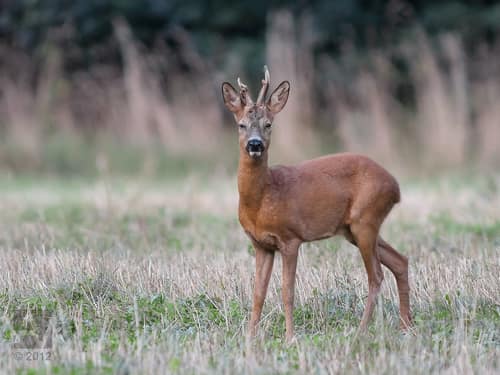
Competitor "Ree bok - Roe deer male" by Arend Vermazeren is licensed under CC BY 2.0. To view a copy of this license, visit https://creativecommons.org/licenses/by/2.0/. · cc-by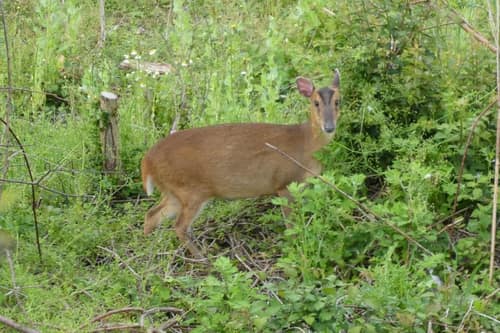
Close Relative (c) Rob Pople, some rights reserved (CC BY), uploaded by Rob Pople · cc-by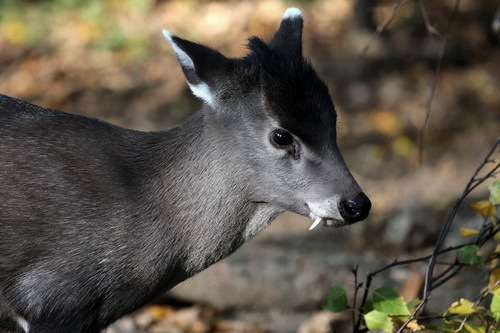
Same Family (c) Николай Усик, some rights reserved (CC BY-SA) · cc-by-sa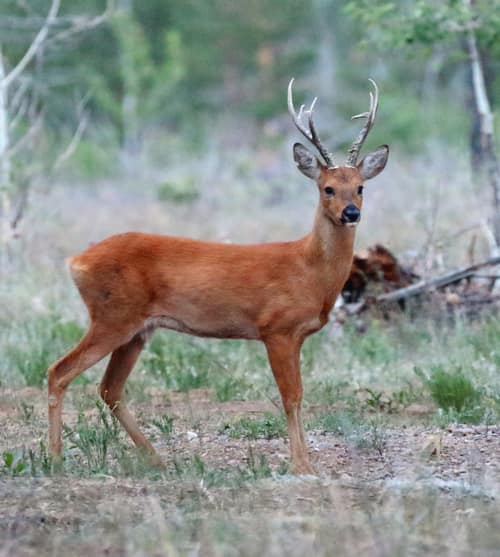
Same Family (c) Andrey Giljov, some rights reserved (CC BY-SA) · cc-by-sa
Help improve the field guideSomething wrong?
Checking your Fauna account…Report a name, category, or profile issue for review.