
Mammal
Six-banded Armadillo
Euphractus sexcinctusAlso known as Yellow Armadillo, Six-banded Yellow Armadillo
Six-banded armadillos are active, diurnal mammals known for their conspicuous yellow-brown armor and surprisingly fast, scurrying gait. Unlike many of their relatives, they spend much of their day foraging in the open, digging deep burrows that provide shelter and shape the local grassland ecosystem. They are highly solitary and rely on a keen sense of smell to locate food beneath the soil.
DiurnalBurrowingArmored
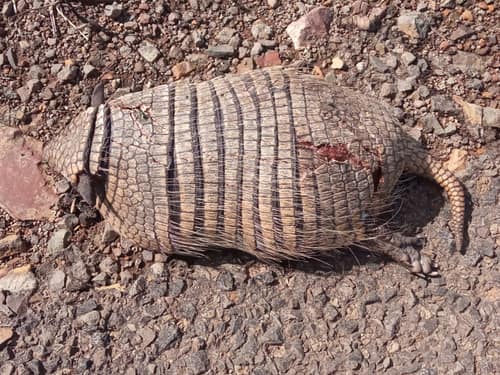
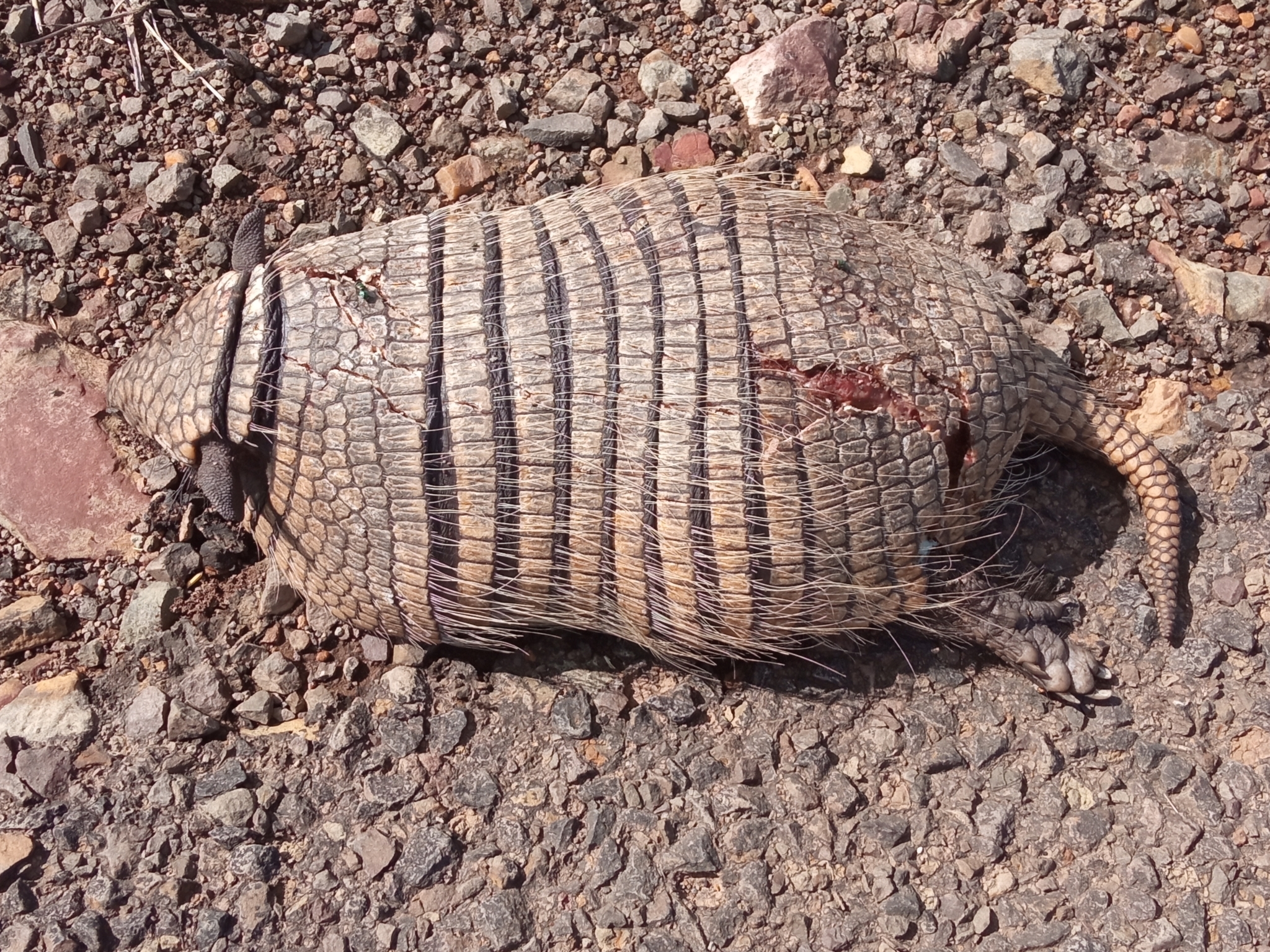
—observations
—countries
—peak records
Least ConcernConservation statusIUCN Red List categoriesLCNTVUENCREWEXLeast ConcernRed List categories, explained →
Diet & preyBeetles, Ants, Tubers
Predators
- Jaguar
- Puma
- Maned Wolf
ThreatsHabitat loss, hunting, and vehicle collisions
HabitatsSavannas, grasslands, shrublands, and dry forests
Life span15 to 18 years
Classification
- FamilyDasypodidae
- SpeciesEuphractus sexcinctus
Native
Interaction riskLow
- Low
- Moderate
- High
- Very high
- Why interaction risk is low
- Capable of delivering a sharp scratch or bite if handled; observe from a safe distance.
- Why it is dangerous
- Equipped with powerful digging claws and strong jaws that can inflict painful scratches or bites if cornered.
- How to recognize a risky encounter
- Identifiable by its flattened, yellowish-tan carapace with six distinct bands and sparse, coarse white hairs.
- What to do
- Never attempt to grab, corner, or block the path of an armadillo; allow it to escape into its burrow.
Responsible observation
- Watch from a distance: Observe their frantic digging behavior without approaching, as they will quickly retreat to their burrows if startled.
- Listen for rustling: Scan dry leaf litter in grasslands during the day, where their loud foraging noises often give away their location.
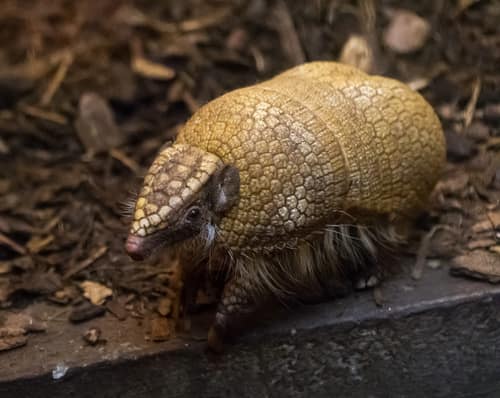
Close Relative Hedwig Storch / CC BY-SA 3.0 · cc-by-sa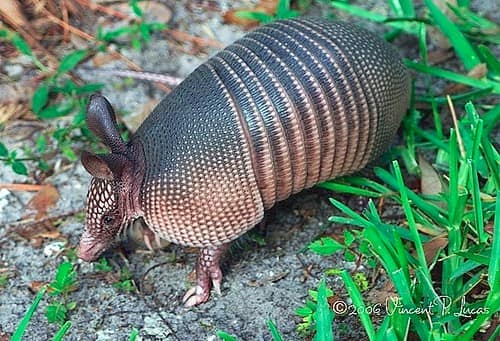
Close Relative "Nine-banded Armadillo" by leppyone is licensed under CC BY 2.0. To view a copy of this license, visit https://creativecommons.org/licenses/by/2.0/. · cc-by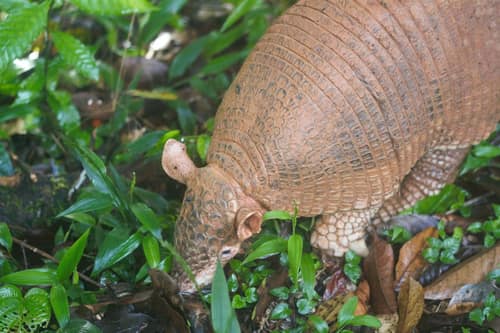
Close Relative Guillaume Delaitre / CC BY 4.0 · cc-by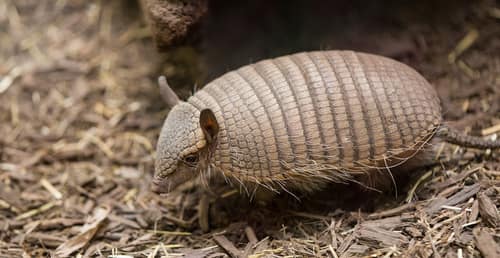
Close Relative "Screaming Hairy Armadillo" by tr.robinson is licensed under CC BY-SA 2.0. To view a copy of this license, visit https://creativecommons.org/licenses/by-sa/2.0/. · cc-by-sa
Help improve the field guideSomething wrong?
Checking your Fauna account…Report a name, category, or profile issue for review.